




Phone:
0086 28 87573647
+86 19150187139

In modern experiments, laboratory pure water plays an increasingly irreplaceable role, and pure water equipment is widely used as a basic laboratory component.
When choosing a pure water purifier, besides well-known domestic brands like UPU, many people are confused about what aspects to consider when evaluating an ultrapure water purifier. Today, we'll provide some factors to consider when choosing a pure water purifier, hoping to give you a better understanding of ultrapure water purifiers and help you choose a satisfactory pure water/ultrapure water purifier.
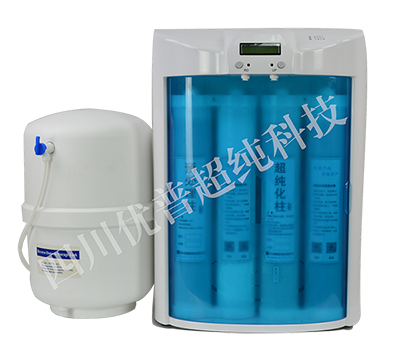
Before choosing the right ultrapure water system for your laboratory, we must understand: What is pure water? What is ultrapure water?
Pure water, also known as purified water, refers to water that meets the standards for drinking water and is processed using methods such as electrodialysis, ion exchange, reverse osmosis, distillation, and other appropriate methods. It is colorless, transparent, and safe for direct consumption, containing no additives. Some bottled water and distilled water sold on the market fall under the category of pure water.
Ultrapure water is further refined from pure water by almost completely removing conductive media and reducing non-dissociated colloidal substances, gases, and organic matter to very low levels. Its resistivity is equal to or close to the limit of 18.2 MΩ·cm (25℃). The differences between pure water and ultrapure water are numerous, some of which are listed here:
① Different conductivity: Pure water generally has a conductivity between 2-10 μS/cm, while ultrapure water has a conductivity of 0.056 μS/cm. The levels of organic matter, bacteria, and particulate matter also differ significantly. For example, pure water contains tens of ppb or more of organic matter, while ultrapure water contains only a few ppb. Simply put, ultrapure water contains virtually no impurities, approaching the theoretical level of pure water.
② Different manufacturing difficulties: Currently, commercially available pure water is primarily produced through reverse osmosis and distillation. Ultrapure water, on the other hand, undergoes a series of complex purification techniques, including ultraviolet oxidation (185nm), nuclear-grade resin treatment, and microfiltration or ultrafiltration, in addition to the process of producing pure water.
Whether a laboratory instrument meets the inherent requirements of modern laboratory equipment is the standard for judging its advancement. What kind of instrument qualifies as advanced and excellent? How do we evaluate the quality of a laboratory pure water system? The development of modern experimental techniques is rapid, with increasingly higher precision in experiments. Requirements for reagent purity, control of interfering factors, and environmental conditions are becoming more stringent. Experimental techniques are becoming increasingly diverse, and laboratories are evolving towards multifunctionality. Simultaneously, the development of modern experimental techniques places increasingly higher demands on experimental instruments: higher quality, more stable performance, more complete and reliable monitoring systems, and scientific data management systems are required. Furthermore, instruments should be more intelligent in operation and simpler to maintain. In addition, safety and low environmental impact are increasingly valued by laboratory workers. These are all aspects we need to consider when selecting a laboratory pure water system.