





Phone:
0086 28 87573647
+86 19150187139

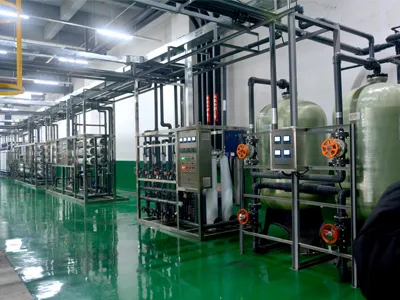
Water softeners utilize ion exchange technology. Functional ions on resin exchange with calcium and magnesium ions in the water, thus adsorbing excess calcium and magnesium ions and removing limescale (calcium carbonate or magnesium carbonate).
Water softeners contain softening resin, a man-made ion exchange resin containing soft mineral sodium. This sodium reacts with dissolved hard minerals like calcium and magnesium in the water, preventing sodium from accumulating as limescale and posing minimal harm to surfaces. The resin is a porous, insoluble exchange material. Modern water softeners contain millions of tiny plastic beads, each containing numerous negatively charged exchange sites that absorb positive ions. When the resin is nascent, these sites are occupied by positively charged sodium ions. The resin preferentially binds to stronger cations; calcium and magnesium ions have stronger charges than sodium ions. When water containing calcium and magnesium ions passes through the resin tank, these ions contact the resin beads and displace sodium ions from their exchange sites. After ion exchange, calcium and magnesium ions are adsorbed onto the resin inside the water softener, softening the water. Finally, once all the resin is saturated with calcium and magnesium ions, it can no longer function and requires regeneration.
Regeneration of the water softener resin is carried out using a dilute solution of sodium chloride and water. During regeneration, the water flow to the softener is first stopped. Saltwater from the brine tank is mixed with another dilution stream. The dilute brine solution flows through the resin, contacting the resin adsorbed with calcium and magnesium ions. Although calcium and magnesium ions carry a stronger charge than sodium ions, the concentrated brine solution contains millions of weakly charged sodium ions, capable of replacing the smaller number of calcium and magnesium ions. Thus, once the calcium and magnesium ions are replaced, the resin is regenerated and ready for the next softening cycle. This cycle repeats continuously.
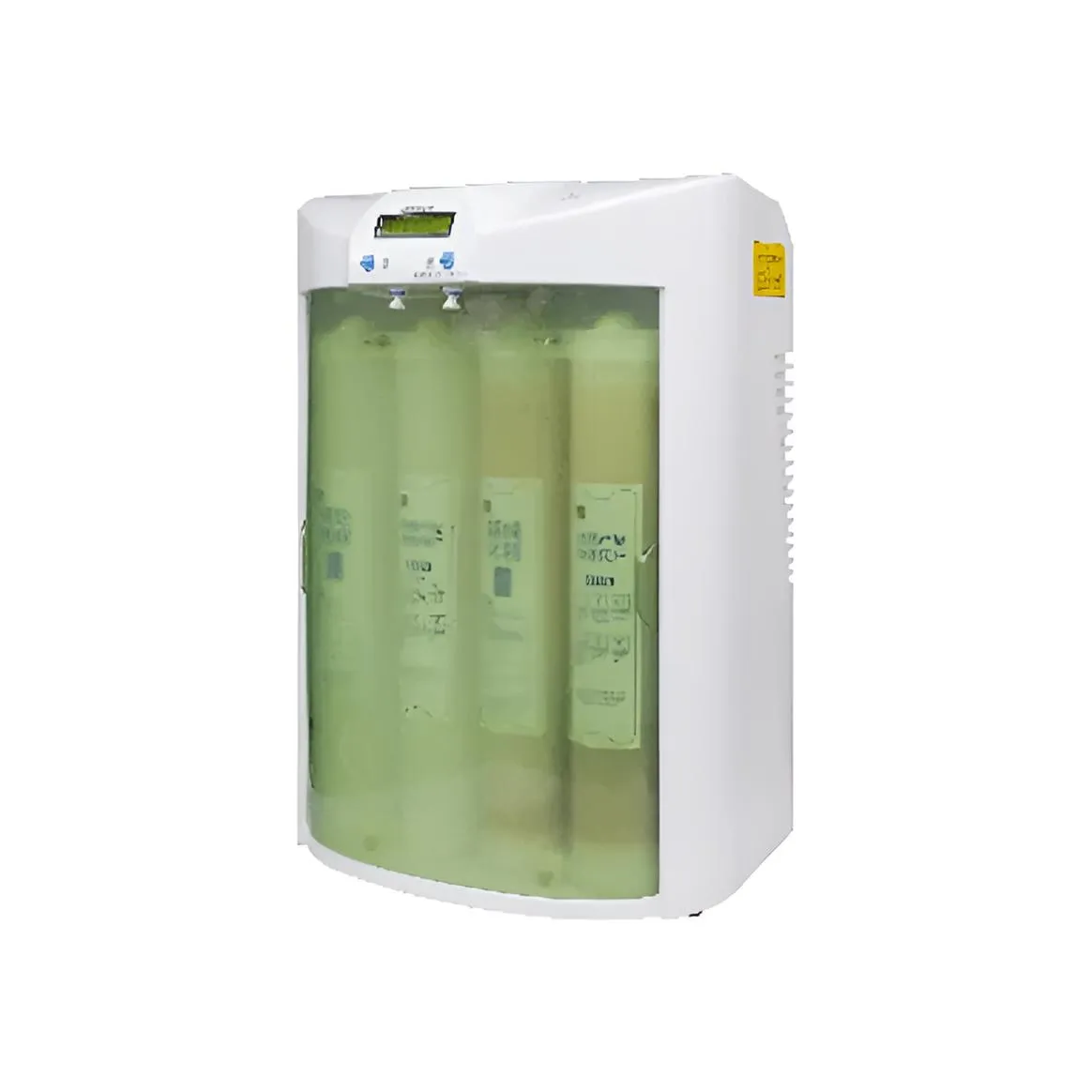
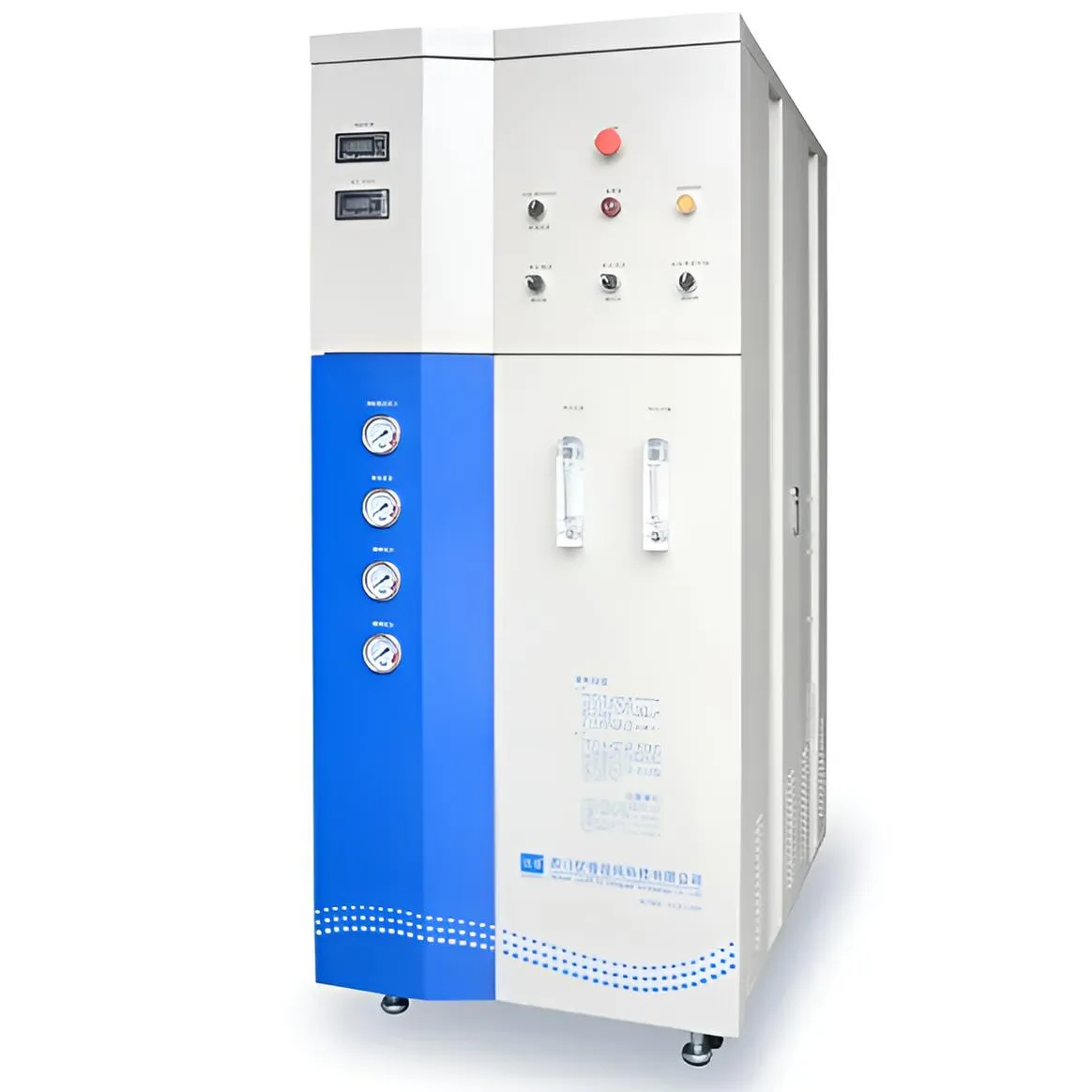
Now, UPU ultrapure water systems offer fully automatic regeneration-type water softeners (unattended operation) configured for use with ultrapure water systems with high total hardness, solving the inconvenience caused to customers during the regeneration process of traditional water softeners.





