





Phone:
0086 28 87573647
+86 19150187139

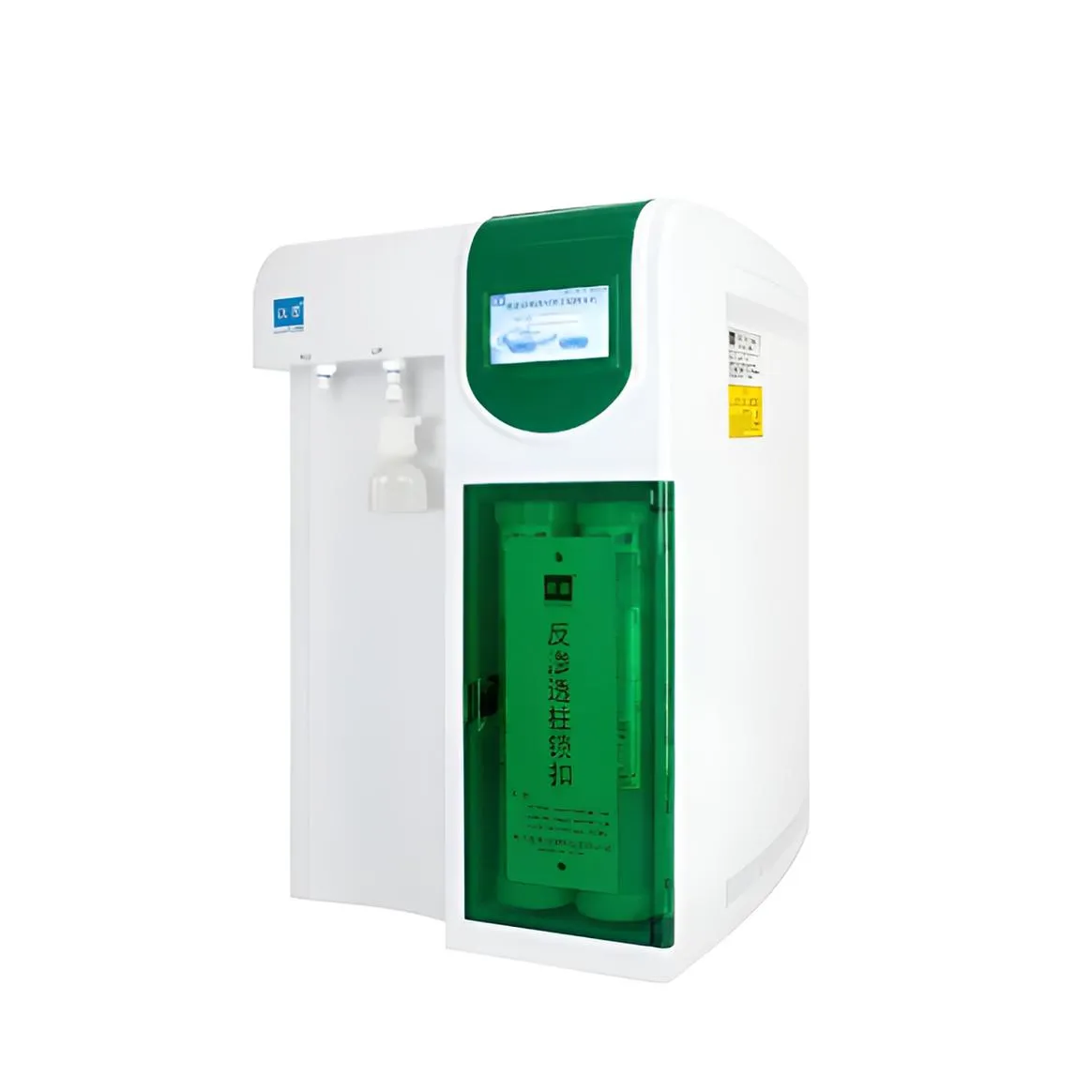
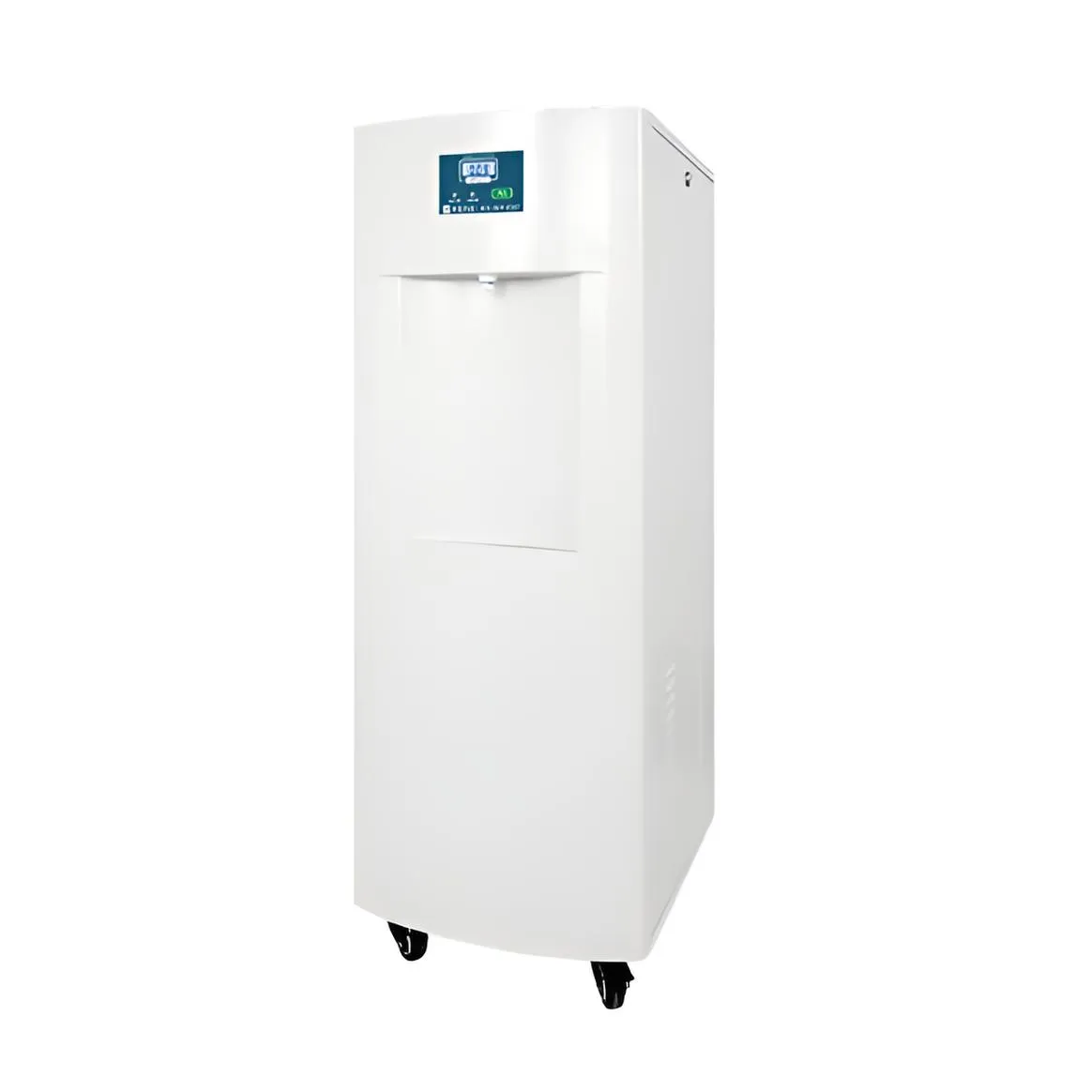
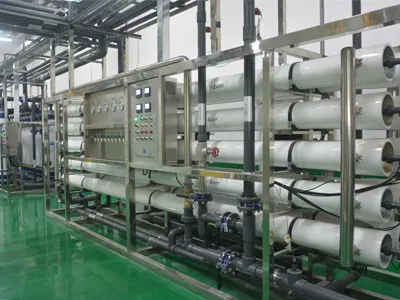
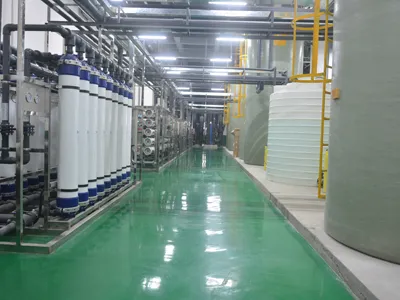
A complete water treatment system consists of three main parts: a pretreatment system, a fine treatment system, and a post-treatment system. After passing through the pretreatment system, including PP filter cartridges (sand rod filters), activated carbon units, and water softener units, the raw water's content of suspended solids (particulate matter), colloids, organic matter, hardness, microorganisms, and other impurities is significantly reduced. This reduces the processing load on subsequent fine treatment systems such as reverse osmosis and electro-desalination, extending their service life.
PP Filter Cartridge
Material: Polypropylene hot-melt fiber filter cartridge.
Characteristics: 10μm pores can trap particulate matter in the water (such as silt and rust commonly found in tap water), reducing turbidity, but cannot filter out bacteria and ionic substances.
Specifications: 10-inch (250mm) / 20-inch (500mm).
Activated Carbon Unit
Activated carbon has a large specific surface area and is filled with micropores with extremely small pore sizes (10-30 angstroms), exhibiting significant adsorption and filtration effects on organic colloids, residual chlorine, iron ions, etc. Tabletop water purifiers and other similar systems commonly use 10-inch/20-inch activated carbon filter cartridges. Large-scale water purifiers often use activated carbon filter tanks made of fiberglass/stainless steel.
Water Softener Unit
Large and medium-sized water purifier systems often use fully automatic water softeners to remove calcium and magnesium ions from the raw water. A fully automatic water softener consists of a sodium ion exchange resin tank, a regeneration salt tank, and a multi-way control valve. It can be programmed for operation and automatically regenerates (using both time-based and flow-based control methods). During regeneration, it uses the siphon principle to draw in salt, then adds water to dissolve the salt. The regeneration time is typically 2 hours.
Small tabletop water purifiers generally use 10-inch/20-inch softening resin filter cartridges to reduce the hardness of the raw water.
Reverse Osmosis Unit
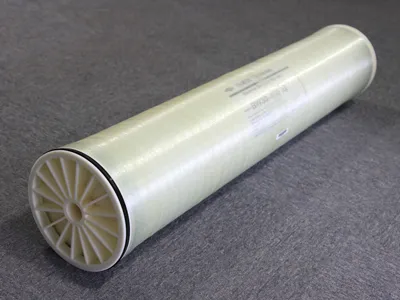
RO (Reverse Osmosis) technology is a membrane separation filtration technology powered by pressure difference. Originating from aerospace research in the United States in the 1960s, it was gradually adapted for civilian use and is now widely used in scientific research, medicine, food, beverage, and seawater desalination.
RO (reverse osmosis) membranes have pores as small as nanometers (1 nanometer = 10⁻⁹ meters). Under certain pressure, H₂O molecules can pass through the RO membrane, while impurities in the source water such as inorganic salts, heavy metal ions, organic matter, colloids, bacteria, and viruses cannot. This allows for a strict separation between permeable pure water and non-permeable concentrated water.
RO membranes achieve a removal rate of over 99% for high-valence ions, colloids, bacteria, and organic matter with a molecular weight greater than 300 daltons (including pyrogens). They also achieve a removal rate of 95% for low-valence ions (Na⁺, K⁺). When the source water conductivity is <3505 μS/cm, the conductivity of RO pure water is typically ≤55 μS/cm, meeting the national Class III water standard. After further circulation filtration using an atomic-level ion exchange column, the effluent yield can reach 18.2 MΩ·cm.
Reverse osmosis is the most economical method to achieve an impurity removal rate of 90%–99%, and it is also the best pretreatment method for reagent-grade ultrapure water systems.
Note: The filtration capacity of RO membranes is significantly affected by water temperature. The optimal water temperature is 25℃~30℃. For every 1℃ decrease in temperature, the RO membrane's permeate flow rate decreases by approximately 3%. When the water temperature approaches 0℃, the RO membrane will stop producing water.
Ultrafiltration Unit
Ultrafiltration membranes, also known as hollow fiber ultrafiltration membranes, have pore sizes between reverse osmosis and microfiltration, approximately 0.01~0.1μm. They are commonly used as post-treatment devices in pure water systems and can be used to remove various particles, large molecular solutes, bacteria, viruses, pyrogens, etc. from solutions. The pore size of ultrafiltration membranes is determined by retention tests on substances of a certain molecular weight and is expressed as a molecular weight value. Ultrafiltration membranes capable of removing pyrogens typically have a molecular weight of 6000 Daltons.
Ultraviolet (UV) Unit
Ultraviolet light is an invisible light wave, existing at the outer end of the ultraviolet spectrum, hence the name ultraviolet. Based on different wavelength ranges, it is divided into three bands: A, B, and C. The C band ultraviolet light, with wavelengths between 240-260 nm, is the most effective bactericidal band, with the strongest wavelength within this band at 253.7 nm.
When a sufficient dose of strong ultraviolet light generated by a UV device irradiates water, liquids, or air, various bacteria, viruses, microorganisms, parasites, or other pathogens are damaged under the radiation of UV-C light. This damages the DNA and RNA in the cells, preventing the regeneration of daughter cells. UV disinfection equipment can kill more than 99.9% of bacteria and viruses in water, liquids, or air in a short time (usually 0.2-5 seconds) without using any chemical agents. Scientific experiments have proven that ultraviolet light with wavelengths between 240-280 nm has a highly efficient bactericidal function.
Modern ultraviolet (UV) disinfection technology is based on modern epidemiology, optics, biology, and physicochemistry. It utilizes a specially designed, high-efficiency, high-intensity, and long-life C-band UV light generator to irradiate flowing water (air or solid surfaces) with strong UV C light. When various bacteria, viruses, parasites, algae, and other pathogens in the water (air or solid surface) are exposed to a certain dose of UV C light radiation, their DNA structure is damaged, thus killing bacteria, viruses, and other pathogens in the water without the use of any chemical agents, achieving disinfection and purification.
UV sterilizers use 304 or 316L stainless steel as the main material, with high-purity quartz tubes as the casing, and are equipped with high-performance quartz UV low-pressure mercury disinfection lamps. They have advantages such as strong sterilization power, long lifespan, and stable and reliable operation. Their sterilization efficiency is ≥ 99%, and the imported lamps have a lifespan of ≥ 9000 hours.
Ultraviolet (UV) Sterilization
UV light is an invisible light wave, existing at the outer end of the ultraviolet spectrum, hence the name UV. Based on different wavelength ranges, it is divided into three bands: A, B, and C. The C band, with wavelengths between 240-260 nm, is the most effective sterilization band, with the strongest wavelength at 253.7 nm.
The principle of UV sterilization is generally believed to be that nucleic acids in organisms absorb the energy of UV light, altering their structure and thus disrupting their function. When the energy absorbed by the nucleic acids reaches a lethal level, and UV irradiation is maintained for a certain period, bacteria die in large numbers.
Characteristics of UV sterilization:
1. Fast, efficient, and effective UV sterilization.
2. UV irradiation does not change the physical and chemical properties of water and does not introduce contaminants into pure water.
3. Suitable for various water flow rates, simple to operate, and convenient to use; only periodic cleaning of the quartz glass sleeve and replacement of the lamp are required.
4. Small size, lightweight, and low power consumption.
5. Ultraviolet sterilization lacks continuous disinfection and is susceptible to secondary contamination.
Oxidation effect of ultraviolet (UV) light.
Purification Column Unit
The purification column is filled with UP nuclear-grade mixed-bed resin produced by Rohm and Haas/Dow Chemical Company. When raw water passes through the purification column, cations in the water exchange with H+ ions in the cation exchange resin, and anions in the water exchange with OH- ions in the anion exchange resin. After the exchange, the H+ and OH- ions entering the water immediately combine to form H2O, thereby removing the cations and anions from the raw water. The effluent resistivity can reach up to 18.3 MΩ·cm.
A complete water treatment system consists of three main parts: a pretreatment system, a fine treatment system, and a post-treatment system. After passing through a pretreatment system including a PP filter cartridge (sand rod filter), activated carbon unit, and water softener unit, the raw water exhibits significantly reduced levels of suspended solids (particulate matter), colloids, organic matter, hardness, microorganisms, and other impurities. This reduces the processing load on subsequent fine treatment systems such as reverse osmosis and electro-desalination, extending their service life.
PP Filter Cartridge
Material: Polypropylene hot-melt fiber filter cartridge.
Characteristics: 10μm pores can trap particulate matter in the water (such as silt and rust commonly found in tap water), reducing turbidity, but cannot filter out bacteria and ionic substances.
Specifications: 10-inch (250mm) / 20-inch (500mm).
Activated Carbon Unit
Activated carbon has a large specific surface area and is filled with micropores with extremely small pore sizes (10-30 angstroms), exhibiting significant adsorption and filtration effects on organic colloids, residual chlorine, and iron ions. 10-inch/20-inch activated carbon filter cartridges are commonly used in countertop water purifiers and other water purification systems. Large-scale pure water units commonly use activated carbon filter tanks made of fiberglass/stainless steel.
Water Softener Unit
Medium and large-scale pure water systems often use fully automatic water softeners to remove calcium and magnesium ions from the raw water. A fully automatic water softener consists of a sodium ion exchange resin tank, a regeneration salt tank, and a multi-way control valve. It can be programmed for operation and automatically regenerates (using both time-based and flow-based control methods). During regeneration, it uses the siphon principle to draw in salt, then adds water to dissolve the salt. The regeneration time is typically 2 hours.
Small countertop pure water systems generally use 10-inch/20-inch softening resin filter cartridges to reduce the hardness of the raw water.
Reverse Osmosis Unit
RO (Reverse Osmosis) technology is a membrane separation filtration technology powered by pressure difference. Originating from aerospace research in the United States in the 1960s, it was gradually adapted for civilian use and is now widely used in scientific research, medicine, food, beverage, and seawater desalination.
RO (reverse osmosis) membranes have pores as small as nanometers (1 nanometer = 10⁻⁹ meters). Under certain pressure, H₂O molecules can pass through the RO membrane, while impurities in the source water such as inorganic salts, heavy metal ions, organic matter, colloids, bacteria, and viruses cannot. This allows for a strict separation between permeable pure water and non-permeable concentrated water.
RO membranes achieve a removal rate of over 99% for high-valence ions, colloids, bacteria, and organic matter with a molecular weight greater than 300 daltons (including pyrogens). They also achieve a removal rate of 95% for low-valence ions (Na⁺, K⁺). When the source water conductivity is <3505 μS/cm, the conductivity of RO pure water is typically ≤55 μS/cm, meeting the national Class III water standard. After further circulation filtration using an atomic-level ion exchange column, the effluent yield can reach 18.2 MΩ·cm.
Reverse osmosis is the most economical method to achieve an impurity removal rate of 90%–99%, and it is also the best pretreatment method for reagent-grade ultrapure water systems.
Note: The filtration capacity of RO membranes is significantly affected by water temperature. The optimal water temperature is 25℃~30℃. For every 1℃ decrease in temperature, the RO membrane's permeate flow rate decreases by approximately 3%. When the water temperature approaches 0℃, the RO membrane will stop producing water.
Ultrafiltration Unit
Ultrafiltration membranes, also known as hollow fiber ultrafiltration membranes, have pore sizes between reverse osmosis and microfiltration, approximately 0.01~0.1μm. They are commonly used as post-treatment devices in pure water systems and can be used to remove various particles, large molecular solutes, bacteria, viruses, pyrogens, etc. from solutions. The pore size of ultrafiltration membranes is determined by retention tests on substances of a certain molecular weight and is expressed as a molecular weight value. Ultrafiltration membranes capable of removing pyrogens typically have a molecular weight of 6000 Daltons.
Ultraviolet (UV) Unit
Ultraviolet light is an invisible light wave, existing at the outer end of the ultraviolet spectrum, hence the name ultraviolet. Based on different wavelength ranges, it is divided into three bands: A, B, and C. The C band ultraviolet light, with wavelengths between 240-260 nm, is the most effective bactericidal band, with the strongest wavelength within this band at 253.7 nm.
When a sufficient dose of strong ultraviolet light generated by a UV device irradiates water, liquids, or air, various bacteria, viruses, microorganisms, parasites, or other pathogens are damaged under the radiation of UV-C light. This damages the DNA and RNA in the cells, preventing the regeneration of daughter cells. UV disinfection equipment can kill more than 99.9% of bacteria and viruses in water, liquids, or air in a short time (usually 0.2-5 seconds) without using any chemical agents. Scientific experiments have proven that ultraviolet light with wavelengths between 240-280 nm has a highly efficient bactericidal function.
Modern ultraviolet (UV) disinfection technology is based on modern epidemiology, optics, biology, and physicochemistry. It utilizes a specially designed, high-efficiency, high-intensity, and long-life C-band UV light generator to irradiate flowing water (air or solid surfaces) with strong UV C light. When various bacteria, viruses, parasites, algae, and other pathogens in the water (air or solid surface) are exposed to a certain dose of UV C light radiation, their DNA structure is damaged, thus killing bacteria, viruses, and other pathogens in the water without the use of any chemical agents, achieving disinfection and purification.
UV sterilizers use 304 or 316L stainless steel as the main material, with high-purity quartz tubes as the casing, and are equipped with high-performance quartz UV low-pressure mercury disinfection lamps. They have advantages such as strong sterilization power, long lifespan, and stable and reliable operation. Their sterilization efficiency is ≥ 99%, and the imported lamps have a lifespan of ≥ 9000 hours.
Ultraviolet (UV) Sterilization
UV light is an invisible light wave, existing at the outer end of the ultraviolet spectrum, hence the name UV. Based on different wavelength ranges, it is divided into three bands: A, B, and C. The C band, with wavelengths between 240-260 nm, is the most effective sterilization band, with the strongest wavelength at 253.7 nm.
The principle of UV sterilization is generally believed to be that nucleic acids in organisms absorb the energy of UV light, altering their structure and thus disrupting their function. When the energy absorbed by the nucleic acids reaches a lethal level, and UV irradiation is maintained for a certain period, bacteria die in large numbers.
Characteristics of UV sterilization:
6. UV sterilization is fast, efficient, and effective.
7. UV irradiation does not change the physical and chemical properties of water and does not introduce contaminants into pure water.
8. Suitable for various water flow rates, simple to operate, and convenient to use; only periodic cleaning of the quartz glass sleeve and replacement of the lamp are required.
9. Small size, lightweight, and low power consumption.
10. Ultraviolet sterilization lacks continuous disinfection and is susceptible to secondary contamination.
Oxidation effect of ultraviolet (UV) light.
Purification Column Unit
The purification column is filled with UP nuclear-grade mixed-bed resin produced by Rohm and Haas/Dow Chemical Company. When raw water passes through the purification column, cations in the water exchange with H+ ions in the cation exchange resin, and anions in the water exchange with OH- ions in the anion exchange resin. After the exchange, the H+ and OH- ions entering the water immediately combine to form H2O, thereby removing the cations and anions from the raw water. The resistivity of the effluent can reach up to 18.3 MΩ·cm.





