


Phone:
0086 28 87573647
+86 19150187139

I. Currently, there are three methods in power plant water treatment processes:
The first method is the traditional desalination method, where all salts in the water are removed through ion exchange. This requires large amounts of acid and alkali solutions to regenerate the ion exchange resin, thus increasing operating costs and causing some environmental pollution from the regenerated wastewater.
The second method is a modified desalination method, where most salts in the water are removed through reverse osmosis. However, the regeneration of the ion exchange resin in the mixed bed still requires acid and alkali. Therefore, this method is only a modified desalination method, with slightly lower operating costs, but it still causes environmental pollution.
The third method is a green desalination method, which completely eliminates the use of acid and alkali in ultrapure water preparation, achieving a completely green process.
II. Basic Working Principle of EDI
EDI (Electro-de-ionization) is a pure water production technology that combines ion exchange technology, ion exchange membrane technology, and ion electromigration technology (electrodialysis technology). This technology utilizes ion exchange energy for deep desalination to overcome the incomplete desalination caused by electrodialysis polarization. It also leverages the water ionization generated by electrodialysis polarization to produce H and OH ions, achieving resin self-regeneration and overcoming the shortcomings of chemical regeneration after resin failure. This technology has gradually emerged since the 1980s. After more than a decade of development, EDI technology has captured a significant portion of the ultrapure water market in North America and Europe.
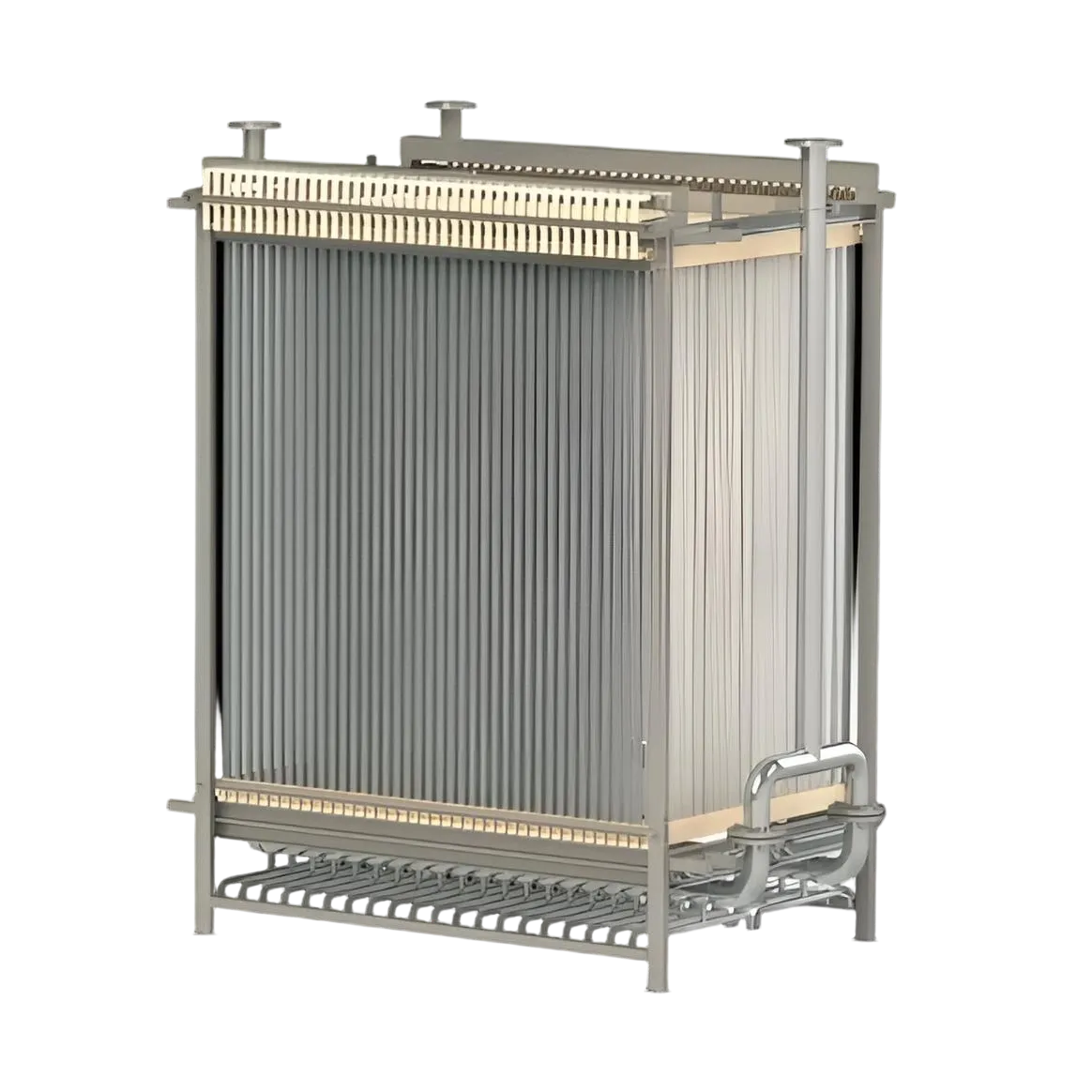
An EDI device includes anion/cation exchange membranes, ion exchange resins, and a DC power supply. The anion exchange membranes allow only anions to pass through, while the cation exchange membranes allow only cations to pass through. Ion exchange resins are sandwiched between the anion and cation exchange membranes to form individual treatment units, constituting the desalination chamber. Units are separated by a mesh to form the concentrate chamber. An electric field is created at the DC power supply's cathode and anode electrodes at both ends of the unit group. Incoming water flows through the desalination chamber, where anions and cations are removed under the influence of the electric field and pass through the anion and cation exchange membranes into the concentrate chamber. The ion exchange resin filling the spaces between the ion exchange membranes significantly increases the rate of ion removal. Simultaneously, water molecules generate hydrogen and hydroxide ions under the influence of an electric field. These ions continuously regenerate the ion exchange resin, maintaining it in optimal condition. The EDI unit divides the feed water into three independent streams: pure water, concentrated water, and extreme water. Pure water (90%-95%) is the final product, concentrated water (5%-10%) can be recycled, and extreme water (1%) is discharged. Figure 2 illustrates the basic water purification process of EDI.
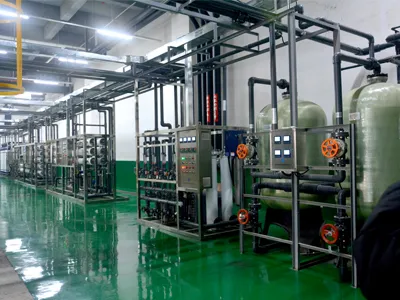
EDI units belong to the category of fine water treatment systems and are generally used in conjunction with reverse osmosis (RO) to form an ultrapure water treatment system consisting of pretreatment, reverse osmosis, and EDI, replacing the mixed ion exchange equipment used in traditional water treatment processes. The EDI unit requires a resistivity of 0.025-0.5 MΩ·cm for the feed water, which is fully met by the reverse osmosis unit. The EDI unit can produce ultrapure water with a resistivity exceeding 15 MΩ·cm. III. Characteristics of EDI Units
EDI units do not require chemical regeneration and can operate continuously. Therefore, they eliminate the need for acid and alkali solutions required for regeneration in traditional water treatment processes using mixed ion exchange equipment, as well as the wastewater discharged during regeneration. Their main characteristics are as follows: Basic Water Purification Process of EDI
Continuous operation, stable product water quality
Easy to achieve fully automatic control
No need for acid and alkali regeneration
No downtime due to regeneration
Saves on regeneration water and wastewater treatment facilities
High water production rate (up to 95%)
No need for acid and alkali storage or acid and alkali dilution and transportation facilities
Small footprint
Safe and reliable operation, avoiding worker contact with acids and alkalis
Reduced operating and maintenance costs
Modular equipment units, allowing flexible combination of water purification facilities with various flow rates
Simple installation and low cost
High initial investment