



Phone:
0086 28 87573647
+86 19150187139

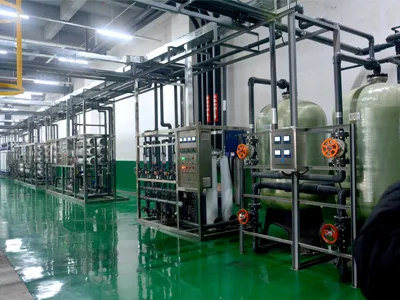
Electrodialysis, a crucial membrane separation technology in pure water treatment, possesses several distinct characteristics:
1. Low Energy Consumption: Electrodialysis operates without phase changes; it uses electrical energy to migrate and eliminate ions. Generally, its energy consumption is directly proportional to the salinity of the water. Therefore, for desalination of water with a salinity below 3000-4000 mg/L, electrodialysis is considered a relatively economical technology with low energy consumption.
2. Low Reagent Consumption and Minimal Environmental Pollution: Electrodialysis does not require the addition of reagents during operation, only a small amount of acid is used for periodic cleaning, and a high-pressure pump is not needed for infusion. Therefore, compared to ion exchange methods, it consumes significantly less reagents, resulting in less waste acid and alkali.
3. Simple Operation and Easy Automation: Electrodialysis typically operates under a constant DC voltage. As long as the flow rate and pressure of the concentrate/dilute electrode are controlled under a constant voltage, and the electrodes are periodically switched, automation is easily achieved.
4. Small Equipment Footprint Water flows through a tightly packed multi-membrane electrodialysis unit for desalination and demineralization. Few auxiliary devices are required, resulting in a small footprint. Smaller scale units can combine auxiliary equipment together.
5. Long equipment lifespan and convenient pretreatment: Membranes and separators in the electrodialysis unit are made of high-polymer materials. International comparisons suggest that ion exchange membranes are less prone to fouling than reverse osmosis membranes, and the materials used in electrodialysis equipment are more corrosion-resistant than the metal materials used in distillation. Furthermore, because the water flow direction in an electrodialysis unit is parallel to the membrane surface, unlike the perpendicular flow in a reverse osmosis unit, electrodialysis is generally considered to have lower requirements for feed water quality indicators than reverse osmosis.
6. High water utilization and easy wastewater treatment: The concentrate and electrolyte in the electrodialysis unit feed water can be recycled or reused, resulting in high water utilization.
Seven. Wide adaptability to equipment scale and desalination concentration range: Different assembly forms of separators, from small to large, and multiple units connected in series or parallel, can adapt to different water treatment scales and desalination requirements.