

Phone:
0086 28 87573647
+86 19150187139

Pure water, as the most widely used solvent in laboratories, is extensively applied in scientific research, testing, medicine, food, and other fields. Natural water contains many pollutants, and water obtained through ordinary filtration and distillation methods is not truly pure water, which can significantly affect experimental results and fail to meet experimental requirements. Currently, only pure water produced by a water purifier can meet experimental requirements; therefore, water purifiers are one of the most important and commonly used instruments.
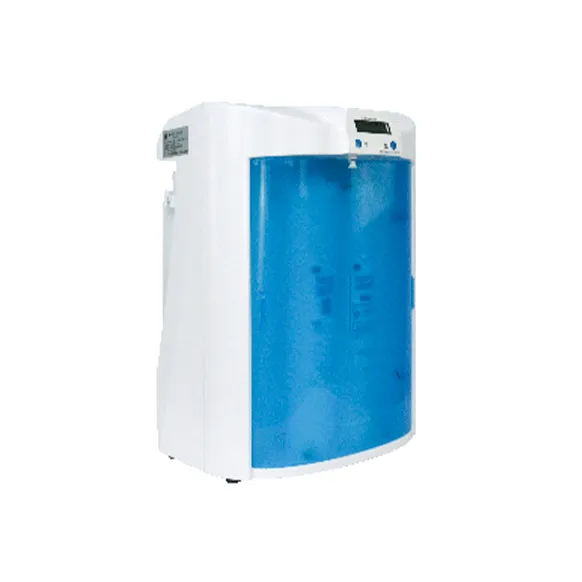
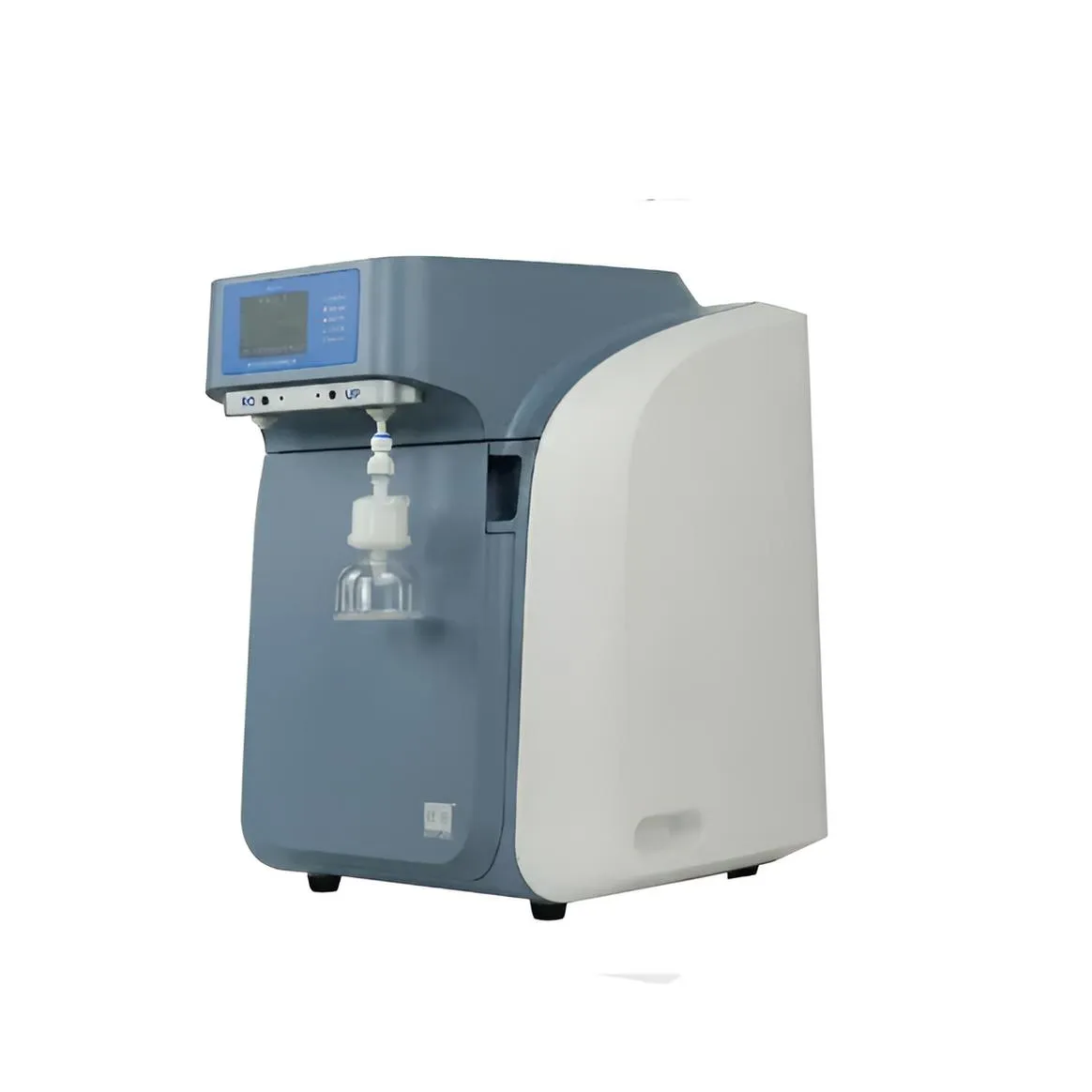
Currently, no single technology can completely remove all pollutants from water, but multiple methods can be used in combination to minimize the amount of pollutants. The preparation process of primary pure water requires five steps: adsorption, membrane filtration, deionization, disinfection, and ultrafiltration. Secondary and tertiary pure water only require the first four steps. Compared to the preparation process of primary pure water, the deionization process for secondary and tertiary pure water is relatively simpler. According to market research on water purifiers, the usage rate of primary pure water purifiers is very high, accounting for over 59%. Therefore, we will take the ULUP ultrapure water purifier, which can produce primary pure water, as an example to introduce the key processes in producing primary pure water.
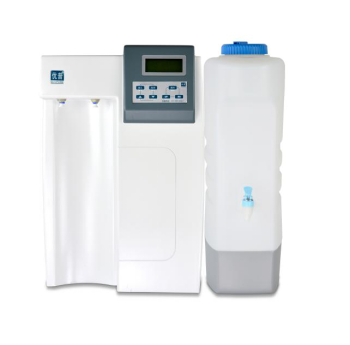
Ultrapure water systems typically employ UV disinfection technology, currently using either a built-in single-wavelength (254nm) UV lamp or a dual-wavelength (185nm/254nm) UV lamp. Single-wavelength UV lamps kill bacteria primarily through two mechanisms: one is by using ultraviolet light to destroy bacterial proteins, and the other is by first generating ozone under UV light, which then kills the bacteria. Dual-wavelength UV lamps, in addition to sterilization, primarily oxidize organic matter in the water, reducing the total organic carbon (TOC) content to below 2 ppb. The ULUP-IV ultrapure water system uses dual long-wavelength UV lamps for disinfection.
Ultrafiltration is a pressure-driven membrane separation technology. Under pressure, small-molecule solutes and solvents pass through a specially designed membrane with specific pore sizes, while large-molecule solutes cannot pass through and remain on one side of the membrane, thus partially purifying the large molecules. The ULUP-IV utilizes a German Sartorius 0.22μm microporous membrane terminal microfilter with a molecular flow cutoff of 5000 Daltons, designed solely to produce ultrapure water of optimal quality.
With advancements in technology, ULUP water purifiers are also at the forefront of automation and system protection technologies.
The ULUP series of ultrapure water purifiers features a fully automatic MCU control system with a user-friendly interface. Automatic flushing settings for the RO reverse osmosis column/UF ultrafiltration column/UP ultrapure purification column, including quantitative and qualitative water dispensing settings and clock/language settings, make operation more convenient and intelligent. Furthermore, historical database query functions and system self-control protection functions are also unique features of this machine.
In addition, most water purifiers or ultrapure water purifiers are equipped with online water resistivity monitoring devices and real-time water temperature monitoring. The ULUP ultrapure water purifier is no exception.
Overall, innovation in purification technology is the true innovation, because purification technology is the core technology of water purifiers. Only by mastering advanced purification technology can one gain a place in the future water purifier market.