





Phone:
0086 28 87573647
+86 19150187139

Water is the source of life, a precious and irreplaceable natural resource for humankind, and the lifeline of social and economic development. Water scarcity and increasingly severe water pollution have become bottlenecks restricting social progress and economic development. Solving this problem is extremely urgent and crucial for my country's sustainable development. Besides the scientific management and optimized allocation of water resources, fully utilizing advanced technologies in water reuse is also critical.
Membrane separation, as a high-tech process, has rapidly developed into an industrialized, highly efficient, and energy-saving separation process over the past 40 years. Over these 40 years, processes such as electrodialysis, reverse osmosis, microfiltration, ultrafiltration, nanofiltration, pervaporation, membrane contact, and membrane reaction have been successively developed and widely applied in energy, electronics, petrochemicals, pharmaceuticals, heavy industry, light industry, food and beverage industries, as well as in people's daily lives and environmental protection, generating significant economic and social benefits. Social demand gave rise to membrane technology, and it is this demand that has driven its rapid development, continuous innovation, progress, and improvement, making it a key unit operation and a crucial element in integrated processes. The role of membrane technology in water reuse is briefly described below, including seawater and brackish water desalination, drinking water purification, groundwater remediation, advanced wastewater treatment and reuse, traditional process transformation, and clean production. These have become a social consensus and have great development potential and promising prospects.
2. Water Resource Development, Protection, and Drinking Water Purification
2.1 Seawater and Brackish Water Desalination
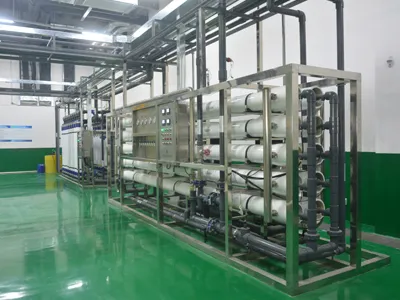
The development of reverse osmosis (RO) was proposed in the 1950s for seawater desalination. Now, RO has become the most economical means of producing drinking water from seawater and brackish water. The world's daily RO desalination capacity reaches 10 million tons, serving as a lifeline for the social and economic development of the Middle East, desert regions, coastal areas, and islands. In my country, some islands, ships, coastal power plants, and numerous brackish water areas, including the western region, also use desalinated water to meet urgent drinking water and industrial needs. It can be expected that in the near future, northern coastal cities will use seawater desalination as emergency and supplementary water.
In recent years, SWRO has repeatedly won bids in international seawater desalination projects due to its advantages such as lowest investment, lowest energy consumption, lowest cost, and short construction period. It is the most economical method for producing drinking water from seawater, typically consuming 4-5 kWh/m³ of electricity. Even when using a two-stage RO process to produce water with a salinity of less than 20 mg/L, combined with ion exchange to produce pure water, its economics are competitive with other methods. The success of SWRO is inseparable from its innovative development in membranes, modules, equipment, and processes.
In the development of reverse osmosis membranes, asymmetric membranes and composite membranes are two innovative examples. Innovations in reverse osmosis membrane module technology have enabled the membrane's performance to be fully realized, primarily through hollow fiber reverse osmosis units and spiral wound reverse osmosis elements. Simultaneously, key equipment for membrane desalination, such as high-pressure pumps and energy recovery devices, has also seen rapid development, especially the third-generation energy recovery product—the pressure exchanger. This directly transfers pressure from concentrated seawater to incoming seawater, achieving an efficiency greater than 90%, thus reducing the power consumption of reverse osmosis seawater desalination to below 3 kWh/m³. Based on advancements in reverse osmosis membrane and module technology, the SWRO process has also continuously evolved. In addition to the single-stage seawater desalination process of the 1980s, two new processes have been proposed in recent years—the high-pressure single-stage seawater desalination process and the high-efficiency two-stage process—further improving the recovery rate to 60%. This reduces seawater pretreatment costs, reagent usage, and energy consumption.
2.2 Drinking Water Purification
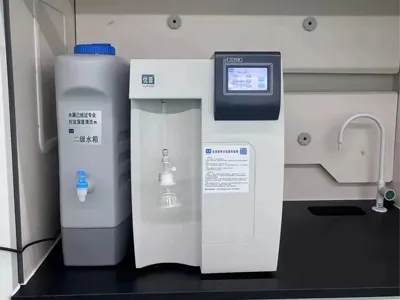
Environmental pollution affects the quality of drinking water, which directly impacts people's health. As people's living standards improve, their demands for drinking water quality are increasing. Countries worldwide are continuously improving drinking water preparation technologies. For example, Japan's MAC-21 and New MAC-21 projects have conducted in-depth research and affirmation of the effects of microfiltration (MF), ultrafiltration (UF), and nanofiltration (NF) on sterilization, turbidity removal, removal of macromolecular colloids, TXMs, pesticides, odors, and some SO42-, NO3-, F-, and As. Reverse osmosis can remove almost all impurities. Household MF, UF, NF, and RO water purifiers, as well as bottled and barrelled purified water and mineral water, are already widespread in China. In addition, electrodialysis can desalinate and remove fluoride, electrochemical membrane processes can disinfect water and produce acidic and alkaline water, and membrane contactors (MC) can remove volatile harmful substances from water. Therefore, with the acceleration of urbanization, membrane technology, as a pretreatment and advanced treatment method for drinking water, is playing an increasingly significant role and will become one of the preferred technologies for drinking water purification in this century. 2.3 Groundwater Remediation
In major cities in northern China, and even in Jiangsu and Zhejiang provinces, groundwater over-extraction is severe, leading to a drop in the water table, a funnel-shaped distribution of groundwater, crustal subsidence, ground collapse, seawater intrusion, and groundwater pollution. Natural precipitation alone cannot compensate for this deficiency. Besides controlling extraction, recharge of treated wastewater is a good solution. Practices in California and other areas of the United States have shown that this measure is highly effective. my country should also consider this issue as soon as possible in areas where there is a need and the conditions permit.





