






Phone:
0086 28 87573647
+86 19150187139

1. The filtration system must be sterilized regularly.
Ultrafiltration membranes can trap bacteria, but they cannot kill them. Even the best ultrafiltration membranes cannot guarantee a completely bacteria-free clean area indefinitely; where bacteria are present, they can multiply rapidly. This directly affects the quality of the permeated water. For example, some finished mineral water products contain translucent, filamentous, white, flocculent mold clumps, mainly due to mold contamination of the system. Therefore, the surrounding environment and filtration system must be sterilized regularly. The sterilization cycle depends on the quality of the raw water supply. For ordinary municipal tap water, it is 7-10 days in summer, 30-40 days in winter, and 20-30 days in spring and autumn. When surface water is used as the supply source, the sterilization cycle is even shorter. Sterilization chemicals can be used, such as a 500-1000 mg/L sodium hypochlorite solution or a 1% hydrogen peroxide solution, which can be circulated or used for soaking for about half an hour.
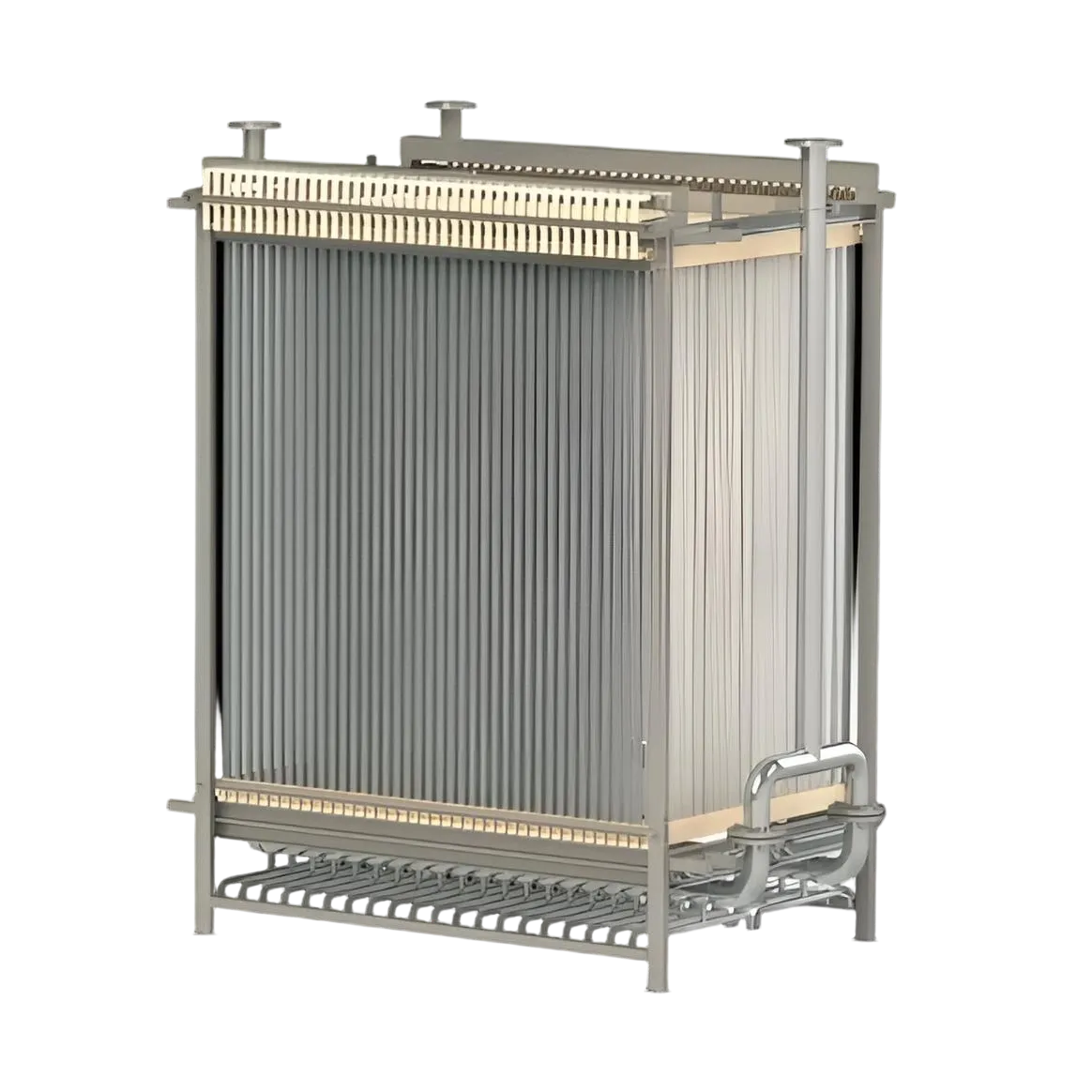
2. The number of components used in the filtration system is determined based on the designed total permeability.
The hourly water production rate specified for each module refers to the pure water permeation rate, meaning that pure water is used as the test medium and does not cause solute-induced clogging of the ultrafiltration membrane. The test temperature is 25℃, and the test pressure is 0.1MPa.
The actual permeation rate of an ultrafiltration system composed of multiple modules is approximately 90% of the nominal rate. However, the permeation rate gradually decreases over time, but it can generally return to a relatively stable value after cleaning. Typically, the stable value is only about 60% of the initial permeation rate. Furthermore, the permeation rate of the ultrafiltration module is also affected by temperature, pressure, feed concentration, and feed water turbidity; therefore, these factors must be considered during design.
3. Since each ultrafiltration module contains a protective solution before leaving the factory, the protective solution in the module must be thoroughly flushed before use. First, flush with low-pressure (0.1MPa) water for 1 hour, then flush with high-pressure (0.2MPa) water for 1 hour. Regardless of whether flushing is done at low or high pressure, the system's product water discharge valve should be fully opened.
4. When using the product water, check and confirm that the product water does not contain any bactericides.
5. Handle the ultrafiltration module with care and protect it. Because the ultrafiltration module is a precision instrument, handle it with care during use and installation, and never drop it. If the module is not in use, rinse it thoroughly with clean water, then disinfect it with a 0.5% formaldehyde solution and seal it tightly. In winter, the module must also be protected against freezing; otherwise, the module may be unusable.
6. Before using the hollow fiber ultrafiltration membrane, carefully read the instruction manual and operate according to the ultrafiltration membrane application process in water treatment.





