





Phone:
0086 28 87573647
+86 19150187139

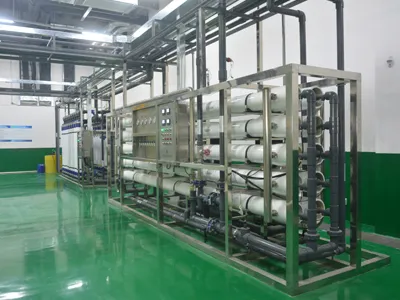
In various industrial ultrapure water equipment, ultrafiltration and reverse osmosis systems are similar, with main membrane modules including: plate and frame, tubular, spiral, capillary, grooved, and hollow fiber types. These are briefly described below:
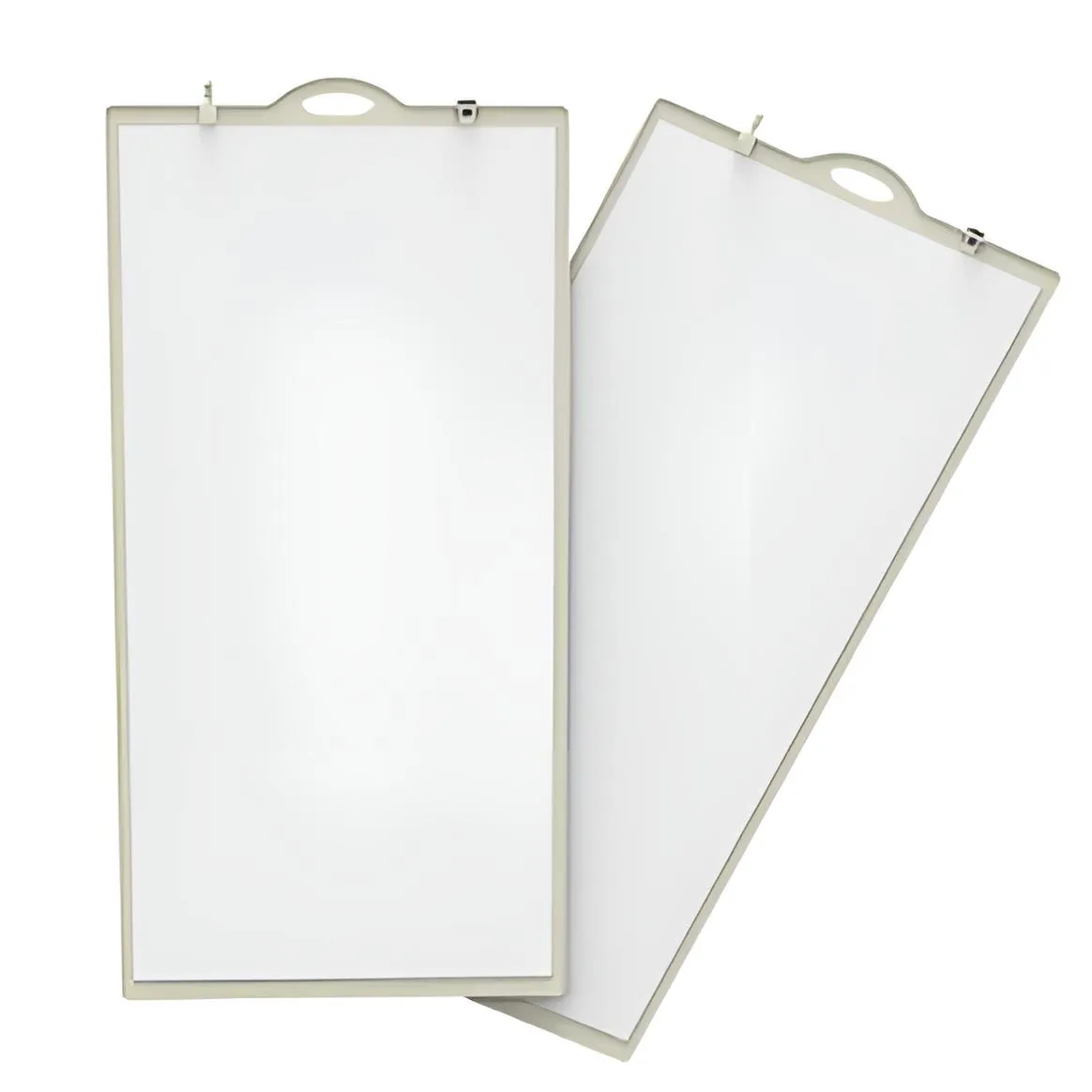
1. Plate and Frame Modules: Plate and frame modules were the first type used in large-scale ultrafiltration systems. This design originates from conventional filtration concepts and is similar to the design of a conventional plate and frame filter press. The membrane is placed on a porous support plate, which may also be lined with filter paper. Two porous support plates are stacked together to form a feed channel, constituting a membrane module. Modules can be connected in parallel or series. Depending on the needs, the membrane can be directly cast onto the support plate or placed on it. For this type of membrane module, concentration polarization at the membrane surface is difficult to control, especially when the solution contains a large amount of suspended solids, making the feed channel more prone to clogging. Ultrafiltration membranes in plate and frame modules are typically disassembled or mechanically cleaned. Furthermore, plate and frame modules are usually sealed with gaskets; therefore, leakage caused by the gaskets is a significant issue. 2. Tubular Membrane Modules: Tubular membrane modules were initially used in reverse osmosis systems. A significant advantage of these modules is their ability to control concentration polarization and fouling. However, in reverse osmosis systems, tubular membranes have been largely replaced by hollow fiber and spiral modules due to their higher investment and operating costs. In ultrafiltration systems, however, tubular modules continue to be used, primarily because tubular membranes have a certain tolerance for suspended solids in the feed solution and are easily cleaned with sponge balls without disassembling the equipment. Tubular membrane modules come in two types: external pressure and internal pressure. Internal pressure tubular membranes are directly cast into porous stainless steel tubes or glass-reinforced plastic tubes. Alternatively, the membrane may be cast onto porous filter paper and then supported externally by tubing. The pressurized feed solution flows through the tubes, and the product solution that permeates through the membrane is collected on the outside of the tubes. Membrane tubes can be installed in series or parallel. The main advantages of tubular membrane modules are the ability to greatly adjust the feed flow rate, effectively control concentration polarization, and facilitate cleaning after membrane fouling. Its disadvantages include relatively high investment and operating costs, and a low specific surface area of the membrane per unit volume. Currently, various tubular membrane modules and corresponding equipment with pipe diameters of 1-2.5 cm are available for selection in China.
3. Spiral Modules Spiral double-wound modules are widely used in reverse osmosis systems. Essentially, it is a rolled-up plate system. The feed liquid flows between the membrane and the porous membrane support material, and the filtrate collects in the central tube. Depending on the flow paths of the feed and filtrate, several spiral modules can be connected to increase the specific surface area of the membrane per unit volume, reducing investment and operating costs. However, this device is difficult to effectively control concentration polarization, and even when the solution contains only a moderate concentration of suspended solids, severe scaling can occur. Therefore, the use of spiral modules in ultrafiltration is limited. In recent years, different membrane module screens have been selected according to different materials to increase the channel spacing and control concentration polarization.
4. Capillary Module: Composed of numerous capillary membranes with diameters of 5-1.5 mm, resulting in a large specific surface area per unit volume. The capillary membranes are solution-spun without supporting tubes. The feed solution flows upward through the center of the capillary, while the filtrate flows downward along the capillary wall. This module offers good control over feed flow, but the operating pressure cannot be too high. When the inner diameter of the capillary is too small, capillary blockage may occur. Therefore, effective pretreatment of the feed solution is essential under all circumstances. Because this membrane is produced using fiber spinning, its investment cost is relatively low. The system also provides good feed control.
5. Strip Membrane Module: Similar to the hollow fiber module in reverse osmosis, this module uses a symmetrical membrane cast from rods with axial grooves, instead of thin hollow fibers. These rod bundles are inserted into a pressure-bearing tube, with the feed solution flowing outside the rods. The filtrate flows out along the axial grooves. This type of membrane module also has a high specific surface area per unit volume of inner membrane, but the feed flow rate control is not as good as that of tubular and capillary modules.
6. Hollow Fiber Module: Similar to the hollow fiber reverse module, except for the pore size.





