


Phone:
0086 28 87573647
+86 19150187139

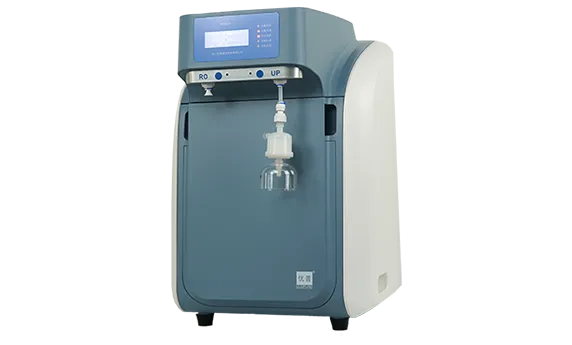
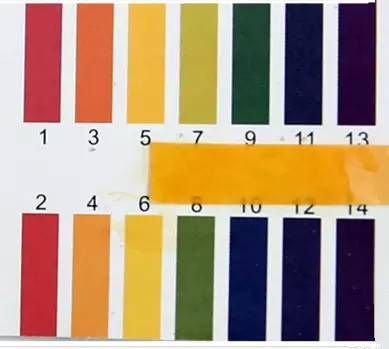
We often encounter feedback from lab technicians that tap water has a pH of 7.x, but why is the pH of the purified water after treatment by a water purifier (RO) still acidic? Today, we'll discuss why the pH of RO permeate is lower than that of the influent:
Because all natural water bodies contain dissolved carbon dioxide (CO2), some CO2 reacts with water to form carbonic acid, and some carbonic acid ionizes.
From reversible chemical equilibrium, we know that in a closed system, the relative amounts of CO2, HCO3−, and CO32− change with pH. Under low pH conditions, CO2 is the dominant component; in the medium pH range, HCO3− is the dominant component; and in the high pH range, CO32− is the dominant component.
Because RO membranes can remove dissolved ions but not dissolved gases, the CO2 content in RO permeate is generally the same as that in the RO feed water. However, HCO3− and CO32− are often reduced by 1-2 orders of magnitude. This disrupts the balance between CO2, HCO3−, and CO32− in the feed water. In a series of reactions, CO2 combines with H2O, resulting in the following equilibrium shift until a new equilibrium is established:
CO2 + H2O ⇌ H+ + HCO3−
If the feed water contains CO2, the pH value of the RO permeate will always decrease. For most RO systems, the pH value of the reverse osmosis permeate will decrease by 1-2 pH values. When the alkalinity and HCO3− in the feed water are high, the pH of the permeate will... The pH value drops even more, which is why GB6682-2008 specifies the pH range for laboratory pure water as 5.0-7.5. This also indicates that slightly acidic pure water is normal; conversely, slightly alkaline pure water is abnormal and does not meet national laboratory water standards. However, a very small number of influents contain only small amounts of CO2, HCO3−, or CO32−, resulting in relatively smaller pH changes in the product water, but the RO water will still be slightly acidic.