Phone:
0086 28 87573647
+86 19150187139

Magnetization: The treatment of water using the effect of a magnetic field is called water magnetization.
Mineralization: This refers to adding beneficial minerals to clean water. It is particularly important to note: First, the water must be strictly purified water. Impurities in the water can sometimes react with minerals to produce other substances. Second, the minerals must be strictly screened and processed through special techniques such as high-temperature distillation to remove carbon and turbidity before use.
Adsorption Water Purification Technology: This mainly refers to adsorption technology using substances with adsorption capabilities, such as activated carbon. Here, we will briefly introduce some characteristics of activated carbon: Activated carbon is widely used in the purification, dehydrogenation, oil removal, and deodorization of drinking water and industrial water in the food, chemical, and power industries. Typically, it can remove 63%-86% of colloidal substances; about 50% of iron; and 47%-60% of organic matter.
Precision Filtration Technology: Using microporous filter cartridges and membranes made of special materials, precision filtration utilizes their uniform pore size to trap particles and bacteria in water, preventing them from passing through. It can filter particles and bacteria at the micrometer (μm) or nanometer (nm) scale. It is widely used in advanced water treatment.
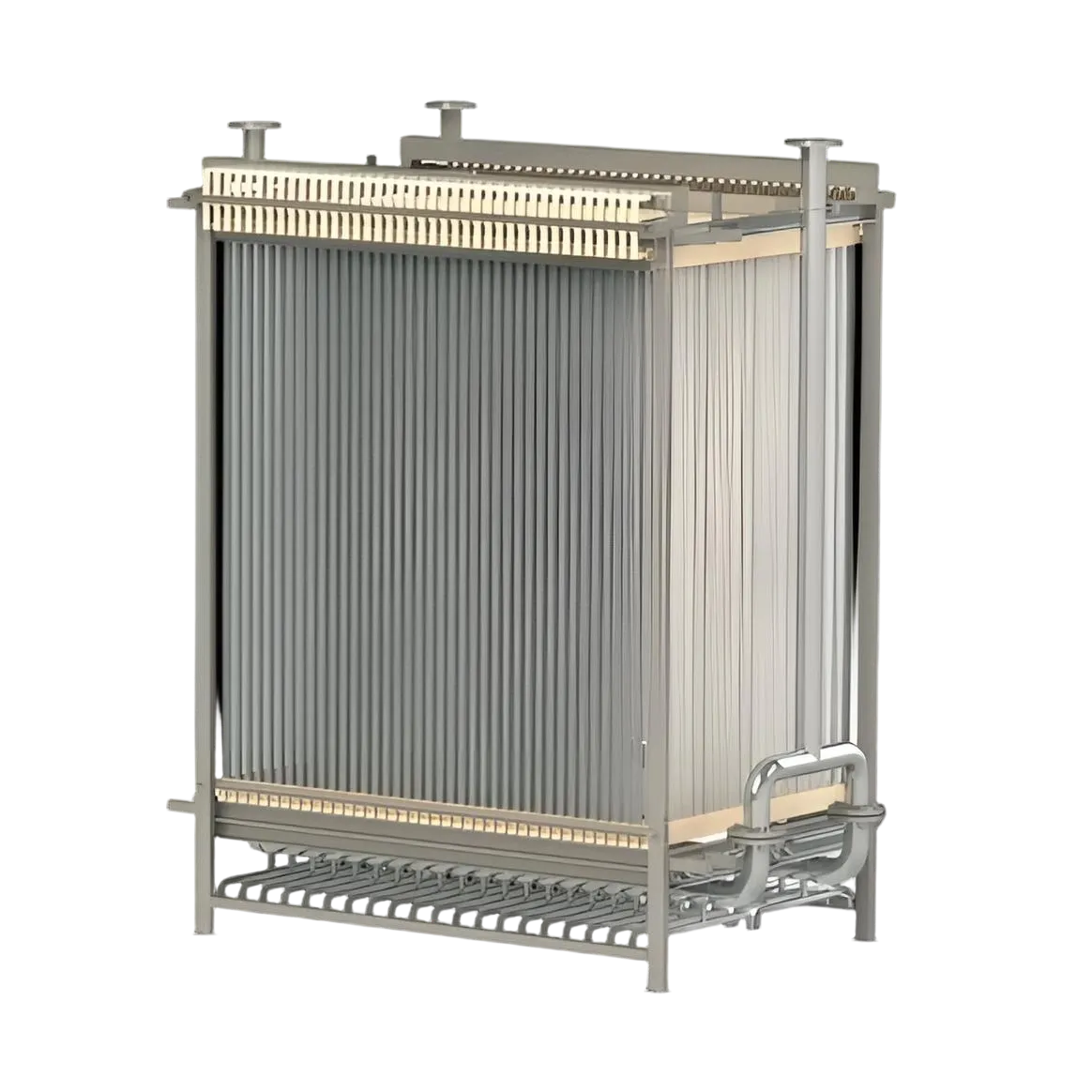
Ultrafiltration Technology: Ultrafiltration is a membrane separation technology. Under a certain pressure (0.07-0.7 MPa, not exceeding 1.05 MPa), water flows over the membrane surface. Water, dissolved salts, and other electrolytes are tiny particles that can permeate the ultrafiltration membrane, while larger molecular weight particles and colloidal substances are blocked, thus separating some of the particles in the water. The pore size of the ultrafiltration membrane is determined by a retention test of a substance with a certain molecular weight and expressed as a molecular weight value.
Nanofiltration and Reverse Osmosis Technology: Nanofiltration, also known as loose reverse osmosis, has the same basic principle as reverse osmosis, but its desalination rate is slightly lower. Osmosis is a physical phenomenon. When two types of water with different salt concentrations are separated by a semi-permeable membrane, water from the side with lower salt concentration will seep through the membrane to the side with higher salt concentration. Applying pressure will stop this osmosis; this pressure is called osmotic pressure. If the pressure is increased further, water will permeate in the opposite direction, leaving the salt behind. Therefore, the principle of membrane osmosis desalination is to apply a pressure greater than the natural osmotic pressure to saline water (such as raw water), causing osmosis to proceed in the opposite direction. This forces water molecules from the raw water to the other side of the membrane, resulting in clean water, thus removing the salt from the water. This is the principle behind nanofiltration and reverse osmosis desalination.
Ion Exchange Ion exchange is an isoelectric reaction between ions in water and ions on an ion exchange resin. The ion exchange reaction process can be illustrated by the exchange reaction between an H+-type cation exchange resin (HR) and Na+ in water: HR + Na+ = Na+ + H+. From this equation, we can see that in the ion exchange reaction, cations (such as Na) in the water are transferred to the resin, while an exchangeable H+ ion on the resin is transferred into the water. The process of Na transferring from water to the resin is a displacement process. The process of H+ exchanging from the resin into the water is called the ionization process. Therefore, due to the results of the ionization and displacement processes, Na+ and H+ interchange positions; this change is called ion exchange.