








Phone:
0086 28 87573647
+86 19150187139

I. Working Principle
The basic principle of electrodialysis desalination is the selective permeability of ion exchange membranes. Cation exchange membranes allow only cations to pass through, blocking anions, while anion exchange membranes allow only anions. Under the influence of an applied DC electric field, ions in the water migrate directionally, causing most ions in one stream to migrate to another, thus achieving the purpose of desalination of saline water.
II. Application Scope
Electrodialysis machines have the main advantages of simple process, high desalination rate, low water production cost, convenient operation, and no environmental pollution. They are widely used for water desalination, specifically in the following applications: seawater and brackish water desalination. According to our unit's test data, brackish water with a salt content as high as 60 g/L can be desalinated into drinking water, solving the drinking water source problem in desert areas. Production of soft water (water resistivity is 10⁵ ohms per centimeter), which can be used as feedwater for low-pressure boilers, eliminating the need for salt regeneration and saving approximately 20% of coal.
The pretreatment of deep desalinated water and high-purity water adopts electrodialysis-ion exchange, which expands the applicability of raw water and is widely used in power, electronics, chemical, pharmaceutical, scientific research and testing, etc., reducing water production costs by more than 50%. It saves about 80% of the acid and alkali used in the regeneration of ion exchange and extends the regeneration cycle by more than five times. It is used for purification in the beverage and food industry, improving the quality of beer and soft drinks and creating conditions for creating high-quality brand products. Electrodialyzers can also be used for chemical separation, concentration and industrial wastewater treatment recovery.
III. Structure and Assembly
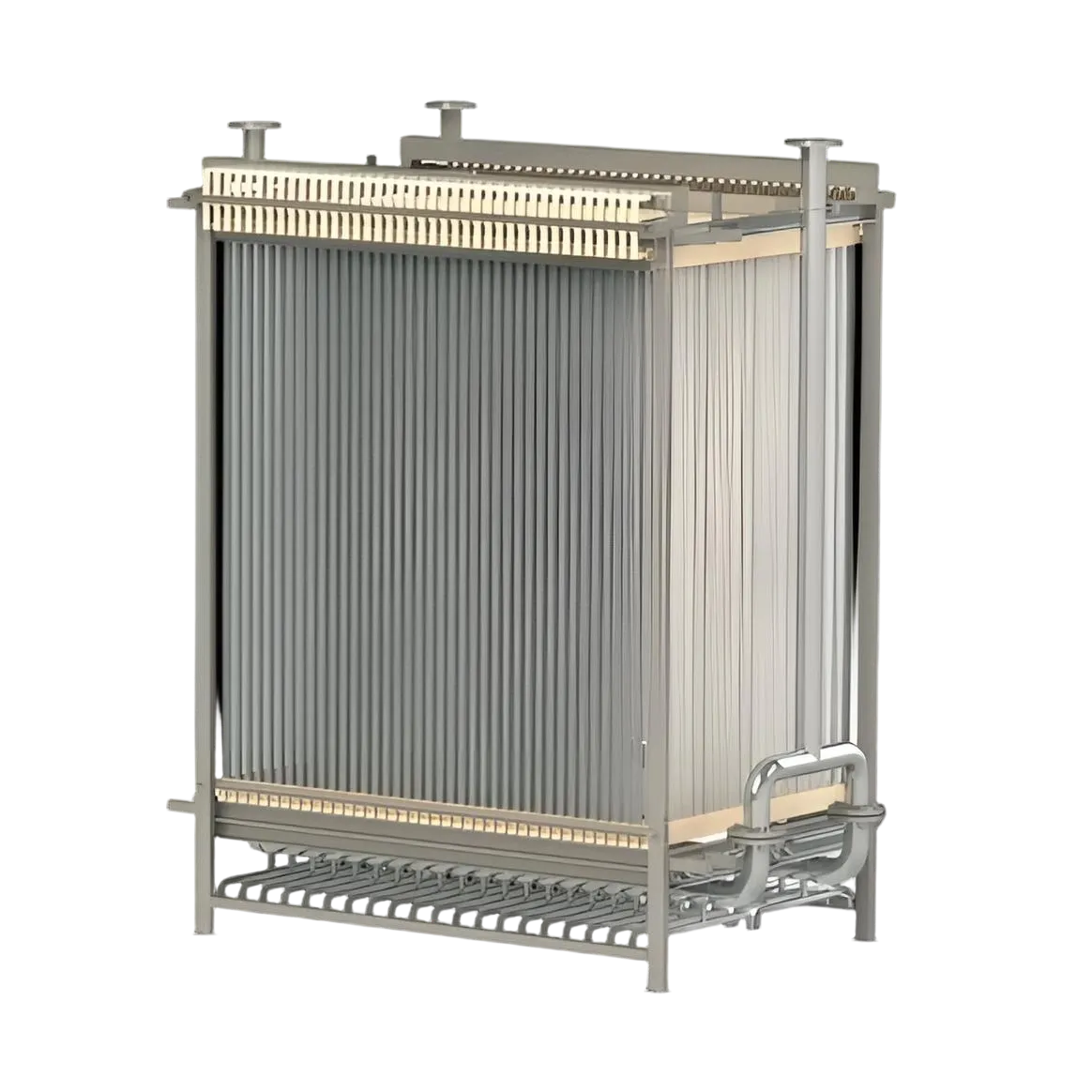
1. Structure: The electrodialyzer consists of three parts: membrane stack, electrode area and clamping device.
(1) Membrane Block: It is assembled from a considerable number of membrane pairs.
Membrane Pair: It consists of one cation exchange membrane and one septum A (or B); one anion exchange membrane and one septum B (or A).
Ion Exchange Membrane: It is the key component of the electrodialyzer. Our factory uses heterogeneous membranes produced by Shanghai Chemical Plant. Separators: Separators for concentrated and desalinated water are alternately placed between the anion and cation membranes to maintain a certain interval between them. Water flows along the plane of the separator, while current flows perpendicular to it. The separator thickness is 0.9 mm.
(2) Electrode Zones: Includes electrodes, electrode frames, and water guide plates.
Electrodes: Used to connect to the power supply. Our electrodes are made of titanium coated with ruthenium.
Electrode Frames: Placed between the electrodes and membranes to prevent the membranes from sticking to the electrodes, providing support.
(3) Compactor: Used to compact the electrodialysis unit, ensuring the membrane stack, electrodes, and other components form a unified whole to prevent leakage.
2. Assembly Method: The assembly of the electrodialysis unit is represented by "stages" and "sections." The membrane stack between a pair of electrodes is called a "stage." Each membrane with water flowing in the same direction is called a "section." Increasing the number of sections is equivalent to increasing the desalination process, which improves desalination efficiency. Increasing the number of membrane pairs increases the water treatment capacity. The assembly method of the electrodialysis unit can be adjusted according to different requirements for freshwater production and effluent quality. Generally, there are the following assembly forms: single-stage; multi-stage; multi-stage; multi-stage; multi-stage.
IV. Auxiliary Equipment
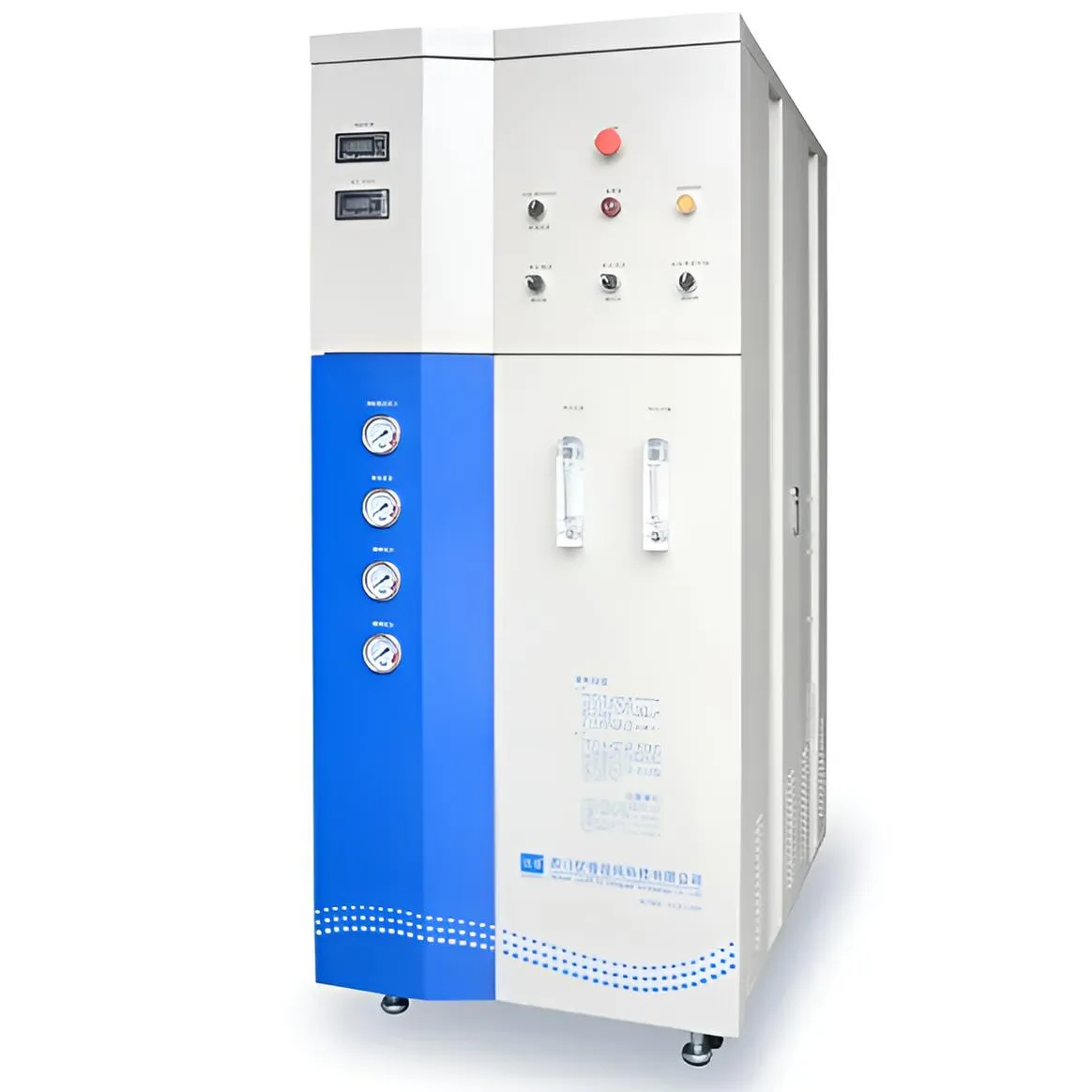
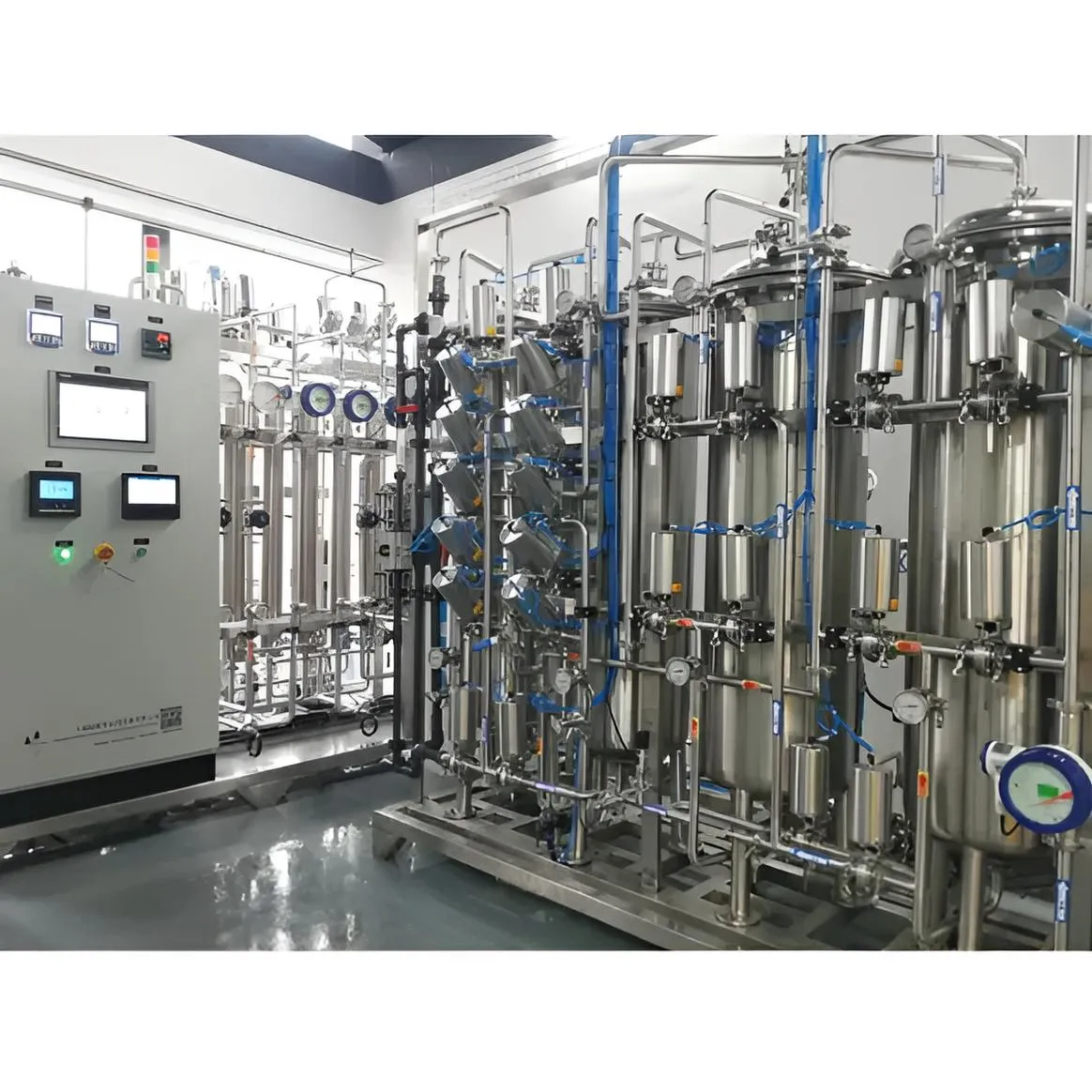
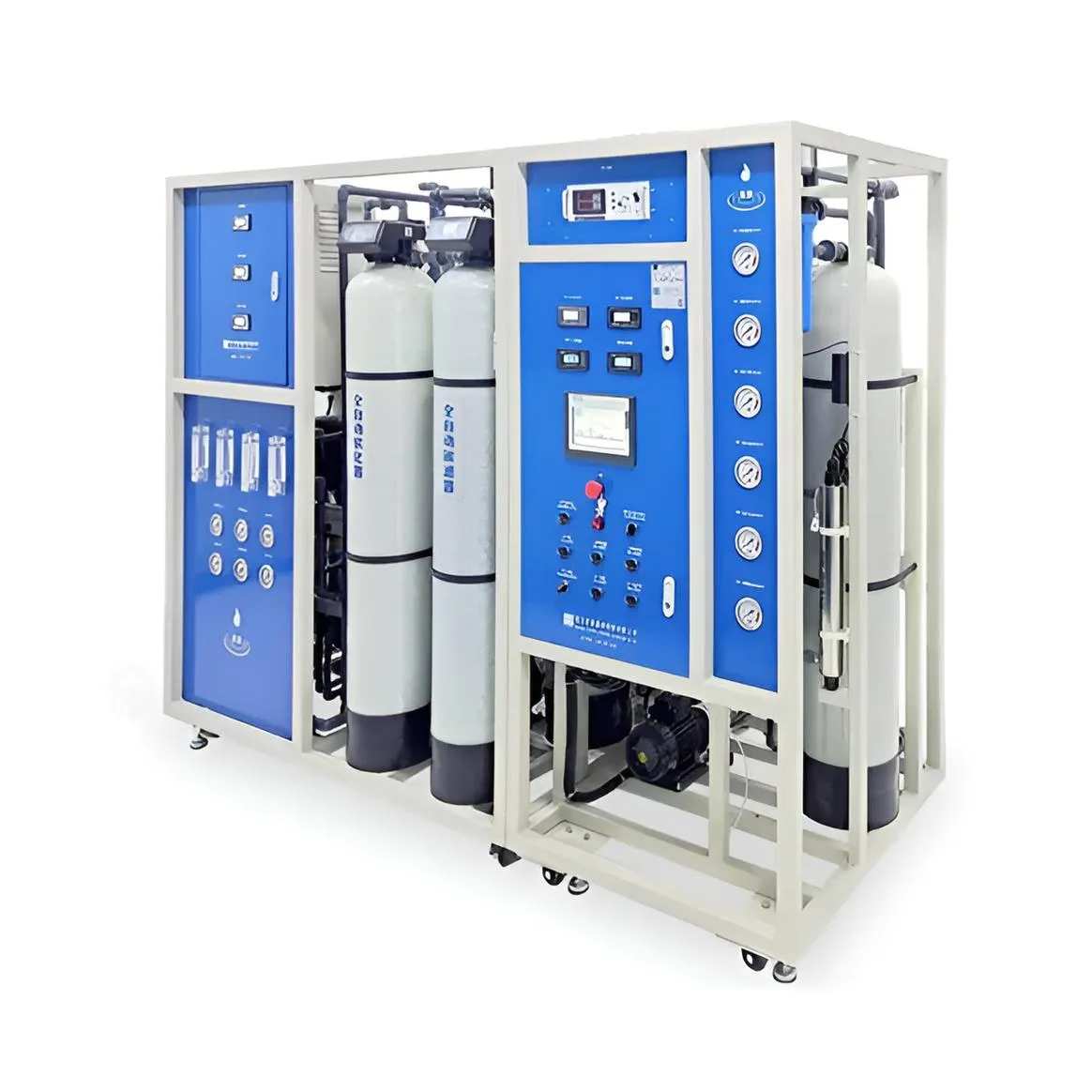
In addition to the main body, the electrodialysis unit also needs to be equipped with rectifiers, filters, acid washing facilities, water pumps, instruments, and other auxiliary equipment. For the convenience of users, our factory can provide a complete set of auxiliary equipment and instruments. The auxiliary equipment supporting with the electrodialysis unit is listed below.
Notes:
(1) Applicable to raw water with a salt content ≤ 800 mg/L. If the raw water salt content > 800 mg/L, the rectifier model needs to be adjusted according to the salt content.
(2) The desalination rate of the electrodialysis unit is calculated using a DDS-11A conductivity meter, which is supplied as a set.
(3) When using a concentrate circulation system, a concentrate tank and water pump are required. The concentrate tank can be a plastic water tank, with a volume approximately equivalent to 40% of the freshwater volume. V. Precautions
(1) Water pretreatment is one of the factors ensuring the normal operation of the electrodialysis unit. Therefore, necessary pretreatment must be carried out before the water enters the electrodialysis unit to ensure that the raw water quality meets the following indicators:
a: Turbidity: ≯3mg/L; b: Total iron content: <0.3mg/L;
c: Total manganese content: <0.1mg/L; d: Color: <15 degrees;
e: Oxygen consumption: <3mg/L (KMnO4); f: Water temperature: 5-40℃;
g: Pollution index: <7
(2) Note that when starting up, water must be turned on first, then electricity; when stopping, electricity must be turned off first, then water. It is strictly forbidden to stop water supply without stopping electricity.
(3) The ratio of fresh water flow rate to concentrated/electrode water flow rate should be adjusted appropriately. To prevent concentrated water leakage, the pressure of concentrated/electrode water can be appropriately reduced, generally by 0.2×9.8×104Pa. (4) Depending on the water quality, the electrodes of the electrodialysis unit should be replaced every 2-8 hours of operation.
(5) Do not place metal objects on the membrane stack to prevent short circuits.





