





Phone:
0086 28 87573647
+86 19150187139

101. What is the maximum permissible silica concentration in the feed water for a reverse osmosis membrane?
The maximum permissible silica concentration depends on temperature, pH, and the scale inhibitor. Generally, without scale inhibitors, the maximum permissible concentration in the concentrate is 100 ppm. Some scale inhibitors allow a maximum silica concentration of 240 ppm in the concentrate. Please consult your scale inhibitor supplier.
102. What is the effect of chromium on RO membranes?
Some heavy metals, such as chromium, can catalyze the oxidation of chlorine, leading to irreversible performance degradation of the membrane. This is because Cr6+ is less stable than Cr3+ in water. It seems that this destructive effect is stronger when oxidizing metal ions with higher valences. Therefore, the concentration of chromium should be reduced in the pretreatment stage, or at least Cr6+ should be reduced to Cr3+.
103. How to dechlorinate water?
The preferred method is the addition of sodium bisulfite. Other commonly used methods include activated carbon adsorption, but it should be noted that activated carbon can pulverize during dechlorination. In some industrial applications, ammonium bisulfite is used for dechlorination.
104. What kind of pretreatment is typically required for an RO system?
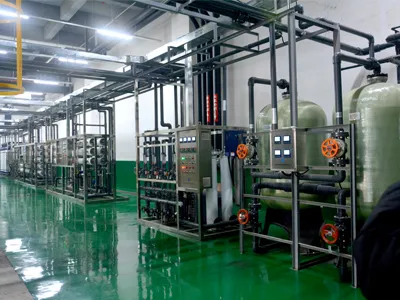
A typical pretreatment system consists of the following: coarse filtration (~80 microns) to remove large particles, addition of oxidants such as sodium hypochlorite, followed by fine filtration through a multi-media filter or clarifier, then addition of sodium bisulfite to reduce residual chlorine and other oxidants, and finally, a security filter installed before the high-pressure pump inlet. The security filter, as its name suggests, serves as a final safety measure to prevent accidental damage to the high-pressure pump impeller and membrane elements from large particles. Water sources with high levels of suspended particulate matter usually require a higher level of pretreatment to meet specified influent requirements; for water sources with high hardness, softening or the addition of acid and scale inhibitors is recommended; for water sources with high microbial and organic matter content, activated carbon or antifouling membrane elements are also necessary.
105. How are Dow FILMTEC membrane elements manufactured?
The process involves two steps: the first step is manufacturing the Dow FILMTEC™ FT30 flat sheet membrane; the second step is rolling the membrane sheet and other materials into spiral-wound membrane elements as required. Dow's highly automated, advanced, fully automated production line controls each step with a dedicated computer diagnostic system, making FILMTEC elements a renowned brand in the global membrane industry for their consistent performance, reliability, and long lifespan.
106. What pore size should be selected for the security filter cartridge in an RO system?
In most cases, a filtration accuracy of 5µm is chosen. However, for feed water with high colloid or silica content, a smaller pore size cartridge is recommended. Please refer to the relevant section of this manual for detailed instructions.
107. What are the unique features of Dow FILMTEC membrane elements?
Each membrane element uses a Dow FILMTEC™ FT30 membrane, recognized worldwide in the membrane industry for its widest operating pH range (2–11) and widest cleaning pH range (1–12). It is exceptionally robust, exhibiting consistently high separation performance over time.
The shorter membrane blades significantly reduce pressure uniformity throughout the membrane, resulting in more uniform water flux and improved fouling resistance.
Fully automated bonding technology ensures a precise, accurate, and uniform seal, enhancing the physical integrity of the membrane element.
Precise blade assembly technology allows for the accurate insertion of more blades, resulting in a higher effective membrane area while ensuring consistent membrane area across all elements. A wider feed channel is also used without sacrificing effective membrane area.
All these features result in systems using Dow membrane elements exhibiting the lowest failure rate, most stable performance, and minimal maintenance, achieving "the highest quality permeate at the lowest cost."
108. What is the warranty situation for Dow FILMTEC membrane elements?
We offer a globally unified three-year limited warranty.
109. Can Dow FILMTEC membranes remove trihalomethanes (THMs), carbon tetrachloride (CTC), and other low molecular weight chlorinated compounds?
Compounds containing these halogens, such as THMs and CTCs, are commonly found in wastewater, some contaminated groundwater, and water sources disinfected with chlorine. They have been proven to pose a health threat. They are medium molecular weight organic compounds. Dow FILMTEC™ RO membranes have extremely high removal rates for these compounds, and Dow FILMTEC NF membranes also have high removal rates.
110. How is pressure drop defined, and why is high pressure drop a problem?
Pressure drop is defined as the pressure loss between the feed water and concentrate of an element or pressure vessel. Under normal operating conditions, the pressure drop of each Dow FILMTEC™ element is 4–5 psi (0.3 bar).
As contamination accumulates within the components, the voltage drop will gradually increase. High voltage drop is a critical issue because it can cause telescope phenomena and reduce the system's operating efficiency and performance. The maximum permissible voltage drop for a housing containing 6-core components is 60 psi (4.2 bar).





