






Phone:
0086 28 87573647
+86 19150187139

Reverse osmosis is an indispensable and important component of ultrapure water systems. It effectively intercepts bacteria, heavy metals, organic matter, and other contaminants in the water; the impurity removal rate can reach 99%, making it the pretreatment step for ultrapure water systems. Because it directly intercepts bacteria, it is also easily contaminated. There are many types of reverse osmosis membrane fouling. So how do we usually determine this? Today, we'll introduce how to identify the type of fouling on the reverse osmosis membrane of an ultrapure water system.
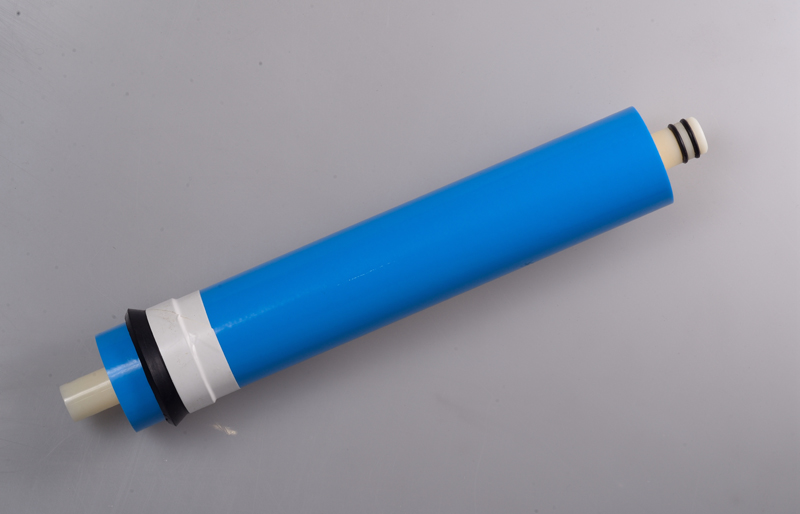
Reverse Osmosis Membrane
Identifying the type of fouling requires a comprehensive assessment of raw water quality, design parameters, fouling index, operating records, equipment performance changes, and microbiological indicators:
1. Colloidal Fouling: Colloidal fouling is typically accompanied by the following two characteristics: A. Rapid clogging of the microfilter during pretreatment, especially a rapid increase in pressure differential. B. SDI value is usually above 2.5.
2. Microbial Fouling: When microbial fouling occurs, the total bacterial count in both the permeate and concentrate of the RO equipment is relatively high, indicating a lack of proper maintenance and disinfection. Preventing damage to the ultrafiltration RO membrane performance is crucial. New reverse osmosis membrane elements are typically soaked in a 1% NaHSO3 and 18% glycerol aqueous solution and then stored in a sealed plastic bag. As long as the plastic bag remains intact, storage for about one year will not affect its lifespan or performance. Once the plastic bag is opened, it should be used as soon as possible to prevent adverse effects from NaHSO3 oxidation in the air. Therefore, the membrane should be opened before use whenever possible. After equipment commissioning, we used two methods to protect the membrane. After two days of trial operation (15-24 hours), maintain the equipment with a 2% formaldehyde solution; or after 2-6 hours of operation, maintain it with a 1% NaHSO3 aqueous solution (air in the equipment pipelines should be completely purged, leak-free, and all inlet and outlet valves closed). Both methods yield satisfactory results. The first method is more expensive and should be used for longer idle periods, while the second method is suitable for shorter idle periods.
3. Scale: This can be determined based on the raw water quality and design parameters. For carbonate-type water, if the recovery rate is 75% and scale inhibitors were added during the design phase, the LSI of the concentrate should be less than 1; without scale inhibitors, the LSI of the concentrate should be less than zero, and scale generally will not form.
4. A 1/4-inch PVC plastic tube can be inserted into the component to test performance changes in different parts of the component for assessment.
5. Determine the type of contamination based on changes in equipment performance.
6. Acid washing (such as citric acid or dilute HCl) can be used. The calcium scale can be determined based on the cleaning effect and the cleaning solution, and further confirmed through cleaning solution composition analysis.
7. Chemical analysis of the cleaning solution: Take three samples—raw water, original cleaning solution, and cleaning solution—for analysis. After determining the type of contamination, cleaning can be performed according to the method in step 1, followed by disinfection before use. When the type of contamination cannot be determined, the cleaning process typically involves cleaning (3) + disinfection + 0.1% HCl (pH 3).





