








Phone:
0086 28 87573647
+86 19150187139

Oily substances contaminate cation exchange resins. Due to their location in the water treatment system, cation exchange resins are susceptible to oil contamination. Oil can be introduced through the inlet water of the ion exchanger, or through leaks in the pressurized air or pump seals. Oil forms a film on the resin surface, severely hindering its exchange capacity. Oil-contaminated resin turns brown, and in severe cases, black. These contaminants cause resin clumping, disrupting normal water flow and causing "channeling," leading to premature resin failure. Oil contaminants adhering to the resin increase its buoyancy, easily causing resin loss during backwashing. Using alkaline cleaning agents based on nonionic surface-active agents is an effective way to solve this problem. For cation exchange resins, recovery can be achieved by disconnecting the cation bed from the system and then reactivating it, or by adding a cleaning agent to the backwash water. It is important to note that if the cation exchange resin is operating in its hydrogen form, it must be deactivated by passing it through a sodium chloride solution before recovery. This prevents the acid solution exchanged from the hydrogen-form resin from causing adverse effects on the alkaline cleaning agent during recovery.
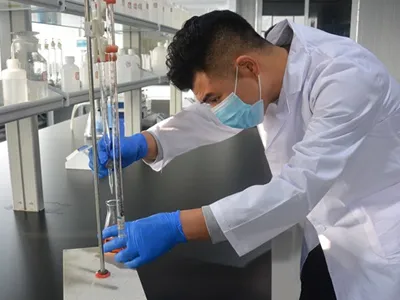
The method for determining if the cation exchange resin is contaminated with oil is as follows: Place a small amount of resin in a test tube, add desalted water, and shake for 1 minute. If a rainbow-colored oil film appears on the water surface, the resin is contaminated with oil.





