





Phone:
0086 28 87573647
+86 19150187139

Phase Inversion Method for Ultrafiltration Membranes
Currently, most commercially available ultrafiltration membranes are prepared using polymer materials via the phase inversion method. Commonly used materials include: polysulfone/polyethersulfone/sulfonated polysulfone; polyvinylidene fluoride; polyacrylonitrile (and related bulk copolymers); cellulose (such as cellulose acetate); polyimide/polyetherimide/polyether fatty amide; and polyetheretherketone.
The preparation of asymmetric membranes using the phase inversion method generally involves the following three steps: First, the polymer is dissolved in a suitable solvent to prepare a casting solution with a polymer content of 10-30%; second, this solution is cast into a liquid membrane 100-500 micrometers thick; finally, the membrane is immersed in a non-solvent to gel or placed in air to allow the solvent to evaporate, thus forming a membrane. For most polymer membranes, water or an aqueous solution can be used as the gel solution. During the gelation process, the homogeneous polymer solution precipitates into two phases: the polymer-containing solid phase forms the membrane portion, while the solvent-containing liquid phase forms the membrane pores. The film formation rate and pore size are related to the gelation process. The pores initially formed on the liquid film surface are smaller, while those formed later in the liquid film layer are much larger, thus creating an asymmetric membrane. Methods for preparing polymer membranes using phase inversion include thermogelation of two-component or multi-component homogeneous solutions, evaporation of volatile solvents from three-component polymer solutions, and addition of non-solvents to homogeneous polymer solutions. Besides these three phase inversion membrane preparation methods, there is also a phase inversion membrane preparation process supported by polymers, with the potential application of porous support membranes for composite membranes.
The following example illustrates the manufacturing process of a polyethersulfone ketone (PPESK) membrane containing a diazanaphthone structure: The dried membrane material is mixed and dissolved with solvent and additives in a certain proportion, allowed to stand, and degassed. Under dust-free conditions and room temperature of 18 degrees Celsius and relative humidity of 35%, the prepared casting solution is poured onto a glass plate and scraped to a certain thickness using a glass doctor blade. After 25 seconds, it is transferred to 6 degrees Celsius water for immersion and membrane formation. After complete solvent exchange, rinse and set aside for use.
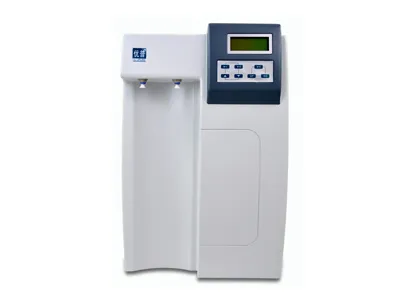
Sichuan Youpu Ultrapure Technology's Youpu ultrapure water systems are comparable in quality to imported products, but at only half the price. New and existing customers are welcome to inquire!





