






Phone:
0086 28 87573647
+86 19150187139

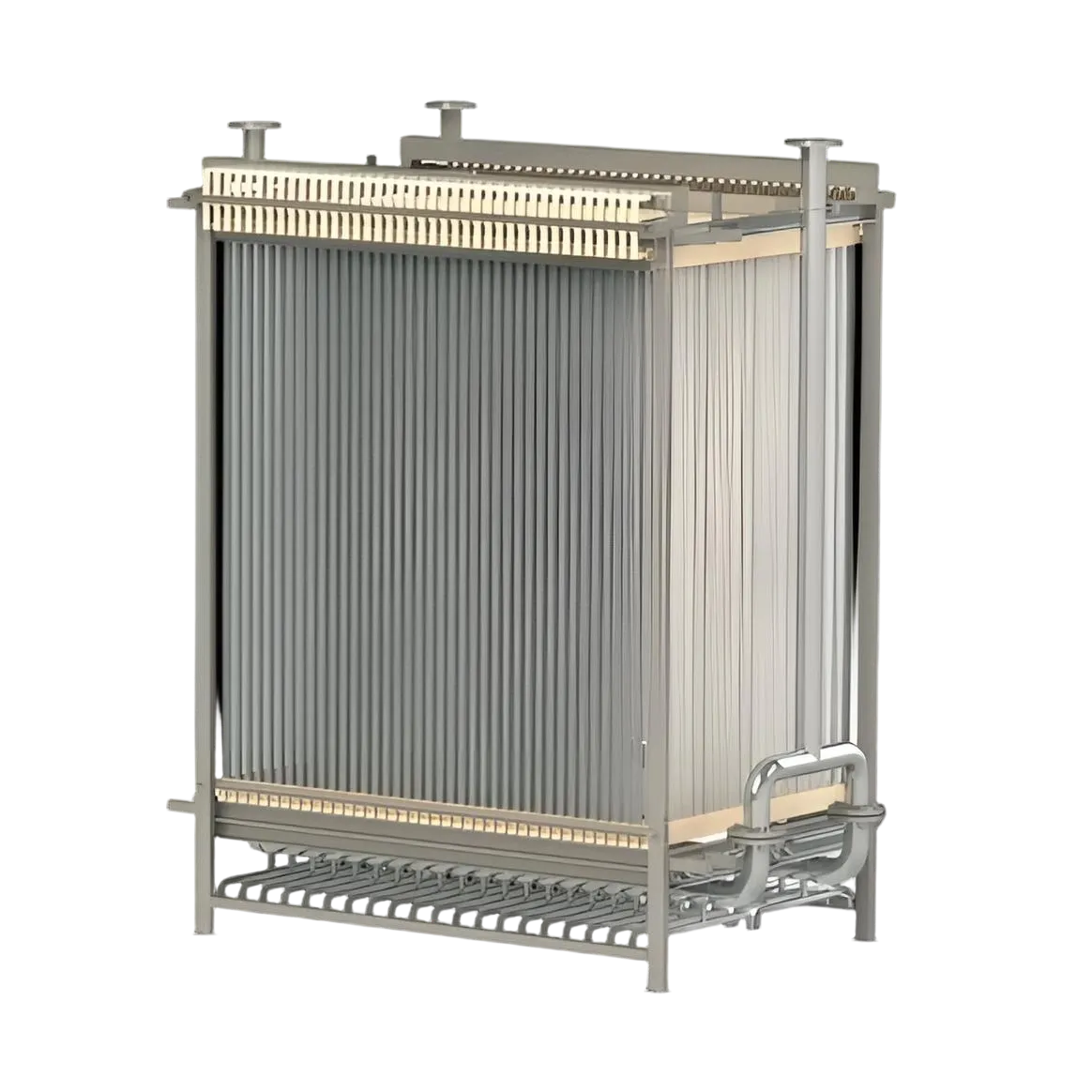
In pure water treatment applications, ultrafiltration membranes can be used as pretreatment or advanced treatment. They are commonly used as a means of deep purification in widely applied water treatment processes. Due to the characteristics of hollow fiber ultrafiltration membranes, certain pretreatment requirements exist for the water supply. Suspended solids, colloids, microorganisms, and other impurities in the water can adhere to the membrane surface, causing fouling. Because ultrafiltration membranes have a high water flux, the concentration of trapped impurities on the membrane surface increases rapidly, resulting in concentration polarization. More seriously, very fine particles can enter the membrane pores and clog the water channels. Additionally, microorganisms and their metabolic products produce sticky substances that also adhere to the membrane surface. These factors all lead to a decrease in the permeability of the ultrafiltration membrane and changes in its separation performance. Furthermore, there are certain limits on the temperature, pH value, and concentration of the ultrafiltration water supply. Therefore, appropriate pretreatment and water quality adjustment are necessary for ultrafiltration water supply to meet the required conditions, extend the service life of the ultrafiltration membrane, and reduce water treatment costs.
I. Microbial (Bacteria, Algae) Elimination:
When water contains microorganisms, some of the trapped microorganisms may adhere to the pretreatment system, such as the media surface of a multi-media filter, after entering the pretreatment system. When these microorganisms adhere to the ultrafiltration membrane surface, they grow and multiply, potentially completely clogging the micropores and even the hollow fiber lumen. The presence of microorganisms is extremely harmful to hollow fiber ultrafiltration membranes. Removing bacteria and algae from the raw water is crucial. In water treatment processes, oxidants such as NaClO and O3 are typically added at concentrations of 1–5 mg/L. Ultraviolet sterilization can also be used. In the laboratory, hollow fiber ultrafiltration membrane modules can be sterilized by circulating hydrogen peroxide (H2O2) or potassium permanganate solution for 30–60 minutes. Microbial elimination treatment only kills microorganisms; it does not remove them from the water, but merely prevents their growth.
II. Reducing Inlet Water Turbidity:
When water contains suspended solids, colloids, microorganisms, and other impurities, it will produce a certain degree of turbidity. This turbidity obstructs the transmission of light; this optical effect is related to the amount, size, and shape of the impurities. Water turbidity is generally measured using turbidity, with 1 mg/L SiO2 producing 1 degree of turbidity. A higher degree indicates a greater amount of impurities. Different sectors have different requirements for water supply turbidity. For example, for general domestic water, the turbidity should not exceed 5 degrees. Since turbidity measurement involves passing light through raw water and measuring the amount, color, and opacity of light reflected by particles in the water, the size, number, and shape of the particles all affect the measurement. The relationship between turbidity and suspended solids is random. Turbidity cannot reflect particles smaller than a few micrometers.
III. Removal of Suspended Solids and Colloidal Matter:
For impurities with a particle size larger than 5 μm, a filter with a 5 μm filtration precision can be used for removal. However, for fine particles and colloids between 0.3 and 5 μm, conventional filtration techniques are difficult to use. Although ultrafiltration has an absolute removal effect on these particles and colloids, it is extremely harmful to hollow fiber ultrafiltration membranes. In particular, colloidal particles carry an electric charge and are aggregates of molecules and ions. The stability of colloids in water is mainly due to the mutual repulsion of colloidal particles with the same charge. Adding a charged substance (flocculator) with the opposite charge to the colloidal particles to the raw water breaks the stability of the colloidal particles, neutralizing them and causing the dispersed colloidal particles to aggregate into large clumps, which can then be easily removed by filtration or sedimentation. Commonly used flocculants include inorganic electrolytes such as aluminum sulfate, polyaluminum chloride, ferrous sulfate, and ferric chloride; and organic flocculants such as polyacrylamide, sodium polyacrylate, and polyethyleneimine. Because organic flocculants, being high-molecular-weight polymers, can neutralize the surface charge of colloidal particles, forming hydrogen bonds and "bridging" to complete coagulation and sedimentation in a short time, thus significantly improving water quality, high-molecular-weight flocculants have shown a trend of replacing inorganic flocculants in recent years.
When adding flocculants, coagulant aids can be added, such as pH adjusters (lime, sodium carbonate), oxidants (chlorine and bleaching powder), stabilizing agents (water-soluble precipitate), and adsorbents (polyacrylamide), to improve the coagulation effect.
IV. Removal of Soluble Organic Matter:
Soluble organic matter cannot be completely removed by flocculation sedimentation, multi-media filtration, or ultrafiltration. Currently, oxidation or adsorption methods are mostly used.
(1) Oxidation Method: Oxidation using chlorine or sodium hypochlorite (NaClO) is effective in removing soluble organic matter. Ozone (O3) and potassium permanganate (KMnO4) are also good oxidants, but their cost is slightly higher. (2) Adsorption method: Activated carbon or macroporous adsorption resin can effectively remove soluble organic matter. However, for alcohols, phenols and other substances that are difficult to adsorb, oxidation is still required.





