







Phone:
0086 28 87573647
+86 19150187139

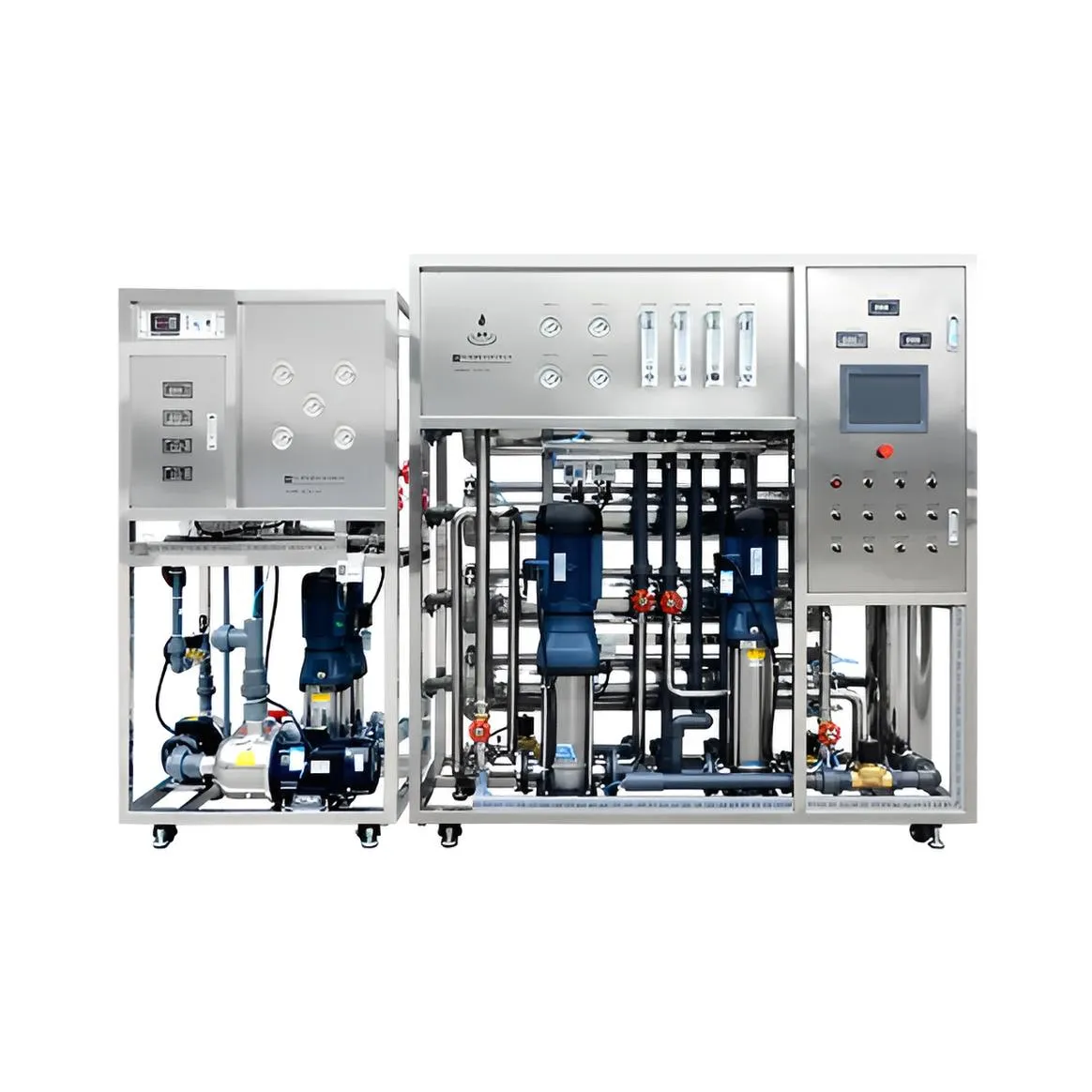
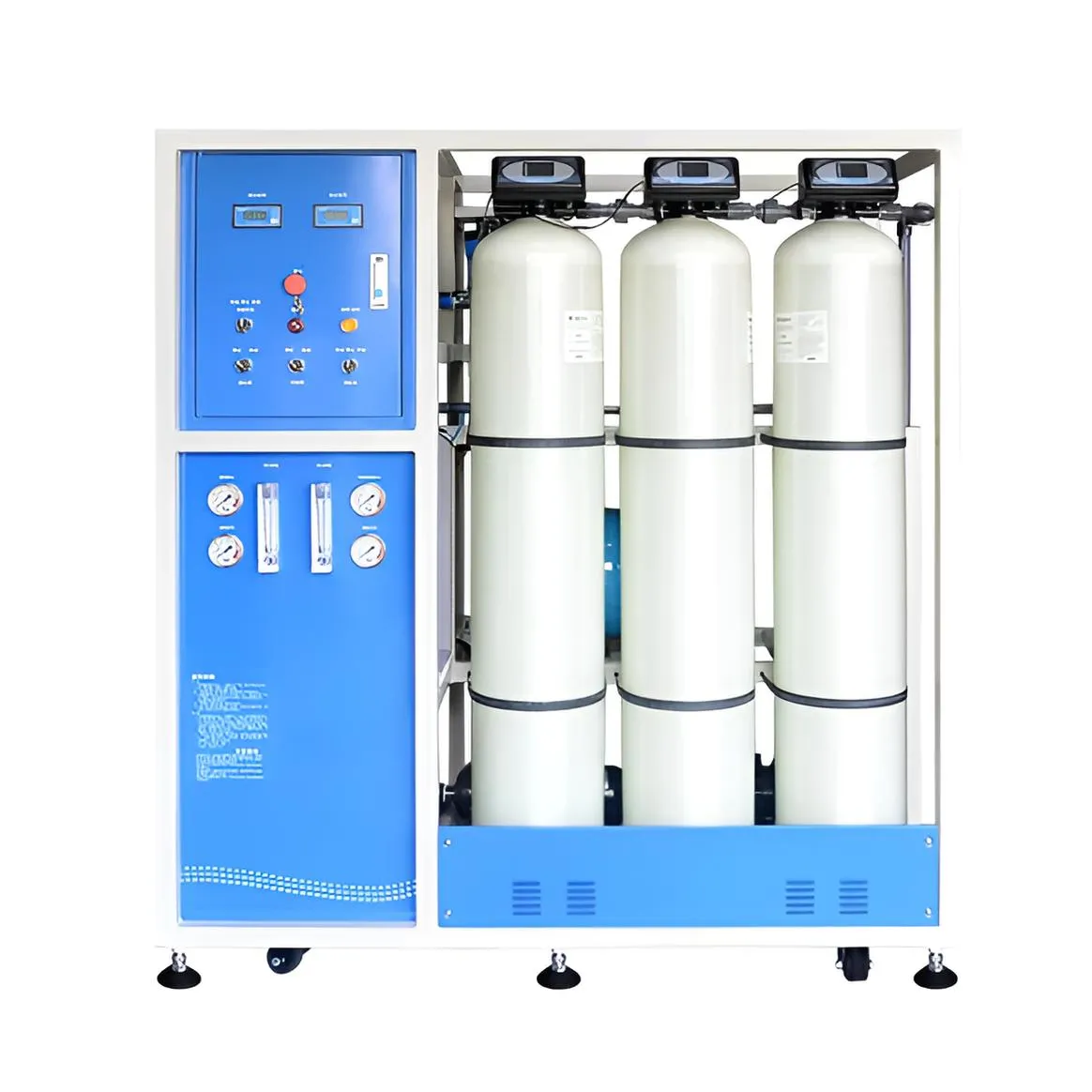
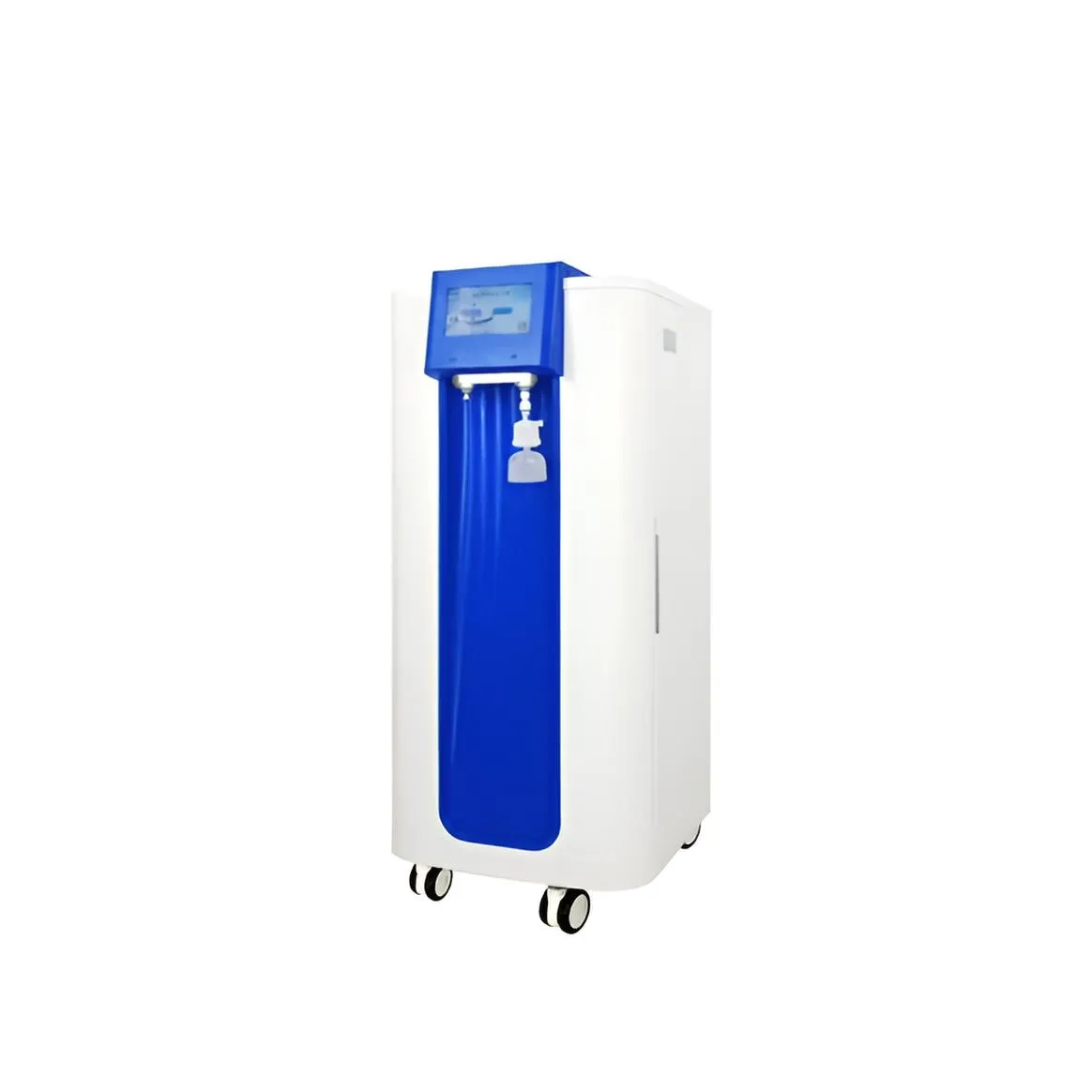
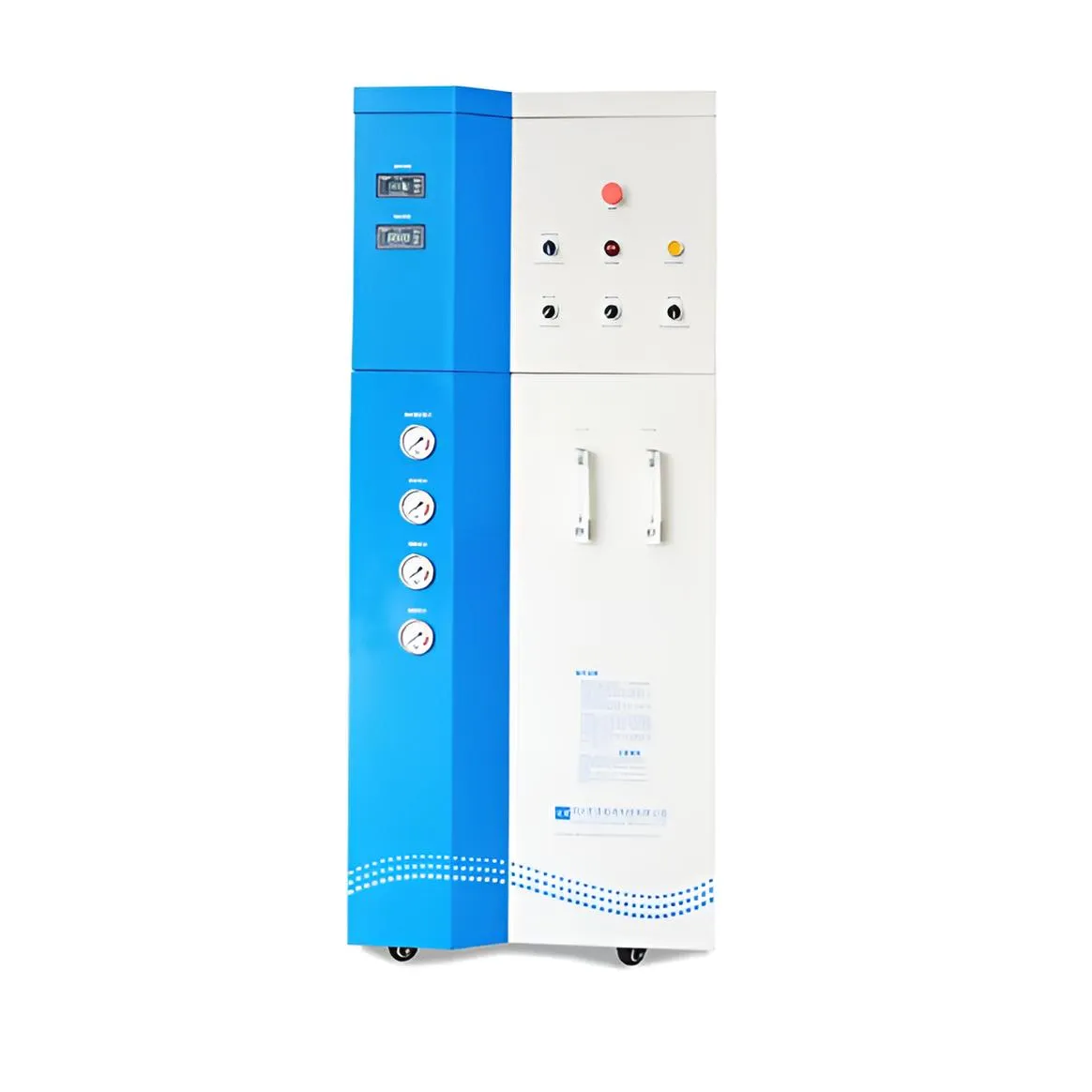
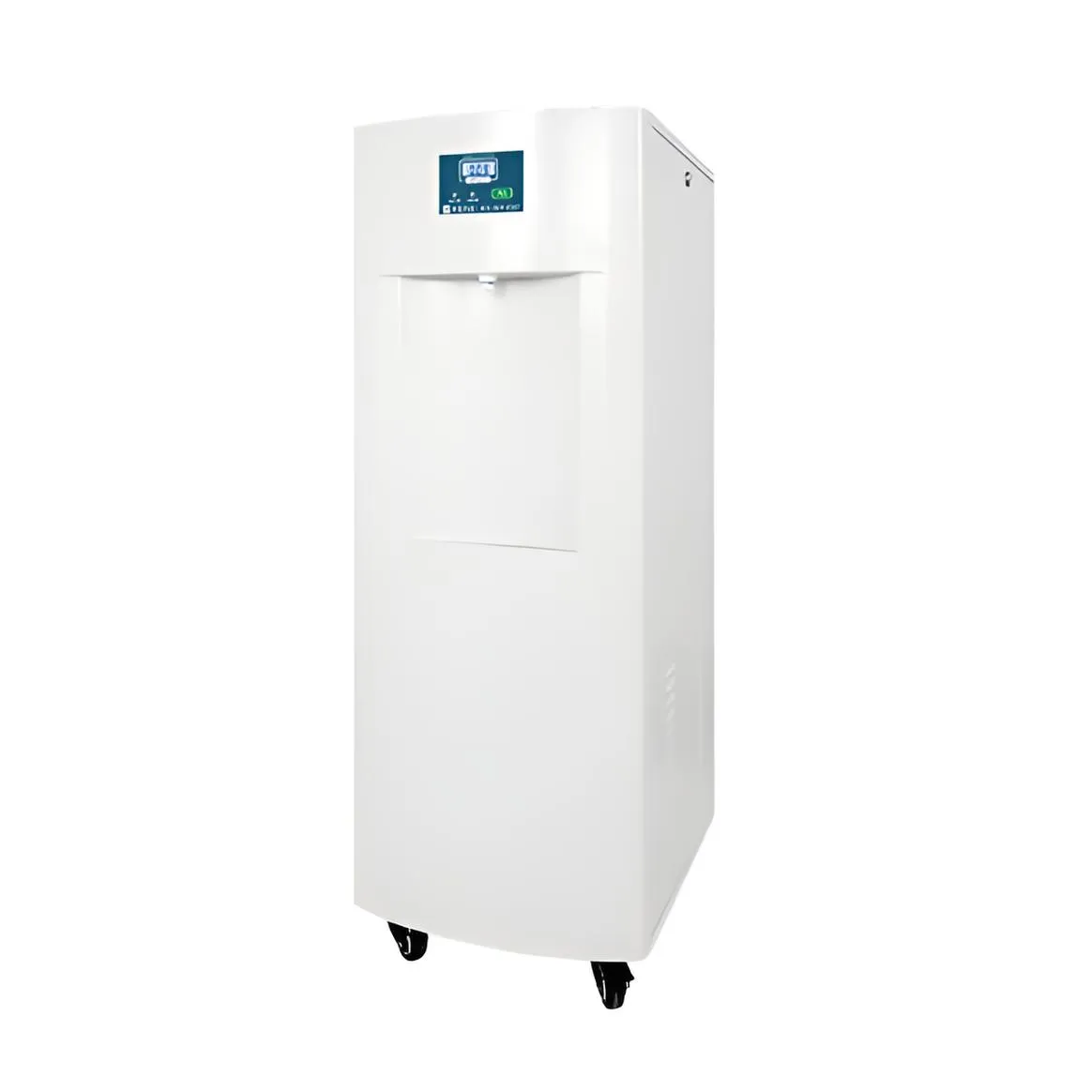
Ultrapure water systems are widely used in laboratories, hospitals, and industrial production. The filter is a crucial component of an ultrapure water system. How should one choose and maintain a filter during normal use?
1. Filters
Filter sizes vary depending on the volume of water being filtered. The most common types are sand filters, non-woven fabric filters, and PP fiber filters. Non-woven fabric and PP fiber filters are typically 10 inches and 20 inches in length, respectively. In both cases, the diameter of the filter element used as the filter should generally be approximately 25µm.
The function of a coarse filter is to remove large-particle suspended impurities from the water, preventing these impurities from entering the activated carbon filter and coating the activated carbon surface, thus preventing the capillary structure of the activated carbon from adsorbing impurities in the water.
As the amount of retained solid impurities increases, the coarse filter's capacity increases dramatically, and the water flow gradually decreases. If not addressed promptly, the water flow requirements of subsequent treatment processes cannot be met. For sand filters, backwashing should be performed promptly after the pressure reaches a certain level. During backwashing, some fine sand is flushed out of the filter, so sand should be added to the sand filter periodically. After repeated backwashing, the degree of breakage increases, and each backwash cannot achieve 100% cleaning. The remaining silt in the sand gradually increases, and the sand layer appears to "knot." At this point, the sand layer should be replaced. For non-woven fabric or PP fiber filter cartridges, it is usually difficult to flush water after the filter pores are clogged. The filter cartridge must be replaced regularly.
2. Activated Carbon Filter
The main function of an activated carbon filter is to remove large molecular organic matter, iron oxide, and residual chlorine. Organic matter, residual chlorine, and iron oxides are easily poisoned by ion exchange resins, while residual chlorine and cationic surfactants not only poison the resin but also damage the membrane structure and render the reverse osmosis membrane ineffective.
Activated carbon filters utilize the abundant capillary pores of activated carbon to adsorb and filter large molecular organic matter, residual chlorine, iron oxide, and other colloids in water. This adsorption is irreversible, meaning that activated carbon has a certain saturation adsorption capacity. After adsorption saturation, activated carbon loses its adsorption performance and cannot be washed away by backwashing. Furthermore, after activated carbon adsorbs organic matter, it provides abundant nutrients for bacteria, allowing bacteria to multiply within the activated carbon filter, and increasing the microbial content in the water through activated carbon filtration.
Regular backwashing should be performed before the activated carbon becomes saturated to remove large amounts of bacterial colonies and suspended solids from its surface. Once the activated carbon is saturated, it should be replaced immediately; otherwise, irreparable damage to the reverse osmosis membrane will occur.
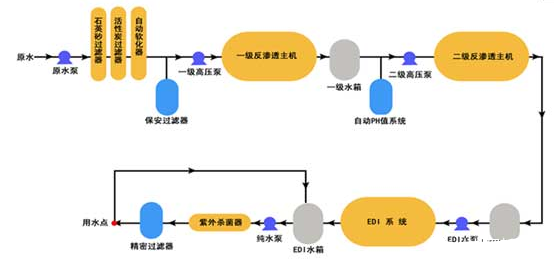
3. Water Softener
The function of a water softener is to remove calcium and magnesium ions from water and soften it. Without a water softener or if it malfunctions, the concentration of calcium and magnesium salts will increase dramatically, forming water-soluble precipitates on the surface of the reverse osmosis membrane. This clogs the pores of the reverse osmosis membrane and shortens its lifespan.
Water softeners used for pure water typically use sodium-type cation exchange resin. The resin is exchanged and saturated, then regenerated with salt. After several years of use, the resin becomes increasingly damaged, and its softening capacity gradually diminishes. Especially when the activated carbon filter is saturated and the activated carbon is not replaced in time, iron, organic matter, and residual chlorine in the raw water will directly enter the water softener, causing resin poisoning. Once the resin is poisoned, it cannot be regenerated. The resin should be replaced when its working exchange capacity is significantly reduced.
Reverse osmosis is the core component of a pure water system. Raw water that has been pretreated and meets the requirements of the reverse osmosis membrane is then used for reverse osmosis.
Maintaining proper reverse osmosis is crucial to ensuring pure water quality. During the operation of the reverse osmosis membrane, the salt concentration on the membrane surface is higher than the salt concentration of the bulk fluid. This phenomenon is called concentration polarization. The result of concentration polarization is the precipitation of some salts.





