






Phone:
0086 28 87573647
+86 19150187139

[Abstract]: For groundwater contaminated with low concentrations of ammonia nitrogen, this study experimentally screened different combinations of reaction media to achieve nitrogen removal through physical adsorption and biological nitrification-denitrification.
Results showed that under the conditions of an influent ammonia nitrogen concentration of 10 mg/L and a flow rate of 0.5 m/d, the simulated column achieved an ammonia nitrogen removal rate of over 98%, without any increase in nitrite or nitrate concentrations. After passing through the oxygen-releasing column, dissolved oxygen levels increased from 2 mg/L to over 10 mg/L, indicating that the oxygen-releasing material provided the aerobic environment required by nitrifying bacteria. The aerobic column was filled with biofilm-forming ceramic particles and zeolite, which has a strong adsorption capacity for ammonia nitrogen. The combined use of these two materials achieved ammonia nitrogen removal through a synergistic effect of biological nitrification and physical adsorption, with biological action accounting for approximately 50% of the total ammonia nitrogen removal. The subsequent anaerobic reaction column is filled with sponge iron for deoxygenation and utilizes pine bark particles as a carbon source to create conditions for the growth of denitrifying bacteria. The nitrate nitrogen concentration can be reduced from 10 mg/L to below 5 mg/L, achieving the removal of nitrates produced in the aerobic reaction stage and avoiding secondary pollution of groundwater.
Currently, ammonia nitrogen pollution in my country's aquatic environment is becoming increasingly serious. Polluted river water often causes groundwater pollution when it seeps into the groundwater. Taking the Hunhe River in Shenyang as an example, the average ammonia nitrogen concentration at a downstream section reaches above L9;a+, posing a significant threat to the water quality safety of downstream riverside groundwater sources. Effective treatment measures for non-point source pollution include controlling the diffusion and transport intensity of pollutants and, as far as possible, treating pollutants in situ.
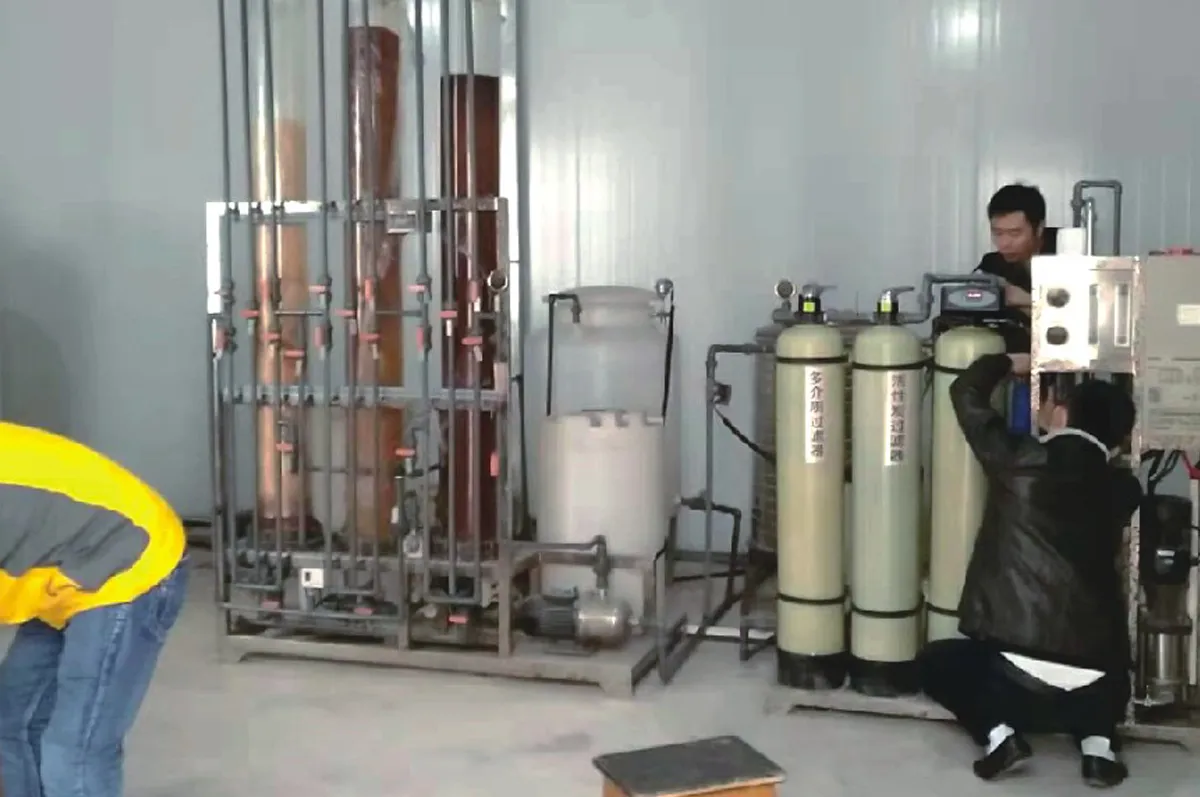
This research design aims to remove nitrogen pollution from groundwater by ultimately converting ammonia nitrogen into nitrogen gas through physical adsorption and biological nitrification-denitrification. In the experiment, the oxygen-releasing column was filled with a self-developed oxygen-releasing material to replenish dissolved oxygen in the water. This material features a slow oxygen release rate, a long oxygen release cycle, and no significant alteration to the system environment. The aerobic column used bio-ceramic particles, which are easy for microorganisms to attach to, and zeolite, which has a strong ion exchange capacity for ammonium, to ensure a high removal rate of ammonia nitrogen.
A deoxygenation column filled with sponge iron was connected after the aerobic column. The sponge iron reacts with oxygen in the water to achieve chemical reduction deoxygenation, transforming the water body from an aerobic to an anaerobic environment. The subsequent anaerobic column was filled with pine bark as a solid carbon source to promote the growth of denitrifying bacteria and their denitrification, avoiding secondary pollution caused by nitrates produced during the biological nitrification process in the aerobic stage.





