


Phone:
0086 28 87573647
+86 19150187139

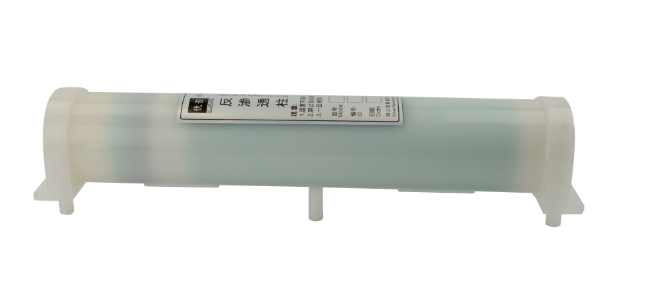
Membrane fouling refers to the phenomenon where particulates, colloidal particles, or large solute molecules in the feed solution interact physically and chemically with the membrane, or where concentration polarization causes the concentration of certain solutes on the membrane surface to exceed their solubility, or where mechanical action causes adsorption and deposition on the membrane surface or within the pores, resulting in reduced pore size or blockage. This leads to irreversible changes in permeate flow and separation characteristics. The flux decline and reduced separation capacity caused by the adsorption of pollutants, especially large molecules such as proteins, on the membrane surface and within the pores are the main causes of membrane flux decline. However, flux decline caused by membrane fouling is often mixed with reversible flux decline caused by concentration polarization, further reducing membrane separation efficiency.
During operation of a reverse osmosis system, prolonged contact between the membrane and wastewater (metal ions, microorganisms, poorly soluble precipitates, organic pollutants, biological slime, colloids, grease, etc.) causes membrane fouling, significantly reducing membrane flux and separation performance, and increasing pressure drop. The main reasons include the following:
1) Concentration Polarization
In a reverse osmosis desalination system, the selective permeability of the membrane allows water molecules to continuously pass through the membrane from the high-pressure side, while solute molecules remain in the original solution. This results in a concentration difference between the feed solution on the membrane surface and the inlet feed solution, which can become very high in severe cases. This phenomenon is called concentration polarization. Concentration polarization increases the osmotic pressure of the feed solution and reduces the effective driving force, leading to a decrease in water permeability and desalination rate.
2) Ion Scaling
Salts with low solubility products, such as CaCO3, CaSO4, BaSO4, SrSO4, CaF2, and SiO2, may precipitate during reverse osmosis due to concentration exceeding their solubility product, forming deposits that remain on the membrane surface and in the feed channels, forming scale. J.H. Bruus et al. found that extracting Ca2+ from sludge led to an increase in the number of small particles and filtration resistance.
3) Metal Oxide Deposition
Some well water sources, especially those in the brackish water range containing low-valent iron and manganese ions, have a certain reducing property. The main reason for membrane fouling in such water sources is the formation of colloidal particles from iron, aluminum, and manganese on the membrane surface. Iron oxidation requires a low pH, leading to frequent iron fouling in reverse osmosis systems. Possible causes of soluble ferrous and ferric iron deposition on the membrane surface include: oxygen entering the feed water containing ferrous iron; the formation of FeCo3 from high-alkalinity water; the reaction of iron with silicon to form insoluble ferric silicate; oxidation by iron-reducing bacteria, which exacerbates biofilm growth and iron scale deposition; colloidal iron formed by the conversion of iron-containing flocculants; and the characteristic manifestations of metal fouling by iron, aluminum, and manganese include decreased permeate flow and increased pressure differential.
4) Formation of Biological Sludge
When the membrane surface is covered with vigorous microbial sludge, the salts removed by the membrane become trapped in the sludge layer, making them difficult to wash away by water. This provides abundant nutrients for microbial reproduction. Simultaneously, the scale inhibitors (such as polymaleic acid, aminotrimethylphosphonic acid, etc.) and water softeners added during the pretreatment of reverse osmosis feed water further promote microbial growth. While dissolved organic and inorganic substances and particulate matter can be removed through effective pretreatment, proliferating microbial particles, even if only 0.01% remain after pretreatment, can still multiply using biodegradable substances in the water. This is one of the main reasons why biological sludge causes pollution in any system.
5) Colloidal Contamination
Groundwater and surface water contain substances such as iron, aluminum, silicon, and organic matter. These substances, along with coagulants, flocculants, and scale inhibitors added during pretreatment, form colloidal deposits on the membrane surface, causing colloidal contamination. Silicate colloids in water will hydrolyze to form Si(OH)4, and under certain conditions, undergo a polymerization reaction: mSi(OH)4-(SiO2)m+2mH2O to form SiO2 colloidal nuclei, which then undergo stepwise ionization, releasing H+ to form negatively charged colloids.
Colloid fouling is difficult to treat because it carries the same charge, is relatively stable, does not easily settle, and easily fouls the membrane, leading to a decrease in water flux. This tendency is generally evaluated using the Solids Influenced Discharge Index (SDI). Typically, when SDI < 3, this type of fouling does not occur on the membrane surface; when SDI > 3, fouling will occur.
6) Water Hammer Phenomenon
For reverse osmosis systems, due to improper design and the initial commissioning phase, a large amount of air may be present in the membrane housing. When the liquid to be treated enters the membrane housing instantaneously, the air is compressible and cannot be completely expelled instantly. When the air reaches a certain pressure inside the membrane housing, it will suddenly burst and release, causing the reverse osmosis molecules to collide, compress, and move within the membrane housing, resulting in the "water hammer" phenomenon. In reverse osmosis systems, water hammer causes irreversible damage to the reverse osmosis membrane elements.
7) Suspended Particulate Contamination
When the security filter has a "short circuit" or defect causing leakage of filter media, corrosion debris, and foreign objects (such as small core fibers), or when the initial flushing of the reverse osmosis system is incomplete, the membrane element may become contaminated, leading to blockage of the feed channel and the formation of amorphous deposits on the membrane surface. This situation is relatively rare.
8) Contamination Caused by Other Factors
Carbon compounds and silicone-based oils and greases can coat the membrane surface, causing contamination; membrane hydrolysis, organic solvents, and oxidizing agents can also cause fundamental changes to the membrane material.
The above are some of the main causes of reverse osmosis membrane fouling, listed by Sichuan Youpu Ultrapure Technology. For more information, please call our 24-hour nationwide customer service hotline 400-884-6567.