









Phone:
0086 28 87573647
+86 19150187139

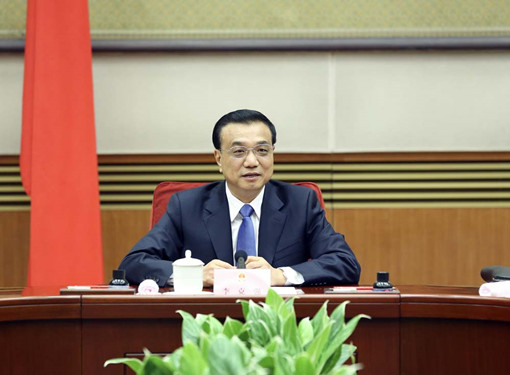
Premier Li Keqiang chaired an executive meeting of the State Council on June 1, which focused on strengthening the protection of children in difficult circumstances and providing them with more care and assistance; determining measures to improve the management of central government-funded scientific research project funds to further stimulate the innovation and creativity of scientific researchers; and deciding to cancel another batch of professional qualification licenses and certifications to continuously lower the threshold for employment and entrepreneurship.
The meeting pointed out that thoroughly implementing the spirit of the National Science and Technology Innovation Conference, forming a dynamic science and technology management and operation mechanism, promoting the reform of "streamlining administration, delegating power, and improving services" in the scientific research field, and further mobilizing the enthusiasm and creativity of scientific researchers are of great significance for implementing the innovation-driven development strategy, promoting mass entrepreneurship and innovation, fulfilling the tasks of "reducing overcapacity, destocking, deleveraging, reducing costs, and strengthening weak links," cultivating new growth drivers, enhancing endogenous development momentum, and moving towards becoming an innovative country and a world-class science and technology power.
The meeting determined the following: First, simplify the budget preparation for central government-funded scientific research projects, delegating the right to adjust the budget for most items in direct costs to the project undertaking units. Remaining funds for the project year can be carried over to the next year, and the final surplus funds can be retained by the project undertaking units according to regulations. Second, significantly increase the proportion of personnel expenses. The following measures will be implemented: First, the proportion of indirect costs will be increased. Performance-based expenditures for personnel incentives will be increased from a maximum of 5% to 20% of direct costs after deducting equipment purchase costs. Second, there will be no limit on the proportion of labor costs; graduate students, postdoctoral fellows, and hired researchers and research assistants participating in projects can all receive labor costs according to stipulated standards. Third, travel and meeting management will not be simply modeled after government agencies and civil servants. Central universities and research institutes can reasonably study and formulate travel expense management methods and determine the scale and expenditure standards for business meetings based on their work needs. Fourth, the management of scientific research equipment procurement will be simplified. Central universities and research institutes can independently procure projects within the centralized procurement catalog and select review experts. A registration system will be implemented for imported equipment. Fifth, the autonomy of central universities and research institutes in infrastructure projects will be reasonably expanded, and procedures for land use and environmental impact assessments will be simplified. Projects using their own funds and not applying for government investment will be changed from approval to registration. Simultaneously, equity incentive policies will be implemented and improved, a research financial assistant system will be established, and various inspections and reviews will be streamlined. Universities and research institutions should strengthen their self-discipline, improve their internal control mechanisms, and ensure they can effectively manage and control the industry to create a better research environment.
The meeting pointed out that canceling unnecessary occupational qualification licenses and certifications is an important measure to reduce institutional transaction costs and promote supply-side structural reform. It also creates favorable conditions for college graduates to find employment and start businesses, and for workers transitioning to other jobs during capacity reduction. Building on the cancellation of 272 occupational qualification licenses and certifications in five batches over the past two years, the meeting decided to cancel another 47 occupational qualifications, including bidding specialists, property managers, market administrators, and florists. This brings the total number of occupational qualifications set by various departments to more than 50% lower than at the beginning of this government's term. The next step is to continue canceling occupational qualifications while simultaneously publishing and implementing a national occupational qualification directory. No occupational qualifications outside the directory may be licensed or certified, and those within the directory, except for entry-level qualifications, may not be linked to employment or entrepreneurship.





