

Phone:
0086 28 87573647
+86 19150187139

According to existing industry standards, laboratory pure water can be classified into four conventional grades: pure water, deionized water, Class II pure water, and ultrapure water. Different grades of pure water have different purity indicators and are suitable for different experimental scenarios.
1. Pure Water: The lowest level of purification, typically with a conductivity between 1-50 μS/cm. It can be produced using methods such as single weakly basic anion exchange resin and reverse osmosis.
2. Deionized Water: Conductivity is typically between 1.0-0.1 μS/cm, with a higher degree of purification than pure water.
3. Class II Pure Water: Even lower conductivity, suitable for most routine experiments.
4. Ultrapure Water: Also known as Class I water, the highest purity level, with a resistivity reaching 18.2 MΩ·cm (25℃), suitable for high-precision analytical instruments such as high-performance liquid chromatography (HPLC).
Chinese National Standards
The Chinese National Standard GB/T 6682-2008 specifies the classification standards for water used in analytical laboratories, including quality requirements for Grade I, Grade II, and Grade III water. This standard applies to test water used in chemical analysis and inorganic trace analysis.
GB/T 6682-2008 details the technical requirements for different grades of water, including indicators such as pH value, conductivity, resistivity, oxidizable substances, absorbance, evaporation residue, and soluble silica.
International Standards
ISO 3696:1995: The International Organization for Standardization (ISO) specification for water used in analytical laboratories, providing specifications and test methods for laboratory water. This standard includes three grades: Grade I (ultrapure water), Grade II, and Grade III.
ASTM D1193: A standard developed by the American Society for Testing and Materials (ASTM), providing specifications and test methods for laboratory water.
NCCLS: The International Committee on Clinical Trial Standards has also developed relevant standards.
1. Resistivity: Resistivity is an important indicator for measuring the electrical conductivity of laboratory water, measured in MΩ·cm. The resistance gradually increases as the amount of inorganic ions in the water decreases. The standard resistivity of laboratory ultrapure water is 18.2 MΩ·cm (25℃).
2. Total Organic Carbon (TOC): Total organic carbon is the total amount of carbon present in water in various organic forms, including organic matter easily oxidized by common strong oxidants and organic matter requiring special oxidation methods. The level of TOC directly affects the accuracy of experimental results.
3. Particulate Matter: Particulate matter refers to substances other than gases that are dispersed in water as non-liquid substances, forming a heterogeneous mixture [0]. These particles may damage precision instruments or interfere with experimental results.
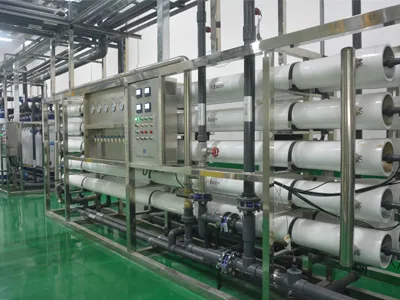
Laboratory pure water systems typically employ a combination of technologies to prepare different levels of pure water. Common technologies include:
1. Reverse Osmosis: Separating ions and molecules in water through a semi-permeable membrane.
2. Ion Exchange: Uses anion and cation exchange resins to remove cations and anions from water.
3. Distillation: Removes impurities from water through evaporation and condensation.
4. Ultrafiltration: Uses ultrafiltration membranes to remove particulates and large molecules from water.
5. Activated Carbon Adsorption: Removes organic matter and chlorides from water.
1. Replace filter cartridges and consumables.
2. Clean the system to prevent bacterial and microbial contamination.
3. Check the operating status of all system components.
4. Regularly test water quality, including resistivity, TOC, and microbial levels.
5. Establish a water quality record and document changes in water quality.
6. Regularly calibrate the pure water system to ensure stable performance.
When selecting a laboratory pure water system, the appropriate level should be chosen based on the specific needs of the laboratory:
1. For high-precision analyses such as High Performance Liquid Chromatography (HPLC), a pure water system capable of producing Grade I water (ultrapure water) is required.
2. For general analytical experiments, Grade II pure water may be sufficient.
3. For general uses such as cleaning glassware, Grade III pure water is sufficient.
4. Water production capacity: How many liters of pure water can be produced per hour?
5. Water quality stability: Can it continuously and stably produce pure water that meets standards?
6. Ease of operation: Is it easy to operate and maintain?
Industry standards for laboratory pure water systems cover multiple aspects, including water quality classification, technical specifications, working principles, and maintenance management. Understanding and applying these standards is crucial for ensuring the accuracy and reliability of experimental results. With the continuous development of science and technology, the requirements for water quality in laboratories are becoming increasingly stringent, and industry standards for laboratory pure water systems will continue to be improved and updated. Laboratory managers and technicians should closely monitor industry trends and update equipment and management methods in a timely manner to meet ever-changing experimental needs.