


Phone:
0086 28 87573647
+86 19150187139

[Introduction] The improvement of standards and quality for industrial and consumer products should be closely integrated with the upgrading of equipment manufacturing. The shift of the consumer market towards the mid-to-high end should guide and drive equipment manufacturing enterprises to proactively improve the performance, functionality, and technological level of their equipment products. "We must change the old model of 'producing whatever equipment we have,' and promote the upgrading of the entire 'Made in China' industrial chain by upgrading consumer demand."
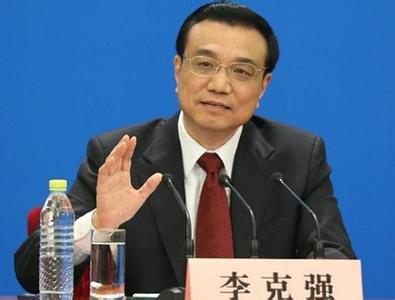
After concluding his inspection tour in Jiangxi, Premier Li Keqiang's intensive work schedule did not pause for a moment. At noon on August 24, the Premier returned to Beijing and immediately chaired an executive meeting of the State Council that afternoon, continuing his fast-paced approach.
The meeting focused on deploying measures to promote the improvement of standards and quality for consumer products, increasing the effective supply of "Made in China" to meet the demands of consumption upgrading. Li Keqiang said that using advanced standards to guide the improvement of consumer product quality and force the upgrading of the equipment manufacturing industry is key to implementing "Made in China 2025," promoting "Made in China" towards the mid-to-high end, and consolidating the foundation of industrial development.
The Premier also used three examples from his Jiangxi inspection tour to outline key work priorities. He emphasized, "We must use the improvement of consumer product quality standards to force the upgrading of the entire 'Made in China' industrial chain."
"Building a brand" not only enhances a company's competitiveness but also forces it to demand higher product quality standards.
The first example Li Keqiang cited was Jingneng Optoelectronics Co., Ltd., which he visited in Nanchang on the 23rd. The company's disruptive silicon substrate semiconductor technology enables LED products to reduce costs by one-third while increasing energy efficiency by 20%. The Premier encouraged them not only to transform scientific and technological achievements into productivity but also to build a brand and establish competitiveness in the market.
"In the past, our companies mostly did OEM manufacturing for foreign brands. Now we need to guide companies to strengthen their brand awareness," Li Keqiang said at the State Council executive meeting on the 24th. "Building a brand not only enhances a company's competitiveness but also forces it to demand higher product quality standards."
The meeting decided that day to guide companies to enhance their awareness of quality, branding, and marketing, promote entrepreneurial spirit and craftsmanship, and implement refined quality management. Premier Li Keqiang stated that compared to some developed countries, my country's consumer goods competitiveness is still relatively weak, and the pass rate of spot checks on key consumer goods needs further improvement, leading some people to choose to purchase daily consumer goods abroad.
He explicitly demanded that the government's work focus on two aspects: firstly, promoting enterprises to strengthen brand building and enhance the reputation and brand awareness of Chinese consumer goods; secondly, adhering to the key elements of consumer product quality and safety, accelerating the formulation of a series of mandatory national standards, and simultaneously innovating standards and quality supervision.
"Many people now pursue personalized customization, and we cannot standardize all products. Therefore, the government must put more effort into supervision," the Premier said. "But it must be clear that we must innovate the regulatory system, implementing random inspections of enterprises, random product sampling, and random selection of testing institutions. We must avoid duplicate inspections, standardize fees levied on enterprises, and truly allow enterprises to concentrate on quality and improvement."
Improving consumer product standards and quality cannot be separated from high-quality professional and technical personnel.
The second example Premier Li Keqiang cited was a new model of co-working space in Nanchang, the AVIC Yangtze River Designer Creative Industrial Park. This area integrates the building decoration industry chain, introducing over 30 design centers specializing in interior design and landscape design, achieving complementary advantages and shared benefits between the park and designers, as well as between upstream and downstream entrepreneurs. A university in Nanchang has also used this area as an internship base, successfully incubating two entrepreneurial projects and providing internships and employment opportunities for hundreds of university students annually.
"Improving the standards and quality of consumer goods requires high-quality vocational and technical personnel. Germany's 'dual system' vocational education model combines school education with vocational training in factories and enterprises. We must also strengthen vocational education and skills training, establish a 'dual system' technical talent training mechanism between schools and enterprises, and introduce systems for salaries and honors that reflect the value of skilled workers," the Premier said.
He emphasized that cultivating vocational and technical personnel in multiple aspects is an urgent need, and reforms in this field must be deepened.
Closely integrating the improvement of standards and quality for industrial products and consumer goods with the upgrading of equipment manufacturing.
The third example cited by Premier Li Keqiang was his first stop during his inspection tour of Jiangxi: Ganzhou Fuxing Company. This private enterprise primarily engages in the research and development and production of lithium batteries and vehicle control systems for new energy vehicles. Its production equipment is entirely customized from domestic manufacturers, costing only one-sixth the price of imported equipment.
Li Keqiang immediately affirmed this new model and instructed relevant department heads to study and promote it. At the State Council executive meeting on the 24th, he emphasized the need to closely integrate the improvement of standards and quality for industrial and consumer products with the upgrading of equipment manufacturing, guiding and driving equipment manufacturing enterprises to proactively improve the performance, functionality, and technological level of their equipment products by encouraging the consumer market to move towards mid-to-high-end development.
"We must change the old model of 'producing whatever equipment we have,' and promote the upgrading of the entire 'Made in China' industrial chain by upgrading consumer demand," the Premier said.
Li Keqiang concluded by demanding the promotion of institutional and mechanism innovation, leveraging the role of the market, and utilizing the combined efforts of various departments to effectively promote the improvement of consumer product standards and quality, adding new impetus to economic and social development.