




Phone:
0086 28 87573647
+86 19150187139

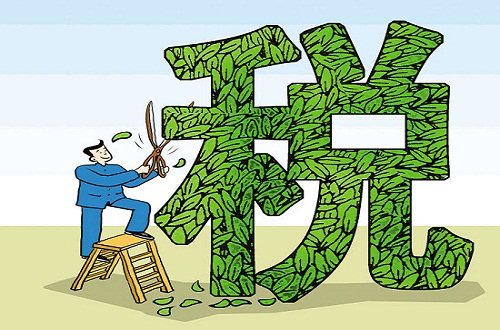
After a six-year legislative process and two rounds of deliberation, the Environmental Protection Tax Law of the People's Republic of China was passed on December 25th at the 25th session of the Standing Committee of the 12th National People's Congress and will come into effect on January 1, 2018.
It is understood that the Environmental Protection Tax Law is the first standalone tax law passed by the Standing Committee of the National People's Congress after the Third Plenary Session of the 18th CPC Central Committee proposed "implementing the principle of taxation by law." It is also my country's first standalone tax law specifically embodying a "green tax system" and promoting ecological civilization.
The Environmental Protection Tax Law consists of five chapters and 28 articles: General Provisions, Tax Base and Tax Payable, Tax Reductions and Exemptions, Collection and Administration, and Supplementary Provisions.
The overall approach of the Environmental Protection Tax Law is to transform a "fee" into a "tax," that is, to achieve a smooth transition from the pollution discharge fee system to the environmental protection tax system according to the principle of "tax burden transfer." The bill incorporates "protecting and improving the environment, reducing pollutant emissions, and promoting ecological civilization" into its legislative purpose, explicitly defining "enterprises, institutions, and other producers and operators that directly discharge taxable pollutants into the environment" as taxpayers, and identifying air pollutants, water pollutants, solid waste, and noise as taxable pollutants.
Wang Jianfan, Director of the Tax Policy Department of the Ministry of Finance, stated that implementing the reform of environmental protection fees into taxes is an important measure to implement the decisions and deployments of the Party Central Committee and the State Council. It is conducive to addressing problems such as insufficient enforcement and local government interference in the existing pollution discharge fee system; it is conducive to raising taxpayers' environmental awareness and compliance, and strengthening enterprises' responsibility for pollution control and emission reduction; it is conducive to building a green tax system that promotes economic restructuring and transformation of development patterns; and it is conducive to standardizing government allocation order, optimizing the structure of fiscal revenue, and strengthening budget constraints.