







Phone:
0086 28 87573647
+86 19150187139

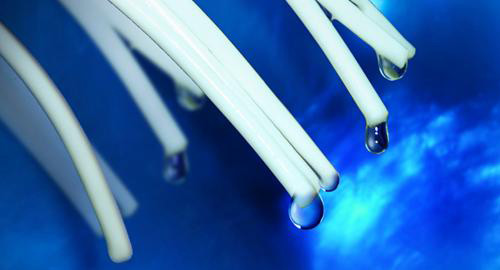
Water quality directly impacts human health. Membrane technology, with its simple principles, convenient operation, and superior purification effect, is widely used in the water treatment industry. As the core of membrane technology, membranes have always attracted attention because they can separate fluids into two non-communicating parts.
With the frequent introduction of favorable policies for the environmental protection industry, investment enthusiasm in the water treatment sector, which is closely related to people's livelihoods, is surging. Among them, membrane technology, as a new technology in the wastewater treatment industry, is gradually expanding its application scope, and its market space is further opening up. For the convenience of readers, Polaris Energy Conservation and Environmental Protection Network has compiled a list of the four major types of membrane technology.
Microfiltration Membranes
Microfiltration membranes can retain particles between 0.1 and 1 micrometer. Microfiltration membranes allow large molecules and dissolved solids (inorganic salts) to pass through, but retain suspended solids, bacteria, and high molecular weight colloids. The operating pressure of microfiltration membranes is generally 0.3-7 bar. Microfiltration is the earliest developed and applied membrane technology in the world, using natural or artificially synthesized polymer compounds as membrane materials. For microfiltration membranes, the separation mechanism is mainly sieving and retention.
Separation efficiency is the most important performance characteristic of microporous membranes, controlled by the membrane's pore size and pore size distribution. Because microporous membranes can achieve relatively uniform pore size, they offer high filtration accuracy and reliability; their surface porosity is high, typically reaching 70%, at least 40 times faster than filter paper with equivalent retention capacity; their thinness minimizes liquid loss due to adsorption by the filter medium; and polymer-based microfiltration membranes are a uniform continuous structure, preventing media shedding during filtration and avoiding secondary contamination, thus yielding high-purity filtrate.
Microfiltration membranes are mainly used in the pharmaceutical industry for filtration and sterilization, in the food industry, in the paint industry, and in the biotechnology industry.
Ultrafiltration Membranes
Ultrafiltration membranes are microporous filtration membranes with uniform pore size specifications, a rated pore size range of 0.001-0.02 micrometers. Ultrafiltration membranes can be manufactured in various forms, including planar membranes, spiral wound membranes, tubular membranes, and hollow fiber membranes. Ultrafiltration membranes are best suited for separating and concentrating solutes in solutions, or separating colloidal suspensions that are difficult to achieve using other separation techniques.
The ultrafiltration membrane sieving process is driven by the pressure difference across the membrane, using the ultrafiltration membrane as the filtration medium. Under a certain pressure, when the feed solution flows across the membrane surface, the numerous tiny micropores on the membrane surface allow only water and small molecules to pass through, becoming the permeate. Substances in the feed solution with a volume larger than the membrane surface micropores are retained on the feed side of the membrane, becoming the concentrate. This achieves the purification, separation, and concentration of the feed solution.
Ultrafiltration membranes are mainly used in medical sterile and pyrogen-free water equipment, beverage, drinking water, and mineral water purification, industrial separation, concentration, and purification, industrial wastewater treatment, and the treatment of oily wastewater from electrophoretic paint and electroplating.
Nanofiltration Membranes
Nanofiltration membranes fill the gap between reverse osmosis and ultrafiltration. They are functional semi-permeable membranes that allow solvent molecules, certain low-molecular-weight solutes, or low-valence ions to pass through, and belong to the category of separation membranes.
Nanofiltration membranes retain organic matter with a molecular weight of approximately 150-500, and their ability to retain dissolved salts ranges from 2% to 98%. Their desalination efficiency for monovalent cation solutions is lower than that for hypervalent cation solutions. They are mainly used for groundwater hardness removal, surface water organic matter and color removal, drinking water purification, oil-water separation, ethylene glycol recovery, copper sulfate recovery, organic and inorganic liquid separation and concentration, dye purification, concentration and desalination, natural drug separation and concentration, and fermentation broth concentration.
Reverse Osmosis Membranes
The principle of reverse osmosis technology is based on the principle that under pressure higher than the osmotic pressure of the solution, substances that cannot pass through a semi-permeable membrane are separated from water. Reverse osmosis membranes have very small pore sizes, thus effectively removing dissolved salts, colloids, microorganisms, and organic matter from water. They offer advantages such as good water quality, low energy consumption, no pollution, simple process, and easy operation.
A reverse osmosis membrane is an artificial semi-permeable membrane with specific characteristics, made to mimic biological semi-permeable membranes. Generally made of polymer materials, reverse osmosis membranes possess characteristics such as high desalination efficiency at high flow rates, high mechanical strength and service life, ability to function at low operating pressures, resistance to chemical or biochemical effects, minimal influence from pH and temperature factors, and readily available and inexpensive raw materials.
Reverse osmosis membranes can retain various inorganic ions, colloidal substances, and large molecular solutes in water, thereby producing purified water. They are now widely used in seawater and brackish water (see brine) desalination, boiler water softening, and wastewater treatment. They are also used in combination with ion exchange to produce high-purity water, in the concentration of dairy products and fruit juices, and in the separation and concentration of biochemical and biological agents.





