








Phone:
0086 28 87573647
+86 19150187139

Introduction: On April 24, 2015, the 14th session of the Standing Committee of the 12th National People's Congress passed the newly revised Food Safety Law. The new law, comprising 10 chapters and 154 articles, has been dubbed the "strictest in history." The central government emphasized that providing the public with a satisfactory answer on food safety is a major test of its governance capabilities. Clear management regulations and penalty details have been provided for food safety issues of public concern, building a legal protective wall for the public's food safety.
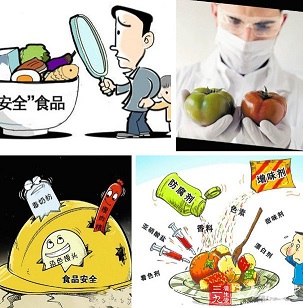
The new Food Safety Law prohibits the use of highly toxic pesticides on fruits, vegetables, and tea, and introduces new regulations on pesticide use and management. The state implements a strict management system for pesticide use, accelerates the phasing out of highly toxic and persistent pesticides, promotes the research and application of alternative products, and encourages the use of highly efficient, low-toxicity, and low-residue pesticides; the use of highly toxic pesticides on vegetables, fruits, tea, and medicinal herbs is prohibited. This fully demonstrates my country's determination to regulate highly toxic pesticides.
The new Food Safety Law stipulates that health food labels must not include disease prevention or treatment functions. In response to problems in the production, sale, and promotion of health food products, the new Food Safety Law explicitly requires that: any health food product claiming health benefits must be based on scientific evidence and must not cause acute, subacute, or chronic harm to the human body. The labels and instructions for health food products must not involve disease prevention or treatment functions, and the content must be truthful and consistent with the registered or filed information, indicating the suitable and unsuitable populations, the active ingredients or marker ingredients and their content, and stating that "this product cannot replace medicine."
The new Food Safety Law also requires full-process quality control in the production of infant formula. Following the 2008 melamine scandal, infant food safety became a focal point in the food safety field. The newly revised Food Safety Law clearly stipulates that infant formula manufacturers must establish and implement full-process quality control from raw material intake to finished product output, and conduct batch-by-batch inspection of infant formula products leaving the factory to ensure food safety. The new Food Safety Law particularly emphasizes that the product formula of infant formula milk powder must be registered with the State Food and Drug Administration. During registration, a formula development report and other materials demonstrating the scientific validity and safety of the formula must be submitted. Enterprises are prohibited from producing infant formula milk powder by repackaging, and the same enterprise is prohibited from producing different brands of infant formula milk powder using the same formula.





