



Phone:
0086 28 87573647
+86 19150187139

We not only provide customers with high-quality products, but also deliver professional solutions and technical services solutions and professional services for their laboratory water needs.
China is a vast country with numerous industries, and customers in different regions have significantly different source water quality and water usage requirements. Therefore, different selection and combination methods are often used for the three subsystems that make up an ultrapure water system—water pretreatment system, reverse osmosis system, and purification system. The ultrapure water system series launched by various manufacturers based on differences in product water quality cannot fully cover the individual needs of different customers. Therefore, we provide this selection guide for your reference, hoping to help you choose the most cost-effective laboratory water solution.
Source Water Quality (TDS) | 100~200ppm | 200~350ppm | 350~500ppm |
Water Pretreatment | Standard Type | Enhanced Type | With Water Softener |
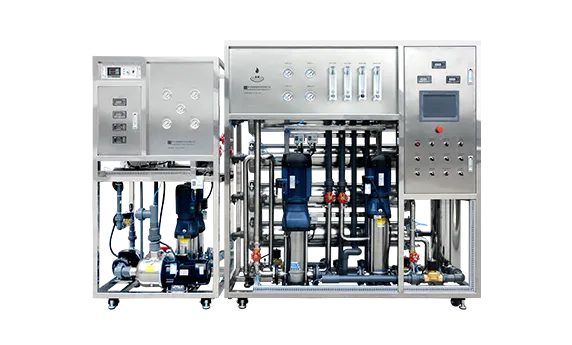
RO Membrane Water Production Capacity (tons/unit) | 20~30 | 10~20 | 5~15 |
Single-Stage RO Pure Water Conductivity (μS/cm) | 3~6 | 6~12 | 15~30 |
Secondary RO Pure Water Conductivity (μS/cm) | 1~2 | 2~5 | 5~10 |
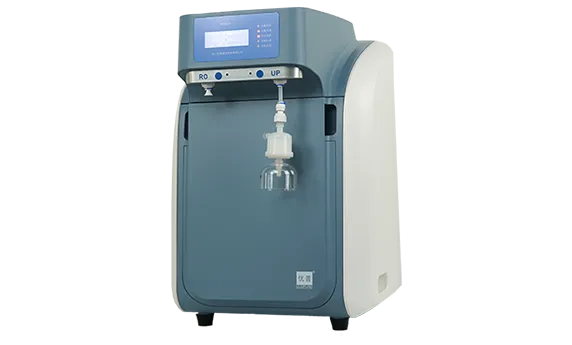
Single-Stage RO Benchtop System Water Production Capacity of Purification Column (liters/set) | 4000~6000 | 2000~3000 | 1000~1500 |
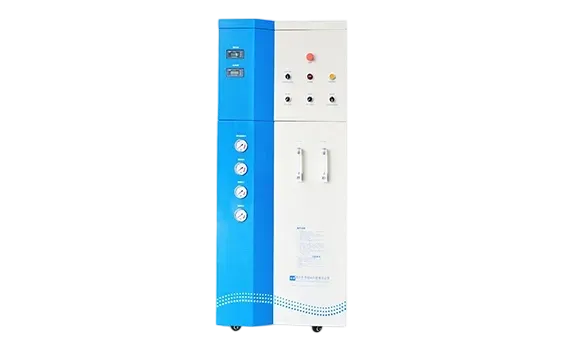
Single-Stage RO Floor-Standing Unit Water Production Capacity of Purification Tank (tons/set) | 10~15 | 6~10 | 3~5 |
I. Water pretreatment selection:
A water pretreatment unit can improve the quality of the source water, extend the service life of the subsequent RO membrane, and avoid frequent replacement of the expensive RO membrane. When the source water quality is poor (especially above 400ppm) and the pure water consumption is large, a fully automatic water softener should be considered; otherwise, the RO membrane will require frequent replacement due to scaling.
II. Main Unit Selection:
As shown in the table above, poor source water quality results in correspondingly poor RO pure water quality. If the RO pure water quality cannot meet the needs of laboratory staff, they will have to use UP ultrapure water, leading to frequent replacement of UP purification columns and increased operating costs. In this case, the following two solutions can be considered:
(1) Upgrade the single-stage RO system to a dual-stage RO system. This can significantly improve the quality of RO pure water to meet the water quality demands of experiments.
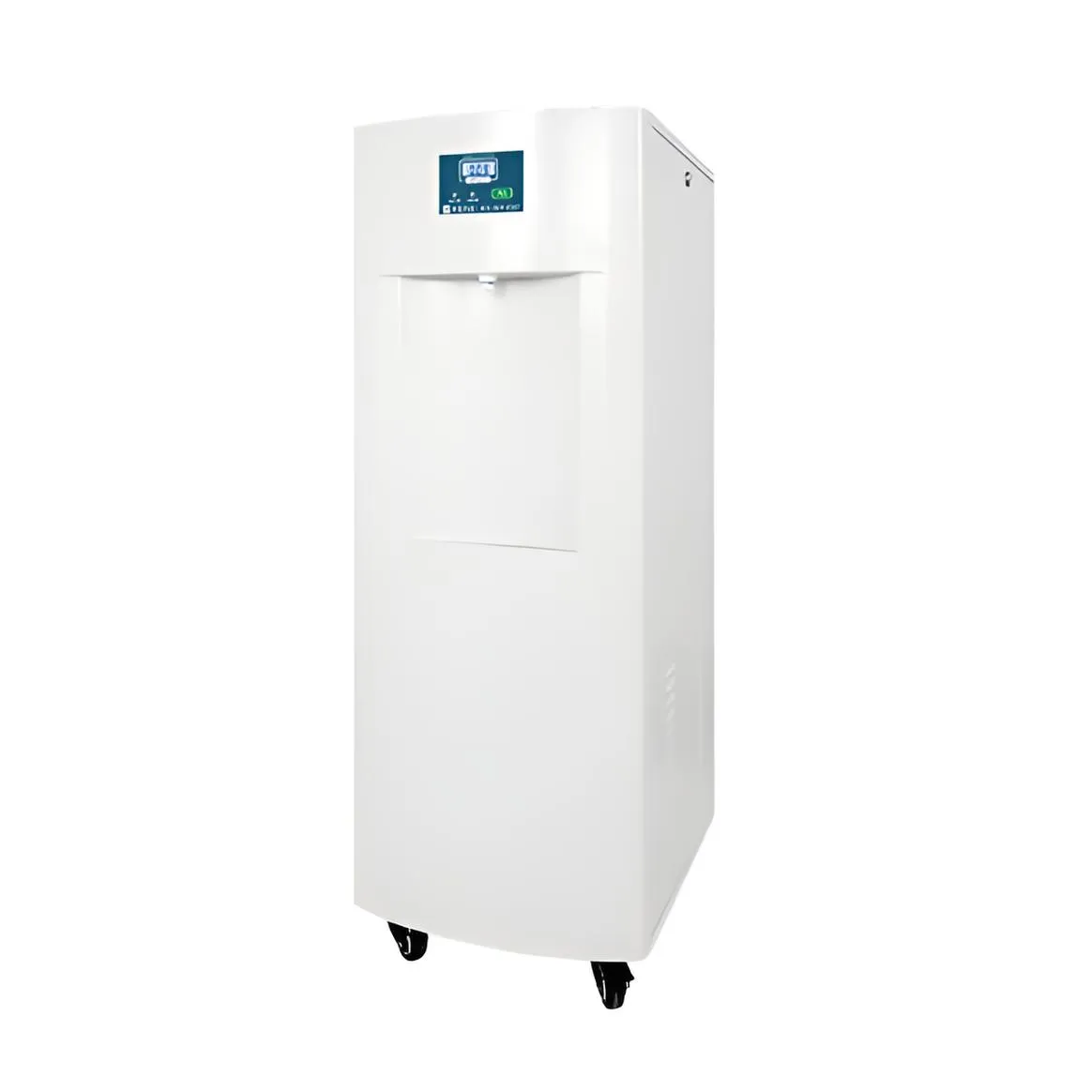
(2) Select the UPT floor-standing ultrapure water system. Through technological innovation,this UPT floor-standing ultrapure water system features a purification tank that allows customers to replace the resin themselves, replacing the disposable purification columns used in benchtop ultrapure water systems. This purification tank contains more than 10 liters of refined resin, and its performance is equivalent to about 25 ordinary purification columns (resin filling volume is about 0.4 liters/column). However, the cost of replacing 10 liters of resin is only equivalent to the cost of replacing 7 to 8 purification columns. Compared with using a traditional benchtop ultrapure water system, the UPT floor-standing ultrapure water system can reduce consumable replacement costs by more than 60%.