





Phone:
0086 28 87573647
+86 19150187139

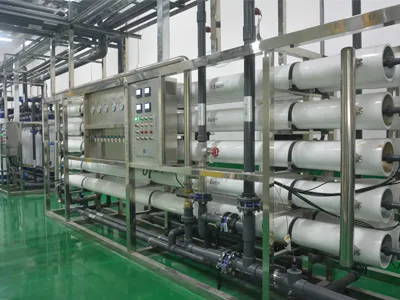
During long-term operation, various contaminants, such as colloidal microorganisms, inorganic fouling, and metal oxides, gradually accumulate on the membrane surface of a reverse osmosis (RO) unit. These deposits cause a decline in the unit's performance. To restore membrane performance, chemical cleaning and sterilization are necessary.
1. Standardized salt permeate flow rate increases by 10%-15%.
2. Standardized permeate flow rate decreases by 10%-15%.
3. The pressure difference between feed water and concentrate increases by 15% compared to baseline conditions, and the pressure difference between different sections increases by 15%.
4. As routine maintenance, generally after 3-6 months of normal operation.
Under normal feed water pressure, permeate flow rate decreases by 10-15% compared to normal values; to maintain normal permeate flow rate, the temperature-corrected feed water pressure increases by 10-15%; permeate quality decreases by 10-15%, salt permeate flow rate increases by 10-15%; feed water pressure increases by 10-15%; and the pressure difference between different sections of the system increases significantly.
Stable operating parameters primarily refer to permeate flow rate, permeate back pressure, recovery rate, temperature, and TDS. If these parameters fluctuate, it is recommended to check for fouling, or to verify the normal operation of the reverse osmosis system given changes in key operating parameters.
Regular monitoring of the overall system performance is a fundamental method for confirming whether membrane elements have become fouled. The impact of fouling on membrane elements is gradual, and the degree of impact depends on the nature of the fouling.
The cleaning cycle for fouled reverse osmosis membranes depends on the actual site conditions. A normal cleaning cycle is every 3-12 months.
When membrane elements are only mildly fouled, cleaning is crucial. Severe fouling can hinder the penetration of chemical agents into the fouled layer, affecting the cleaning effect.
The type of contaminant to clean and the cleaning method depend on the specific fouling situation. For complex situations where several types of fouling coexist, the cleaning method involves alternating between low-pH and high-pH cleaning solutions (low-pH cleaning should be performed first, followed by high-pH cleaning).





