


Phone:
0086 28 87573647
+86 19150187139

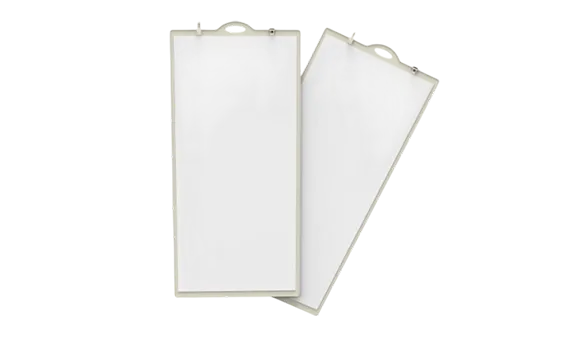
Ceramic filters use waste porcelain powder, a major waste product of the ceramic industry, as aggregate, combined with suitable binders and pore-forming agents to create a reusable, purely physical filter medium. Its filtration principle is as follows: as fluid passes through the filter layer, suspended substances in the fluid are separated and physically adsorbed and aggregated on the surface of the filter medium, thus removing foreign matter and making the fluid cleaner. Ceramic filters possess the following characteristics: good corrosion resistance, heat resistance, uniform pore distribution, and high rigidity, resulting in excellent decontamination and purification effects. Ceramic filters have a large market potential.
Raw Material Conditions
Aggregate: Waste porcelain powder fired above 1250℃, white in appearance.
Binder: Jiyuan clay from this region, yellowish-white or light gray in appearance, loose and blocky, belonging to medium plasticity clay.
Pore-forming agent: Calcium carbonate and a small amount of peroxide.
Production Process Determination
Raw Material Preparation: Waste porcelain powder, Jiyuan clay, and calcium carbonate are separately ground into fine powders with the fineness shown in Table 1. A small amount of plasticizer and peroxide are added, mixed according to the formula ratio, and then dry-mixed in a stirring mill until homogeneous. The prepared dry material is placed in a stainless steel inclined ball milling pan, and water is sprayed in a mist to roll it into balls of different diameters, or it is dry-pressed into sheets.
Irregularly shaped blanks are wet-milled using a material:ball:water ratio of 1:2:0.5. The resulting slurry is then poured into molds.
The blanks are fired in a muffle furnace to 1240–1260 °C and then cooled.
Results
The performance indicators of the fired samples are as follows: acid resistance 96%; alkali resistance 93%; porosity 39%; flexural strength 18 MPa.
Porosity and pore size are the main factors affecting the filtration performance of ceramic filters.
Relationship between Porosity and Firing Temperature
Experiments have shown that porosity increases with increasing firing temperature, but decreases with further increases after reaching a certain temperature. Above 900℃, calcite and peroxides decompose rapidly, leading to a faster increase in porosity. At around 1250℃, a partial liquid phase appears in the matrix, at which point the porosity is approximately 30-40%, and the strength is relatively high.
Relationship between Porosity, Pore Size, and Raw Material Particle Size
The relationship between the fluid permeation rate V through the ceramic filter layer and the filter porosity ε and pore size d is: V∝ε·d². It can be seen that to produce a filter with a certain permeation rate, appropriate porosity and pore size are required, with pore size having a more direct and sensitive impact. The pore size of ceramic filters is mainly controlled directly by the aggregate particle size. Experiments show that the smaller the particle diameter, the smaller the average pore size of the ceramic filter; the smaller the particle diameter distribution range, the larger the pore size.
Relationship between Porosity and Acid/Alkali Resistance
Experiments showed that the acid and alkali resistance of ceramic filters decreased with increasing porosity.
When using waste ceramic powder as aggregate to prepare filters, the amount of waste ceramic powder should be between 65% and 75%, with a particle size below 600 μm. After firing at approximately 1250 °C, the sample porosity reached 39%, exhibiting good filtration effect, acid and alkali resistance exceeding 90%, and good corrosion resistance. This is a high-tech, environmentally friendly product with good economic and social benefits.