





Phone:
0086 28 87573647
+86 19150187139

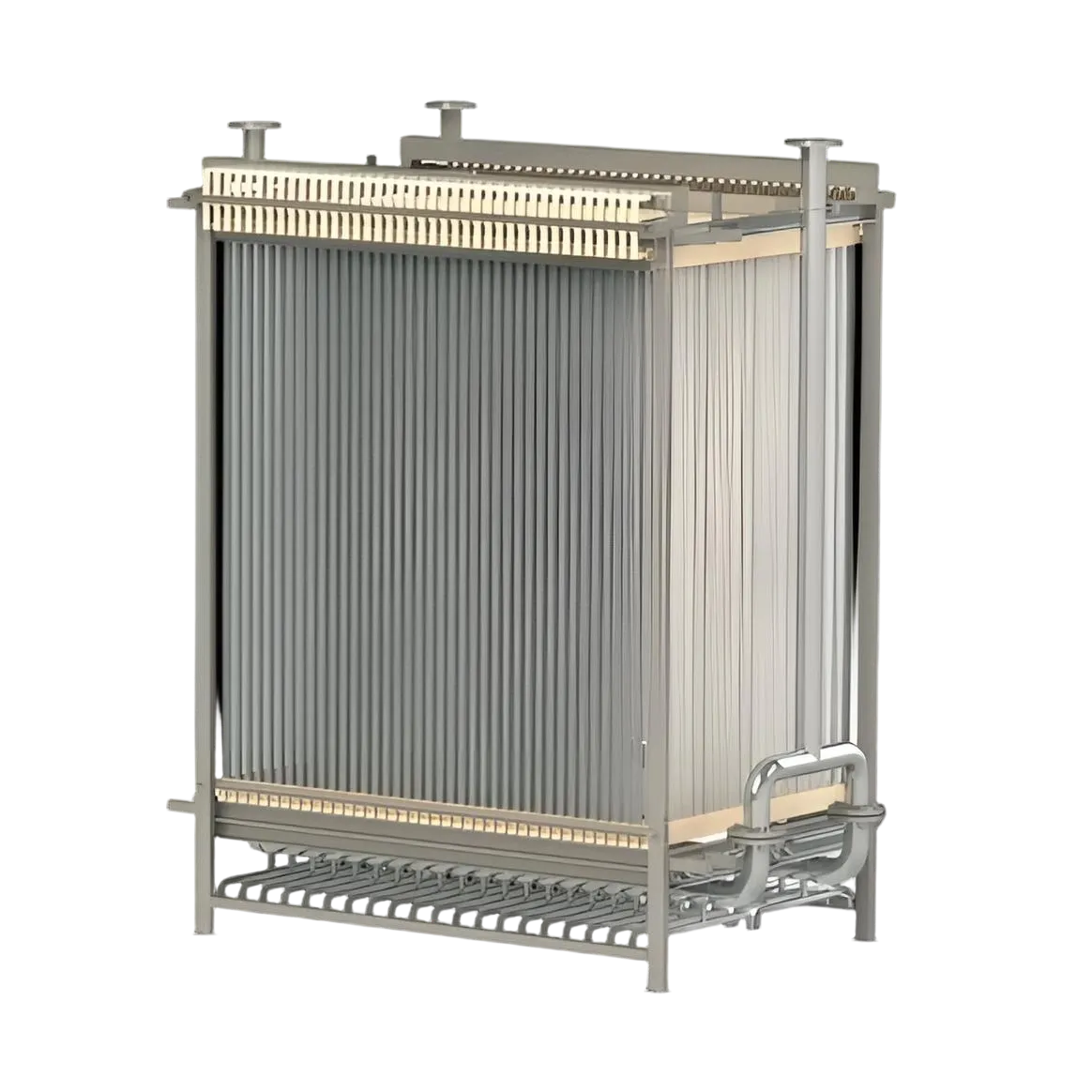
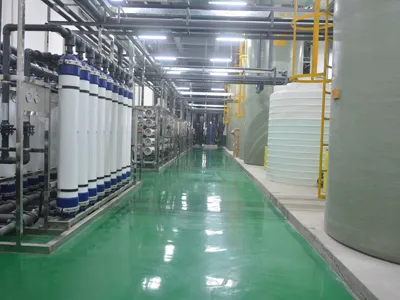
Ultrafiltration membranes are a crucial component of ultrapure water equipment. Their filtration principle is based on the ultrafiltration membrane sieving process. Driven by the pressure difference across the membrane, and using the ultrafiltration membrane as the filtration medium, under a given pressure, when the feed solution flows across the membrane surface, the numerous tiny micropores densely distributed on the membrane surface allow only water and small molecules to pass through, becoming the permeate. Substances in the feed solution larger than the membrane's micropore size are retained on the feed side, becoming the concentrate. This achieves the purification, separation, and concentration of the feed solution. Each meter of ultrafiltration membrane fiber has approximately 6 billion 0.01-micron micropores, with a pore size that only allows water molecules, beneficial minerals, and trace elements to pass through. Since the lower limit of the known volume of bacteria is 0.2 microns, bacteria, as well as colloids, rust, suspended solids, silt, and large organic molecules, which are much larger than bacteria, can be retained by the ultrafiltration membrane, thus achieving the purification process.
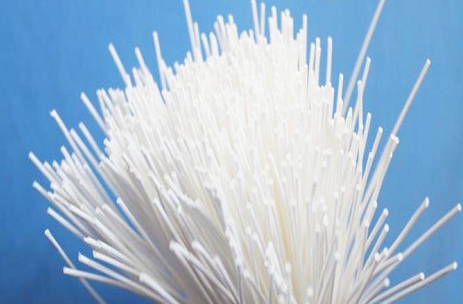
Ultrafiltration membrane cleaning mainly includes: forward washing, backwashing, and air washing (mainly including air scrubbing and air-water washing). Periodic physical cleaning refers to a cleaning method that involves setting the system to run for a period of time and then performing short-term forward washing, backwashing, and air washing, or a combination of these three methods.
1. Forward Washing: Forward washing involves opening the inlet valve and closing the permeate valve, allowing the flushing solution to flow out at high velocity from the concentrate drain valve, thus rapidly rinsing the membrane (hollow fiber curtain membrane) surface and reducing contaminant accumulation.
Backwashing: This operation is the reverse of filtration. Backwash water enters the ultrafiltration fibers from the clean liquid side, permeates the membrane, and flows to the concentrate side. A large flow of backwash water washes away contaminants from the membrane channels and the hollow fiber membrane surface, and the washed-away contaminants are discharged through the drain valve.
2. Air Scrubbing: This method removes contaminants from the membrane surface by agitating the membrane fibers with gas.
3. Air-Water Washing: Backwash water is pumped from the clear liquid side of the ultrafiltration membrane (hollow fiber curtain membrane) tube to the concentration side and discharged. Simultaneously, compressed air is intermittently introduced from the filtration inlet of the ultrafiltration membrane tube. This combined air-water backwashing effectively creates shear force, thus more effectively stripping particles fouling the membrane surface and carrying some particles out of the ultrafiltration membrane tube.
Each process is controlled by a PLC. After a period of operation, combined with forward washing, backwashing, and air washing, contaminants on the membrane (hollow fiber curtain membrane) surface can be removed promptly and effectively. This not only ensures stable system operation but also extends the chemical cleaning cycle.
4. Chemical Cleaning: After a period of normal operation, the ultrafiltration membrane module becomes fouled by suspended particles, organic matter, and other substances in the wastewater, causing a decrease in permeate flow and an increase in membrane (hollow fiber curtain membrane) pressure differential (i.e., a decrease in the "permeate pressure coefficient"). This phenomenon cannot be reversed by physical methods or dispersive chemical cleaning. To restore the membrane module to its original performance, regular chemical cleaning is necessary. The specific cleaning plan should be determined based on the characteristics and degree of contamination.





