






Phone:
0086 28 87573647
+86 19150187139

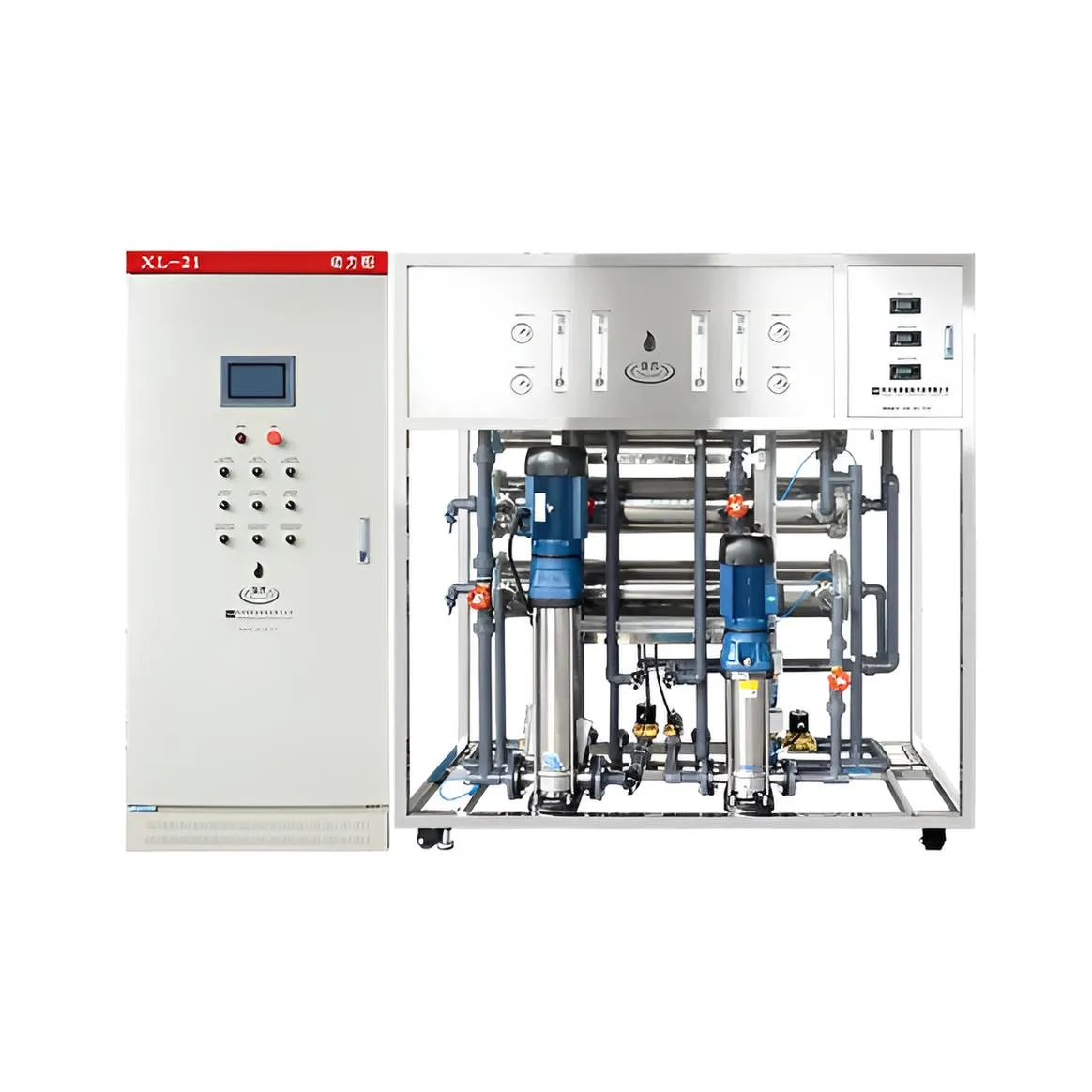
Electrodeionization (EDI) is a new desalination process that combines electrodialysis and ion exchange. In the 1950s, Walters et al. [1] first discussed the electrodeionization process and used it to concentrate radioactive wastewater, but its application in water treatment desalination did not progress much afterward. More than 30 years later, Millpore launched the first electrodeionization water purifier under the trade name IonpureTMCDI; at the same time, it developed the ELIX component that works on the principle of electrodeionization and launched it on the international market as an accessory for Milli-RXTM analytical grade pure water purifiers. In 1990, Ionpure manufactured an improved component [2]. In recent years, E-Cell of Canada has also launched the EDI product component E-CellTM, which is combined into a complete unit with a maximum water production capacity of 450 m3/h. It is reported that the prices of EDI desalination and mixed bed desalination are now comparable internationally. The number of users of EDI desalination has been growing exponentially year by year. Electro-deionization water purification technology has been industrially applied and promoted in the field of water treatment desalination. In my country, electro-deionization water purification technology is called packed bed electrodialysis. Some units, such as the Nuclear Industry Ministry's Institute of Atomic Energy, the State Oceanic Administration's Hangzhou Water Treatment Center, and Factory 742, have conducted research on packed bed electrodialysis experimental devices and related technologies since the 1970s, achieving some scientific research results. However, due to various reasons, my country's packed bed electrodialysis technology has stagnated for more than 10 years, resulting in the absence of commercially available packed bed electrodialysis devices.
EDI, besides being able to continuously produce water, has several advantages: 1) it does not require chemical reagents (acids, alkalis, salts) for regeneration, thus avoiding environmental pollution; 2) it can be unattended, creating conditions for automation; 3) it has wide adaptability, making it suitable for water treatment in various industries; 4) it has low operating costs, good economic efficiency, and is easy to popularize and promote. The demonstrations and analyses of some foreign experts [3] show that in today's water treatment desalination systems, the combined process of reverse osmosis (RO) and EDI can ensure optimal water treatment process performance, and its economic efficiency is also good, providing a good development prospect for the promotion of this combined process. In the process of producing ultrapure water using conventional electrodialysis desalination, the process becomes difficult to continue when the concentration of electrolyte ions in the desalination chamber solution is extremely low. When the electrolyte concentration is too low, the solution resistance increases, power consumption increases, and efficiency decreases, making it practically impossible to produce high-quality pure water using conventional electrodialysis desalination. Typically, a combined electrodialysis and ion exchange desalination method is used to produce ultrapure water. Electrodialysis is used as a pretreatment for coarse desalination, removing 80%–90% of the salt content of the raw water. Ion exchange is then used for fine treatment to remove the remaining 10%–20%. This method leverages the advantages of electrodialysis—low energy consumption, no use of acids or alkalis, no pollution, and low water production cost—while reducing the burden on the ion exchanger. Consequently, the ion exchanger's operating cycle is extended, the number of regenerations is reduced, and the total consumption of regenerant is significantly lowered, saving energy and significantly reducing the discharge of waste acid and alkali. This combined electrodialysis and ion exchange desalination is a series combination of the two methods.
Packed-bed electrodialysis represents another type of integration, combining electrodialysis and ion exchange into a single unit. A packed-bed electrodialysis unit consists of a desalination chamber filled with a mixture of anion and cation exchange resins (granules, fibers, or woven fabrics), effectively integrating electrodialysis and ion exchange into a single container. Because the conductivity of the ion exchange resin in pure water is 2-3 orders of magnitude higher than that of ordinary water, and because the exchange resin particles continuously exchange and regenerate, forming "ion channels," the conductivity of the desalination chamber system (solution, exchange resin, and membrane) is significantly increased. This reduces the polarization phenomenon in the electrodialysis unit, increases the limiting current, and achieves high-level desalination.





