






Phone:
0086 28 87573647
+86 19150187139

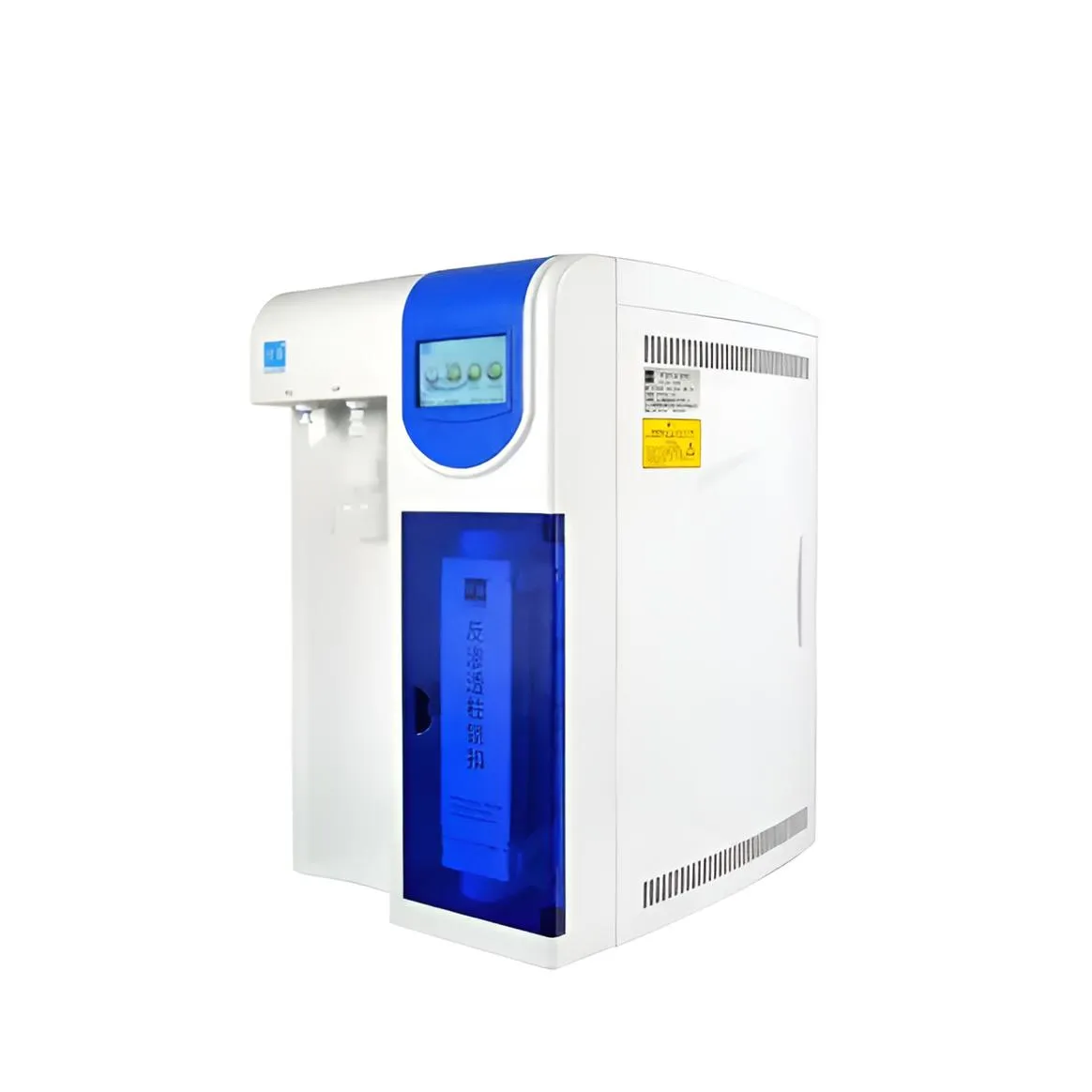
Complete ion exchange water purifiers are readily available in both domestic and international markets. Laboratories can use simple ion exchange columns to prepare pure water. Exchange columns are commonly made of glass, plexiglass, or polyethylene tubing. Inlet and outlet pipes and valves are best made of polyethylene, but rubber tubing with spring clamps can also be used. A simple exchange column can be made by filling an acid burette with ion exchange resin. By plugging the bottom of the burette with glass wool and uniformly filling it with resin of a certain density, a simple ion exchange column is formed. Typically, the ratio of resin layer height to column inner diameter should be at least 5:1.
Tap water is passed through a cation exchange column (cation column) to remove cations, and then through an anion exchange column (anion column) to remove anions. The resulting water can be used for laboratory purposes. However, its quality is not very good, with a pH value often greater than 7. To improve water quality, a "mixed-bed" process, combining cation and anion exchange resins, is added in series to obtain better laboratory water.
The process for preparing laboratory water by ion exchange includes single-bed, multi-bed (cation-anion column), and mixed-bed processes, among others. A system using a combined bed of cation and anion exchange columns, connected in series with a mixed bed, can produce pure water that effectively meets the water quality requirements of various experiments.
Sichuan Youpu Ultrapure Technology will provide a detailed explanation of the pretreatment, column packing, and regeneration of ion exchange resins in future articles. Please visit our website.





