





Phone:
0086 28 87573647
+86 19150187139

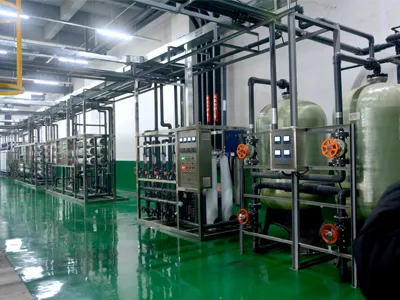
Reverse osmosis, developed in the 1960s, is a novel membrane separation technology that uses reverse osmosis membranes to separate solvents and solutes in a solution under pressure.
To understand reverse osmosis desalination, we must first understand the concept of "osmosis." Osmosis is a physical phenomenon. When two types of water with different salt concentrations are separated by a semi-permeable membrane, water from the side with lower salt concentration will permeate through the membrane into the side with higher salt concentration, while the salt itself will not permeate. Gradually, the salt concentrations on both sides will become equal. However, this process takes a long time and is called natural osmosis. But if pressure is applied to the side with higher salt concentration, the osmosis will stop. This pressure is called osmotic pressure. If the pressure is increased further, water will permeate in the opposite direction, leaving the salt behind. Therefore, the principle of reverse osmosis desalination is to apply a pressure greater than the natural osmotic pressure to the salty water (such as the raw water), causing osmosis to proceed in the opposite direction. This forces water molecules from the raw water to the other side, creating high-purity water, thus removing the salt from the water. This is the principle of reverse osmosis desalination.





