



Phone:
0086 28 87573647
+86 19150187139

Customers have frequently raised questions about the pH of purified water. The issues typically fall into two categories: first, RO water is measured to be slightly acidic (around 6.0); second, RODI water (even with resistivity exceeding 10MΩ) is also measured to be acidic (pH around 6.0).
First, slightly acidic RO water is normal. Almost all primary purified water obtained through RO technology is slightly acidic. This is because dissolved CO2 in tap water cannot be removed. The principle is as follows:

CO2 dissolves in water, existing in the aforementioned chemical equilibrium. Since CO2 molecules are similar in size to water molecules, RO membranes cannot remove gaseous CO2, but most HCO3- and CO3- ions can be removed. This significant reduction in products shifts the chemical reaction to the right, increasing the concentration of another product, H+, thus lowering the pH of the RO permeate and making it slightly acidic.
Therefore, RO water has limitations in certain applications. However, it still meets the Class III requirements of the national laboratory water standard. The Class III standard allows for a pH between 5.0 and 7.5 for pure water. Therefore, RO water is an ideal choice in all applications requiring Class III water, and the RO method is a recognized purification method. Restricted applications include areas with strict pH requirements, such as industrial cooling water. Slightly acidic RO water carries the risk of inducing corrosion in metal pipes. Therefore, softened water is usually used as cooling water, which is cheaper and maintains a stable pH. For high-precision equipment, there are also requirements for using water with a pH of 10M or higher as cooling water, in which case pH is not a concern (it must be neutral).
For high-purity water with a pH above 10M, a measured pH indicating acidity is incorrect. This is entirely different from the acidity measurement results of RO water, and this result is a typical case of methodological error.
Measuring the pH of high-purity water requires specialized tools and instruments. General pH meters are designed for testing electrolyte solutions with high salt content and are unsuitable for measuring ultrapure water, which has poor conductivity and is extremely unsaturated (easily absorbing external impurities). If the resistivity meter is reliable, this unnecessary pH measurement is unnecessary. As stated in the national standard for laboratory water (GB6682-92), pH measurement is not recommended for Class I and II water; accurate measurement of ultrapure water is even more difficult.
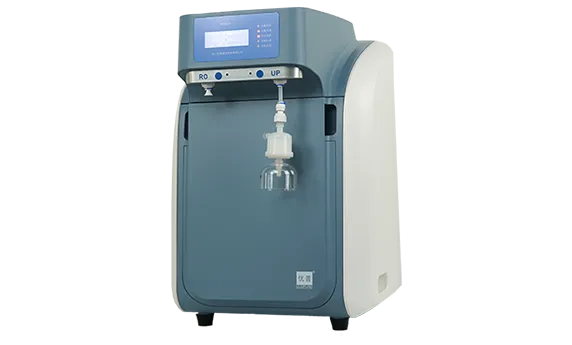
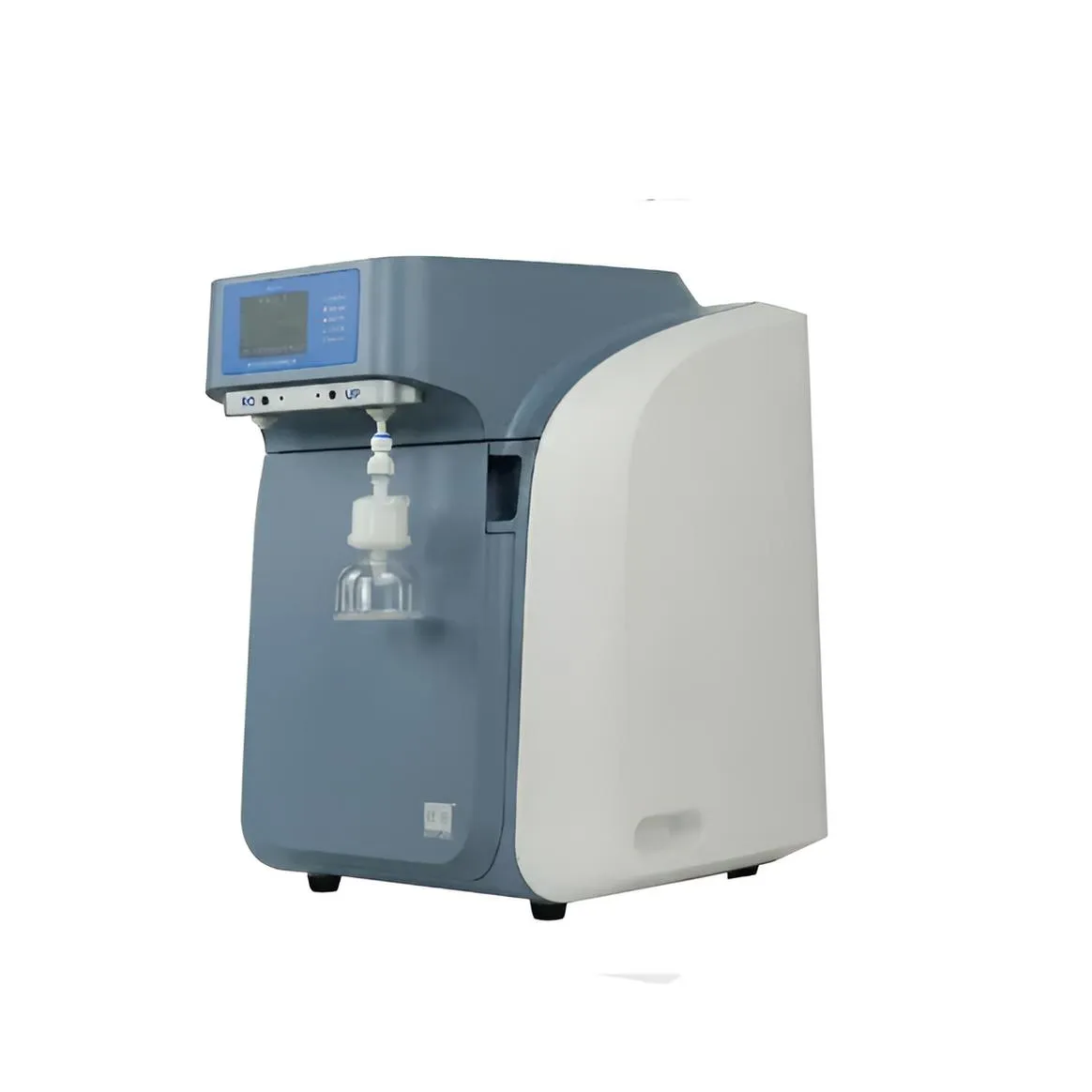
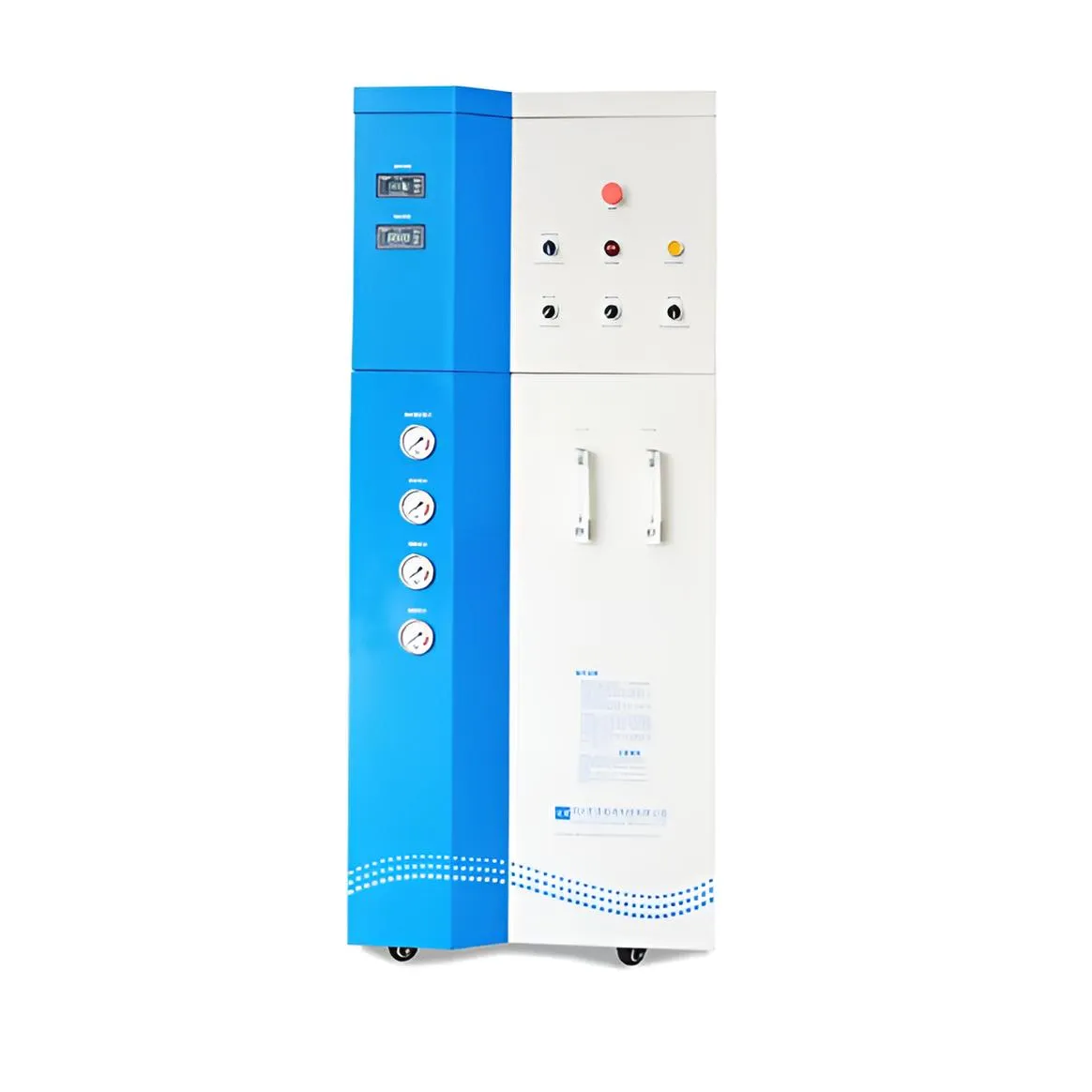
The UPU-series ultrapure water system features a streamlined design and can directly purify tap water into laboratory-grade pure and ultrapure water conforming to the national standard GB6682-2008. It is a high-performance, cost-effective laboratory ultrapure water preparation instrument.
Appendix: Chinese National Standard - Specifications and Test Methods for Analytical Laboratory Water GB/T6682-2008
Name | one class | two class | three class |
pH range (25℃) | - | - | 5.0-7.5 |
Specific resistivity (MΩ.cm.25℃) ≥ | 10 | 1 | 0.2 |
Oxidizable substances [as (0)], mg/L | - | 0.08 | 0.4 |
Absorbance (254nm, 1cm optical path) ≤ | 0.001 | 0.01 | - |
Evaporation residue (105±2℃), mg/L≤ | - | 1 | 2 |
Soluble silicon [as (SiO2)], mg/L < | 0.01 | 0.02 | - |