




Phone:
0086 28 87573647
+86 19150187139

Because cellulose acetate membranes in reverse osmosis (RO) systems are prone to hydrolysis, leading to performance degradation, the pH value of the feed water must be strictly controlled. The feed water pH must be maintained within a specified range, while composite membranes can operate within a feed water pH range of 3-11. Furthermore, RO membrane manufacturers have noted the need for appropriate control of sodium hypochlorite levels, especially for composite and polyamide membranes. Strict control of the free chlorine entering the membrane module is crucial, as exceeding the specified value will lead to membrane oxidative decomposition.
Excessive feed water flow will cause premature degradation of the RO membrane modules; therefore, the feed water flow rate must not exceed the design standard. Additionally, the concentrate flow rate should be kept as close to the design standard as possible. Operating under conditions of excessively low concentrate flow will cause uneven flow within the pressure vessel of the RO system and lead to fouling on the membrane modules due to excessive concentration. Secondly, in summer, high feed water temperatures result in excessive permeate flow, sometimes necessitating a reduction in operating pressure, which will degrade the permeate water quality. To prevent this, the number of RO membrane modules can be reduced while maintaining a higher operating pressure.
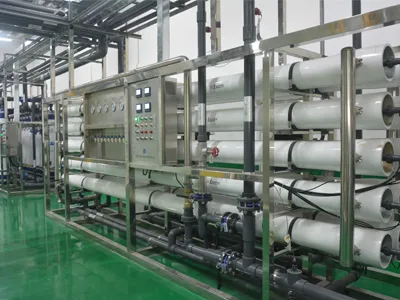
Even a very short interruption in the operation of the high-pressure pump in a reverse osmosis (RO) unit can cause membrane problems. Therefore, it is crucial to strengthen maintenance and management to ensure the normal operation of the high-pressure pump. Furthermore, the RO membrane inlet pressure must maintain an appropriate margin; otherwise, insufficient compaction will reduce the desalination rate.
The above content outlines the precautions for the reverse osmosis system of ultrapure water equipment. To ensure that ultrapure water equipment produces water that meets the required quality standards, these requirements must not be ignored. Any neglect could negatively impact the operation of the ultrapure water equipment.