
Phone:
0086 28 87573647
+86 19150187139

my country has abundant groundwater resources, but in many areas, the groundwater contains excessive amounts of minerals such as iron and manganese. These minerals exist at low valence, making the water clear and transparent. However, upon contact with air, the ferrous iron in the water is oxidized by oxygen, forming water-soluble Fe(OH)3, which precipitates out. When the iron concentration exceeds 0.3 mg/L, the water has a metallic taste. Excessive iron and manganese in drinking water can cause digestive system diseases, iron poisoning, and reduced softening efficiency. Excessive iron and manganese can easily clog pipes during transmission, causing scale buildup in boilers, heat exchangers, central air conditioning systems, and water heaters, resulting in fuel waste and safety issues. Therefore, when using groundwater containing iron and manganese as a water source, iron and manganese removal treatment is essential to ensure people's health.
Working Principle: Iron and manganese in groundwater typically exist as ferric bicarbonate and manganese bicarbonate. Aeration oxidizes the ferrous and manganese into ferric and manganese ions, forming insoluble hydroxides. The solution is then filtered to meet national drinking water standards. The manganese sand containing the filter can be automatically backwashed and regenerated, achieving long-term reuse.
Chemical Reaction:
Fe2++FeO(OH)→FeO(OFe)+H+
FeO(OFe)+ +O2+H2O→FeO(OH) +H+
Process Flow:
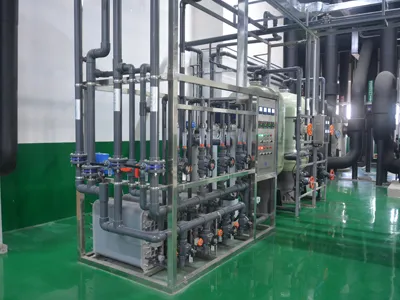
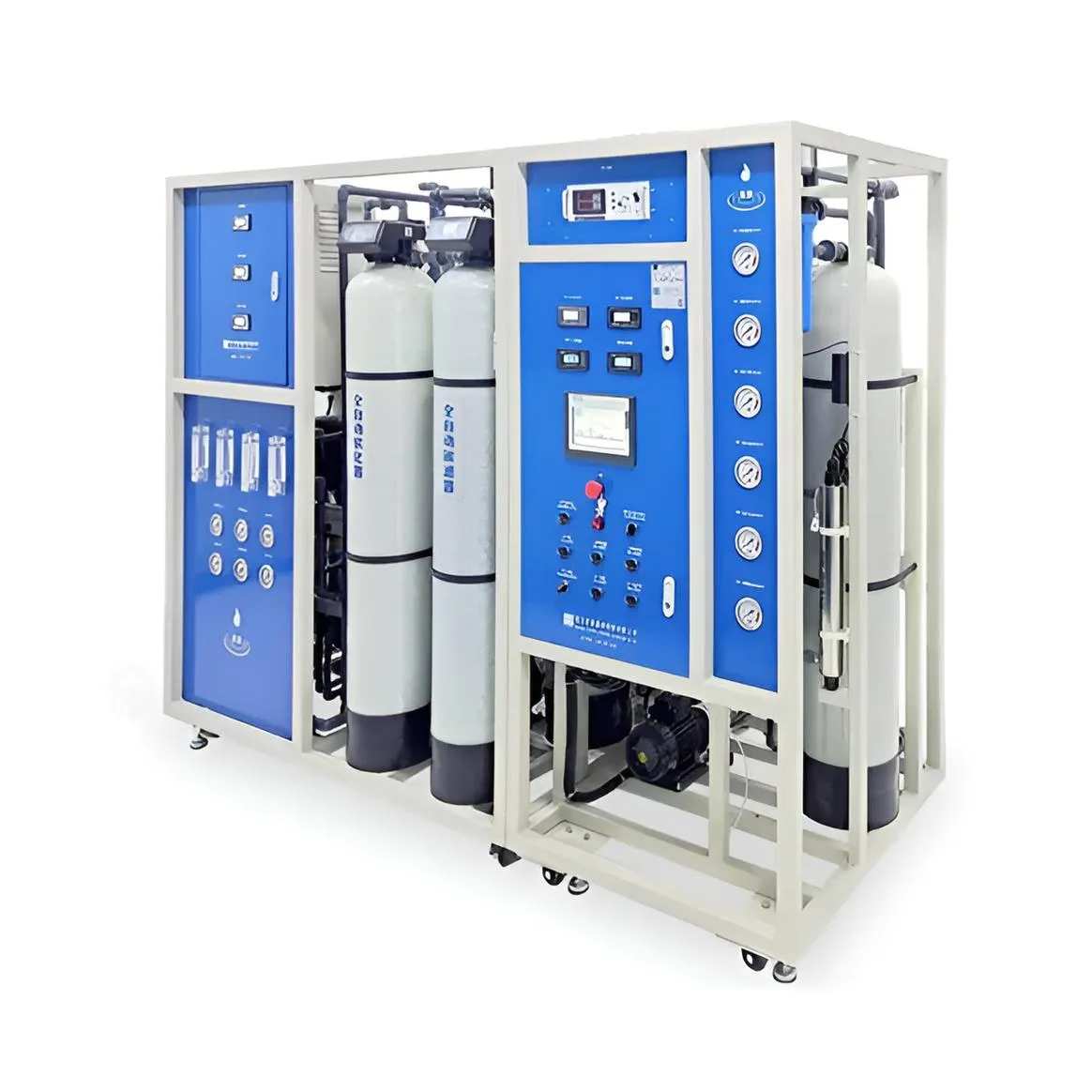
Raw Water → Booster Pump → Ejector → Iron and Manganese Removal Unit → Three-Channel Pretreatment → Pure Water Production Equipment --- Pure Water