





Phone:
0086 28 87573647
+86 19150187139

Under the same operating current, the conductivity of the EDI effluent increases with increasing raw water conductivity. This is because low raw water conductivity indicates low ion content, which in turn leads to a larger potential gradient on the resin and membrane surfaces in the desalination chamber. This results in enhanced water dissociation, a higher limiting current, and a greater quantity of H+ and OH- ions produced, leading to better regeneration of the anion and cation exchange resins in the desalination chamber.
When the raw water conductivity is 21.5 μS/cm, the EDI effluent conductivity remains very low (0.1–0.05 μS/cm) with increasing operating current. This is because lower raw water conductivity results in more intense water dissociation, producing more H+ and OH- ions, thus improving resin electroregeneration (maintaining good exchange performance). As the operating current continues to increase, H+ and OH- ions are used not only for resin regeneration but also for load current, further increasing water dissociation in the desalination chamber. This gradually leads to an equilibrium between ion exchange and resin regeneration, and the product water conductivity stabilizes. Therefore, the conductivity of the raw water is one of the most important factors affecting the quality of the product water. When the influent conductivity is high, the product water quality decreases with the increase of the operating current. Taking the curve when the raw water conductivity is 100 μS/cm as an example, as the operating current gradually increases from 0 to 5A, the conductivity of the EDI effluent increases from 0.17 μS/cm to about 0.5 μS/cm (the water quality decreases). This is because under high salinity, concentration polarization is small, water dissociation is weak, and the resin hardly regenerates. At this time, ion exchange plays a major role, and the resin is saturated with salt ions in a short time. The resin mainly enhances ion migration.
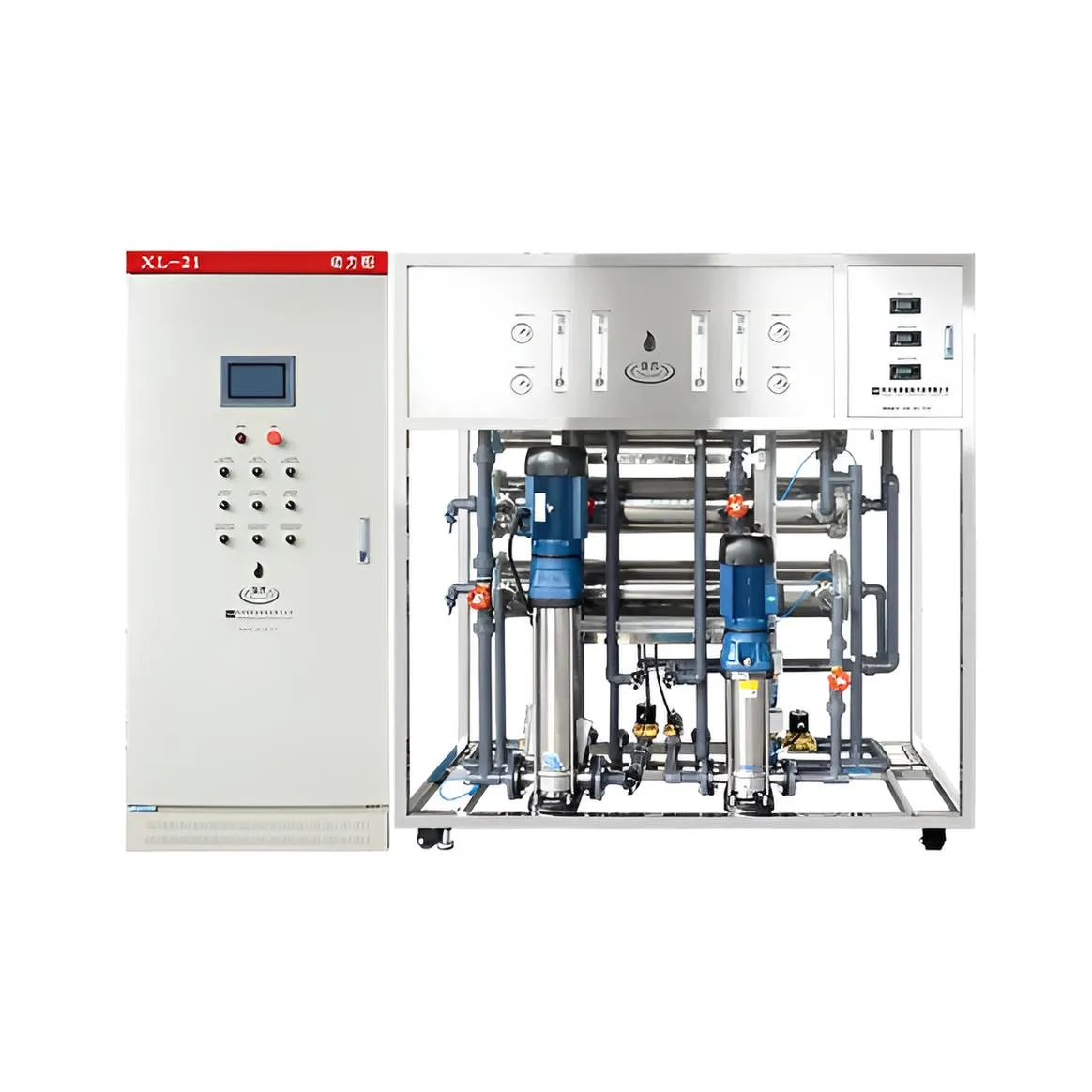
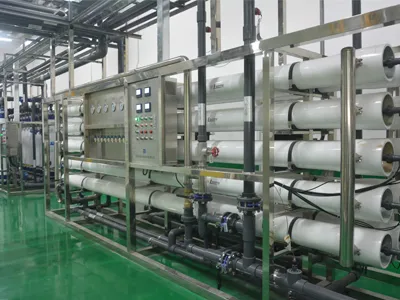
Regardless of the salinity of the influent, the two-stage, five-stage EDI equipment has a very good desalination effect (desalination rate >99%), and the conductivity of the effluent can reach the high-purity water standard (conductivity <1 μS/cm).





