





Phone:
0086 28 87573647
+86 19150187139

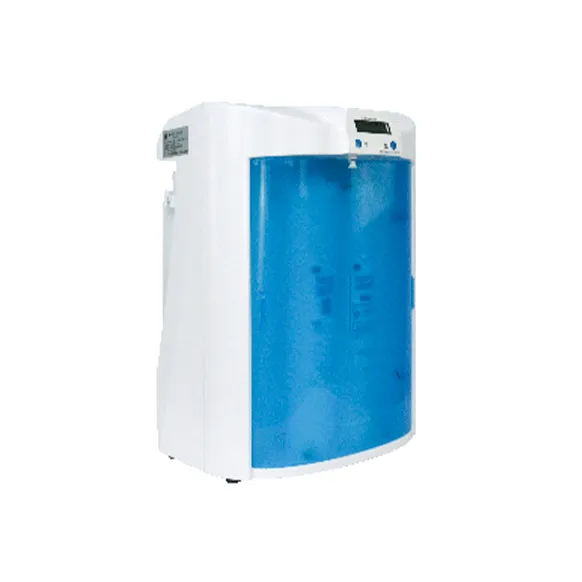
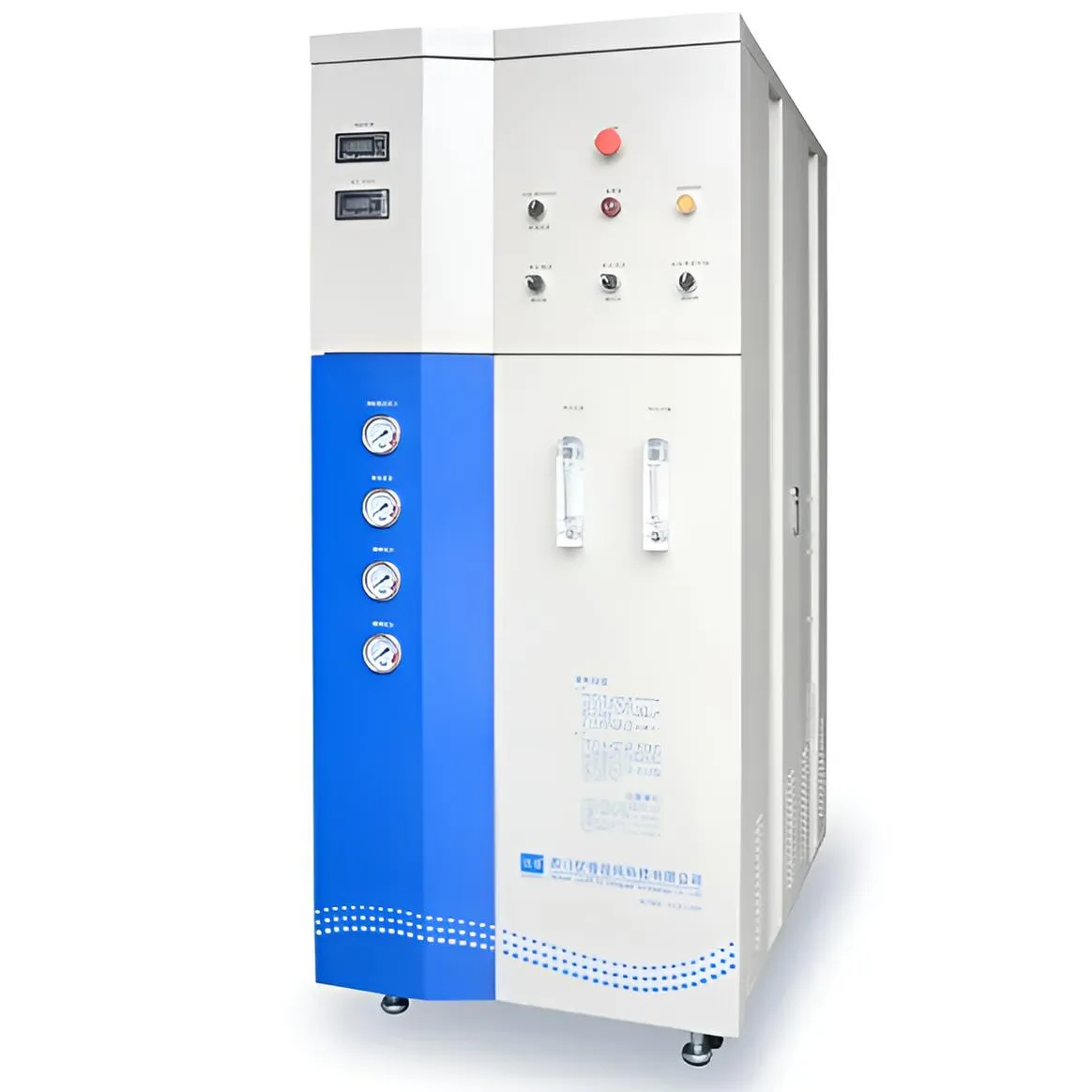
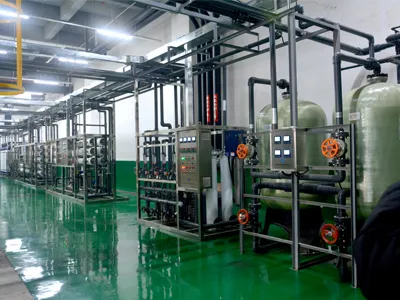
The most stable and convenient method for preparing pure and ultrapure water is through pure and ultrapure water systems. Since the world's first ultrapure water system was invented, its design and production philosophy has consistently revolved around "optimal water quality and most stable water quality."
I. Optimal Water Quality
1. Common Impurities in Natural Water
These include soluble inorganic matter, organic matter, particulate matter, microorganisms, and soluble gases. Pure/ultrapure water systems aim to remove these impurities as thoroughly as possible.
2. Main Water Purification Processes
Commonly used water purification processes include distillation, reverse osmosis, ion exchange, filtration, adsorption, and ultraviolet oxidation. The water purification process can be broadly divided into three steps: pretreatment (producing pure water), ion exchange (producing 18.2 MΩ-cm ultrapure water), and post-treatment (producing ultrapure water that meets specific requirements). The method used in each step is determined based on the quality of the influent and the requirements for the effluent.
3. Pretreatment
This mainly includes a pretreatment unit and a reverse osmosis (RO) unit. Since the pretreated water will undergo further purification via RO, it's crucial to remove as many impurities as possible that could affect the RO membrane. These primarily include large particles, residual chlorine, and calcium and magnesium ions. It's important to note that different treatment units must be specifically configured based on the quality of the incoming water. Most pure water system manufacturers cannot effectively address this issue, leading to suboptimal purification results and shortening the lifespan of key components like the RO membrane.
Chengdu Ultrapure Technology's ultrapure water system effectively solves this problem. It features wire-wound filters, activated carbon adsorption filters, and softening resins to specifically remove large particles, residual chlorine, and calcium and magnesium ions, achieving optimal pretreatment results.
Reverse osmosis uses a high-pressure pump to apply pressure greater than the osmotic pressure difference to a high-concentration solution, forcing water molecules through a semi-permeable membrane to the low-concentration side. Reverse osmosis can filter out 90%-99% of most contaminants, including inorganic ions. Due to its outstanding purification efficiency, reverse osmosis is a highly effective technology in water purification systems. Because it removes most contaminants, it is often used as a pretreatment method, significantly extending the lifespan of deion exchange columns. Given the critical role of reverse osmosis in water purification and the relatively high cost of replacing reverse osmosis membranes, we strongly recommend that users choose an ultrapure water system with membrane protection features.
To maximize the lifespan of the reverse osmosis membrane and improve its filtration efficiency, Chengdu Ultrapure Technology's ultrapure water systems employ advanced and unique technology combined with a leading reverse osmosis flow-limiting design. A flow-limiting valve at the outlet ensures the reverse osmosis membrane is always immersed in water, preventing it from drying out and affecting its lifespan. Extending the membrane's lifespan guarantees the quality of the output water and also improves the cost-effectiveness of the ultrapure water system.
4. Ion Exchange
Ion exchange involves the exchange of positive ions in water with H+ ions in an ion exchange resin, and the exchange of negative ions in water with OH- ions in the resin, thus purifying the water. Theoretically, ion exchange can remove almost all ionic substances, achieving a resistivity of 18.2 MΩ-cm at 25℃. The quality of the effluent from ion exchange depends primarily on the quality of the ion exchange resin and the exchange efficiency between the water and resin within the exchange column.
The market for ion exchange resins is flooded with products of varying quality, making it difficult for users to distinguish between them. Therefore, we strongly recommend that users pay attention to the brand of the resin. Chengdu Chaochun Technology's ultrapure water system uses the world's highest quality ion exchange resin, combined with Heal Force's unique internal pressure structure design of the exchange column, ensuring full contact between the resin and water, significantly improving exchange efficiency and maximizing the treatment capacity of the ion exchange column.
It is important to note that while ion exchange effectively removes ions, it cannot effectively remove most organic matter or microorganisms. Microorganisms can attach to the resin and use it as a culture medium, allowing for rapid growth and the generation of heat. Therefore, it needs to be designed and used in conjunction with other purification methods, which is the post-treatment section we will discuss below.
5. Post-treatment
Mainly producing ultrapure water with low organic matter and low pyrogen content according to the customer's specific requirements. Various treatment methods are available for different requirements, such as ultrafiltration for pyrogen removal, dual-wavelength ultraviolet oxidation for reducing total organic carbon (TOC) in water, and microfiltration for removing bacteria.
Ultrafiltration (UF) membranes are molecular sieves. Based on size, they allow the solution to pass through extremely fine filter membranes to separate molecules of different sizes in the solution, reducing the pyrogen content in ultrapure water to below 0.001 EU/ml. Dual-wavelength ultraviolet oxidation can use photo-oxidation of organic compounds to reduce the total organic carbon concentration in ultrapure water to below 5 ppb.
II. Most Stable Water Quality
The ability of an ultrapure water system to produce high-quality ultrapure water is only the first step. For users, maintaining high-quality output water stably for as long as possible is the most important issue. Currently, most manufacturers emphasize that customers should pay attention to usage details and frequently replace parts and consumables, but they don't make many improvements themselves.
Chengdu Youpu Ultrapure Water System is completely different. Besides common functions such as automatic cleaning at any set time, 2-hour standby and multiple time-interval cyclic sterilization and disinfection modes (using hydrogen peroxide as a liquid disinfectant to better protect operators and filter columns while ensuring ultrapure water quality), automatic shutdown in case of water shortage, and a dual-flow path design for pure water/ultrapure water, it also features a unique configuration to ensure stable water quality: a two-stage ion exchange system, each stage consisting of two columns, which reduces the organic load on the UV lamp, further improving water quality and extending the lifespan of components—a double benefit. Furthermore, the Chengdu Youpu Ultrapure Water System uses up to four ultra-small, high-precision resistivity sensors with a 1/0.01 constant to accurately monitor the conductivity or resistivity of each pure water stream, with automatic temperature compensation and a TOC measurement option for real-time resistivity and TOC monitoring. Through these high-precision sensors, the ultrapure water system is equipped with the ability to automatically detect or alert to malfunctions in pretreatment columns, reverse osmosis membranes, primary purification columns, multi-functional purification columns, microfiltration, ultrafiltration, and UV lamps, ensuring the machine operates at its optimal state and guaranteeing the quality of the produced water.
The main applications of ultrapure water include: 1. Water for animal and plant cell culture; 2. Water for various medical biochemical analyzers, medical instruments, and hemodialysis machines; 3. Water for the preparation and dilution of analytical reagents and pharmaceuticals; 4. Water for physiological, pathological, and toxicological experiments; 5. Purified and high-purity water for hospitals, pharmaceutical preparation rooms, and central laboratories; 6. Water for atomic absorption spectrometry; 7. Water for in vitro fertilization; 8. Water for various high-performance liquid chromatography and ion chromatography; 9. Other various laboratory and pharmaceutical water applications.





