




Phone:
0086 28 87573647
+86 19150187139

User Unit: Department of Laboratory Medicine, Sichuan Provincial Geriatric Medical Center. This center, affiliated with Sichuan Provincial People's Hospital, is a key provincial-level public welfare project. The laboratory department undertakes a large number of clinical sample testing tasks, encompassing multiple specialized laboratories including biochemistry, immunology, microbiology, and hematology. With the increasing sophistication of testing technologies, the requirements for the quality of purified water used in testing are also constantly rising.
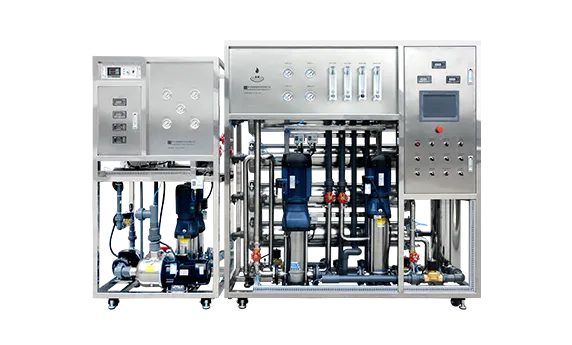
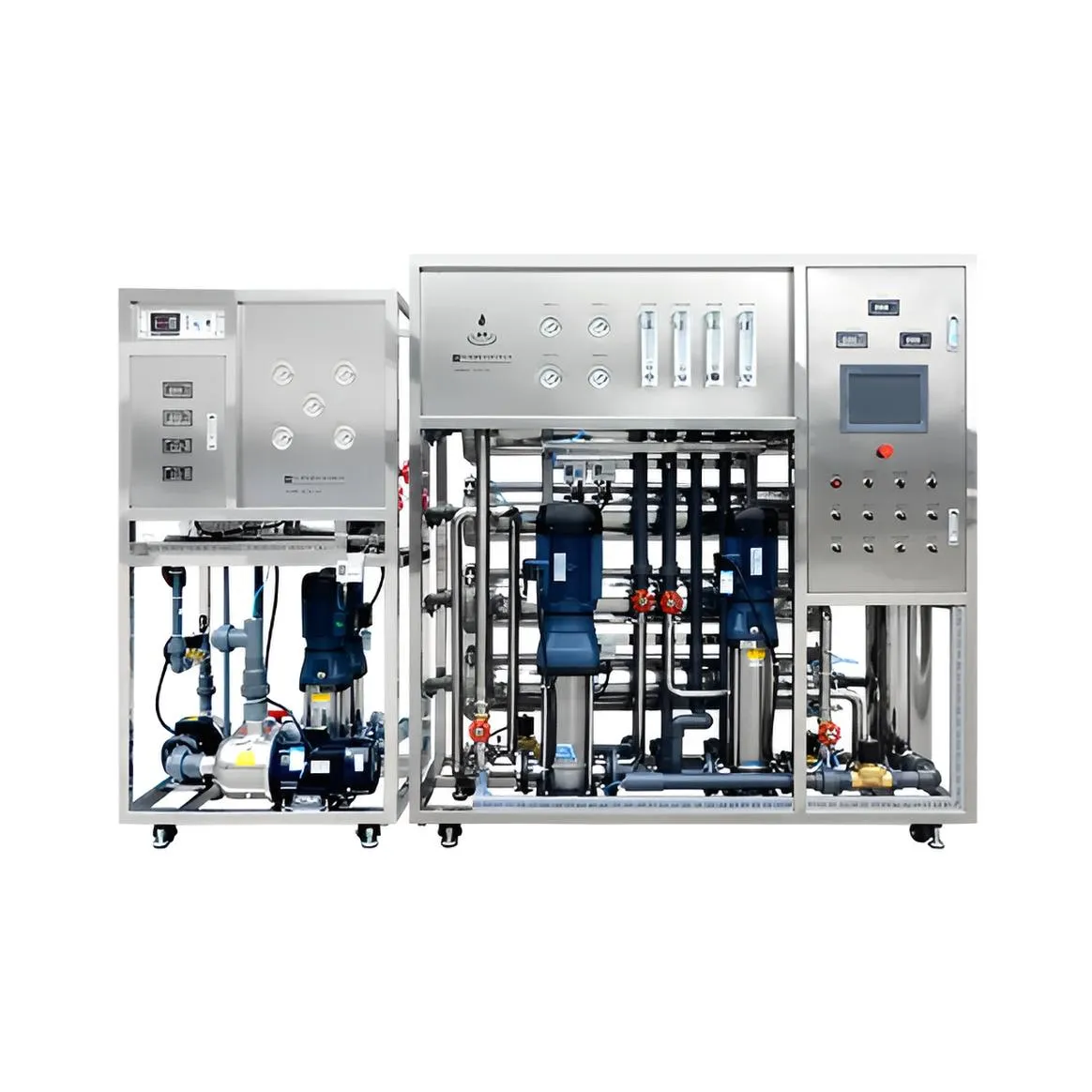
Product Selection: ULPZY-3000RO+3000RO-1000DROE
This is a turnkey project service provided by UPU, covering equipment supply, installation, commissioning and after-sales service, to meet the high-standard water requirements of the laboratory.
1. Technical Parameter Configuration
Water production: ≥2000L/h@25℃
Product water quality: conductivity ≤15μs/cm@25℃
Desalination rate: ≥98%
System recovery rate: ≥50%
Operation mode: PLC + touch screen intelligent control, supports automatic/manual switching, constant pressure water supply design
2. Process Flow
The combined process of “pretreatment + dual-stage reverse osmosis + EDI + constant pressure water supply” ensures continuous and stable water quality, meeting the continuous water demand of equipment such as cleaning machines and disinfection machines.
Pretreatment system: Multi-media filtration + activated carbon filtration + softening filtration + precision filtration
Reverse osmosis system: Single-stage reverse osmosis design, high physical desalination efficiency.
Constant pressure water supply system: Pure water is stored in a constant pressure tank, and a stainless steel water pump achieves constant pressure output.
3. Meets national standards
Standards for Drinking Water Quality GB5749-2006 | Standard for Design of Building Water Supply and Drainage GB50015-2019 |
Electronic Grade Water GB/T11446-2013 | Design Specification for Pure Water Systems in Electronic Industry (GB50685-2011) |
"Installation and Acceptance Specification for Pure Water Systems in Electronic Industry" GB51035-2014 | Standard for Reverse Osmosis Water Treatment Equipment GB/T 19249-2017 |
Technical Requirements for Water Treatment Equipment JB2932-1999 | Reverse Osmosis and Nanofiltration Membrane Element Product and Technology Handbook (2020 Edition) |
Preparation and Detection Technology of High Purity Water, Science Press, 1999 | Pure Water Preparation - 10th Design Institute of Electronic Industry |
National Technical Specification for Safety of Electrical Equipment GB19517-2009 | Low-voltage power distribution design code GB50054-2011 |
Standard for Power Distribution Design of General Electrical Equipment GB50055-2011 | Design Code for Relay Protection and Automatic Devices of Power Installations GB/T50062-2008 |
4. System Equipment Features
The system is operated remotely using a "PLC + touch screen" microcomputer controller and is equipped with relevant online display instruments, which can intuitively reflect the operating status and data of the water purification system equipment, making it easy for operators to observe and record.
The relevant equipment achieves automatic operation through liquid level interlock and has automatic functions (automatic water production, automatic flushing, automatic shutdown when raw water is insufficient/water tank is full, alarm for water quality exceeding standards, etc.).
The dual-stage reverse osmosis and EDI units are equipped with a local control box, which allows for switching between automatic and manual operation.
The pretreatment section operates and is controlled automatically, equipped with an automatic controller that periodically performs self-cleaning, backwashing, and operation switching without manual intervention.
The actuator is designed with standardized, universal, and systematic components, which facilitates disassembly, replacement, and cleaning of parts.
The terminal water supply adopts a variable frequency constant pressure control method to stabilize the water volume and pressure at the terminal water point.
The system has a compact structure and a small footprint, effectively saving space.
The system operates reliably, the water supply pipeline is sealed, and the quality of the effluent is stable.
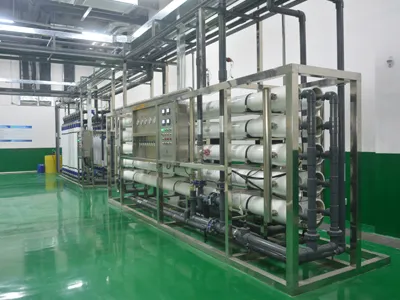
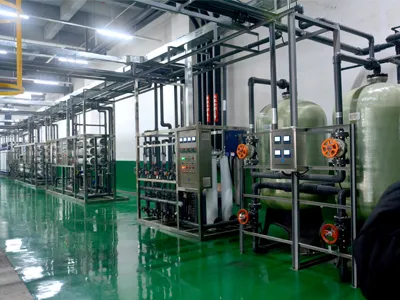
On-site photos:
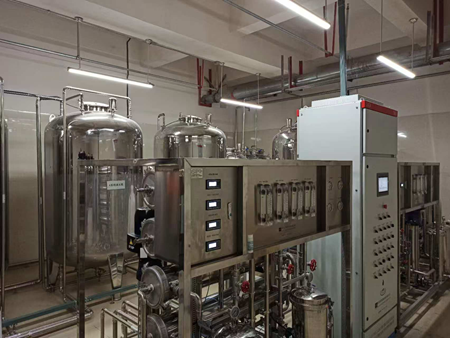
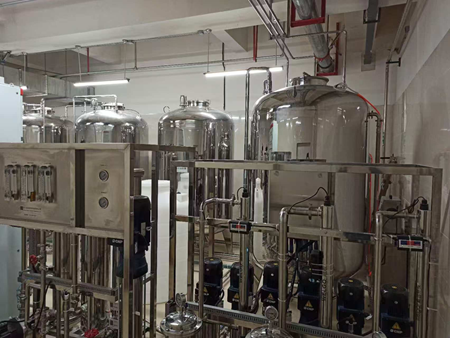
When selecting a pure water system for a laboratory, brand reputation, equipment stability, water quality assurance capabilities, and after-sales service are four key considerations. UPU has accumulated extensive experience in the field of medical pure water systems and can provide one-stop services from design to operation and maintenance.