


Phone:
0086 28 87573647
+86 19150187139

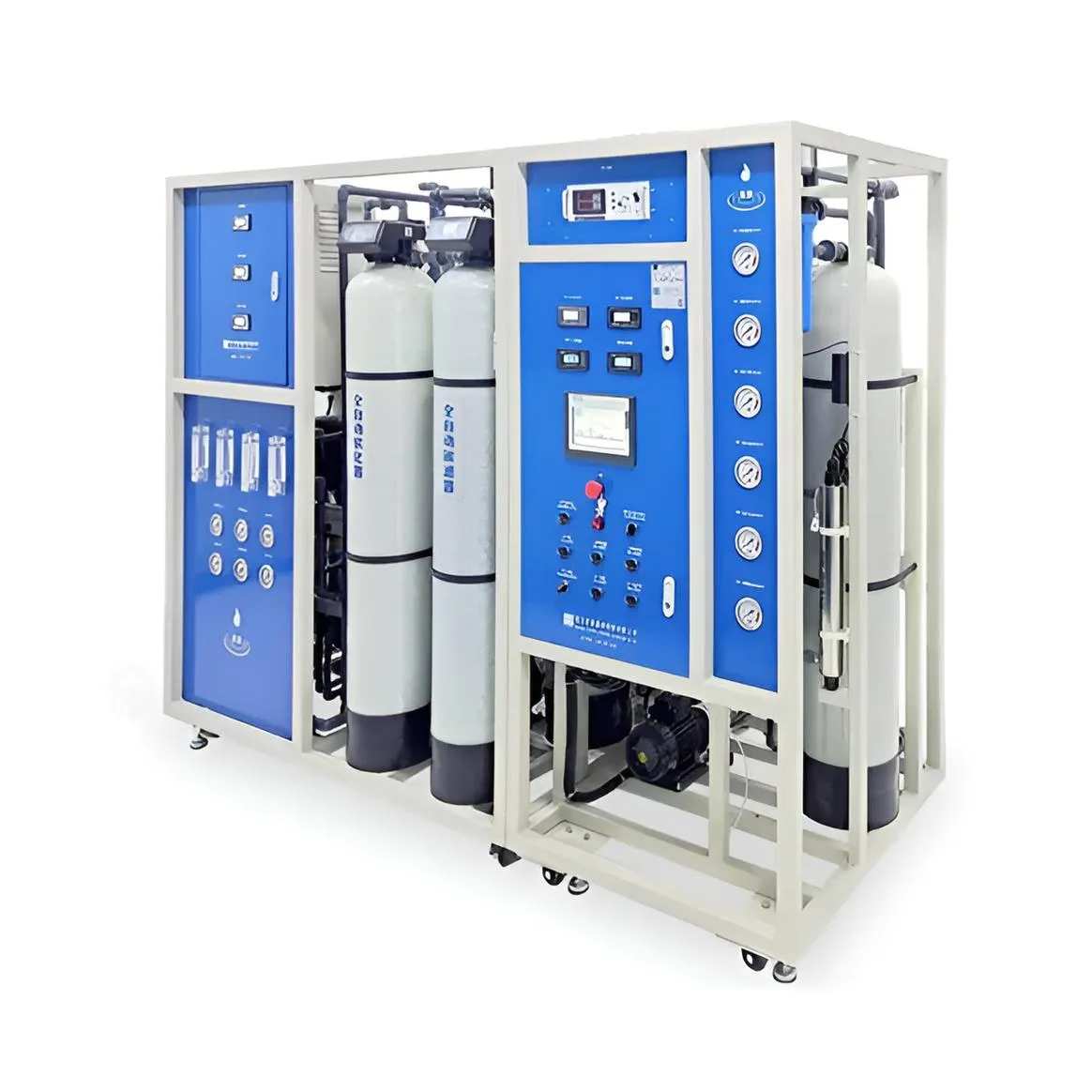
In desalination equipment, reverse osmosis membranes are currently the most advanced and economical technology. However, during the daily operation of reverse osmosis systems, a rapid decline in desalination rate is frequently observed. What are the reasons for this rapid decline in desalination rate?
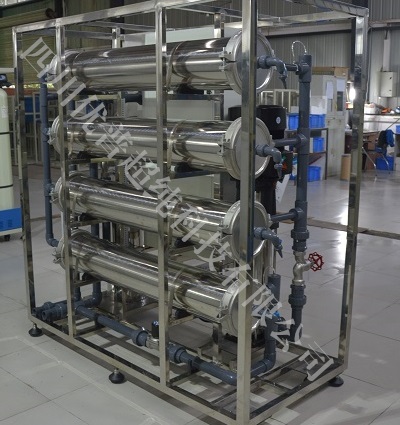
An increase in pressure differential is often accompanied by a rapid decrease in desalination rate. Under normal flow conditions, an increase in pressure differential is usually caused by impurities, contaminants, and scale entering the membrane element's water flow channel screen, leading to a decrease in product water flow. Excessive pressure differential can also occur when the set feed water flow rate is exceeded. Water hammer can occur when the feed water pressure rises too quickly during startup. If the membrane is already fouled, especially by microorganisms, the pressure differential will also increase. The pressure differential between feed water and concentrate represents hydraulic resistance and is related to the feed water velocity and temperature. A certain flow rate should be maintained between product water and concentrate. Possible causes of high pressure differential include: scale, microbial contamination, scale inhibitor precipitation, filter media leakage, and damage to the feed water/concentrate seals.
Contamination is unavoidable in ultrapure water equipment during operation. Pretreatment and the addition of various chemicals can only minimize the possibility of reverse osmosis contamination, not completely eliminate it. Therefore, after a certain period of operation, reverse osmosis systems must undergo thorough analysis and identification of the contaminant. Considering the characteristics of polyamide membranes, appropriate cleaning agents can be selected based on the specific type of fouling:
Hydrochloric acid (36%-38%), prepared as a 0.12% dilute solution, removes metal oxides.
Sodium hydroxide, prepared as a 0.1% dilute solution, removes silica, microbial biofilms, organic matter, etc., with a pH of approximately 12. Its function is to hydrolyze and dissipate organic microbial biofilms. For silica scale, the resulting sodium silicate is soluble, thus removing the scale.
Tetrasodium ethylenediaminetetraacetate, widely used as a chelating agent in industrial cleaning, has a pH of 10.5-11.5 in a 1% aqueous solution, and is added at a concentration of 0.5%-1%.
Sodium dodecyl sulfate, an anionic surfactant, disperses organic compounds in solution, reducing surface tension and inducing positive adsorption, thus increasing the concentration of solute molecules on the solution surface compared to the concentration inside the solution. Sodium dodecyl sulfonate is the primary surfactant used in reverse osmosis cleaning, added at a concentration of 0.025%.
Formaldehyde: Formaldehyde has a strong killing effect on bacteria, fungi, viruses, spores, and protozoa, added at concentrations of 0.5%-35%.
Sodium hypochlorite, as a bactericide, is widely used in the pretreatment of pure water equipment. In reverse osmosis systems, to prevent microbial contamination, the reverse osmosis feed water must be chlorinated. Residual chlorine is measured using a colorimeter, and its concentration is generally controlled at 0.5 mg/L at the sand filter inlet, not less than 0.3 mg/L, and less than 0.1 mg/L at the pre-reverse osmosis security filter. A key issue with polyamide membranes is preventing oxidation. Both residual chlorine levels in the feed water and strong oxidation have adverse effects and must be strictly controlled. Therefore, regular monitoring of the residual chlorine level in the reverse osmosis feed water is extremely important.