






Phone:
0086 28 87573647
+86 19150187139

Ultrapure water systems are devices that produce ultrapure water and are widely used in laboratories, hospitals, and some large factories. However, many problems often trouble users during use. This article analyzes the causes and provides solutions to these problems.
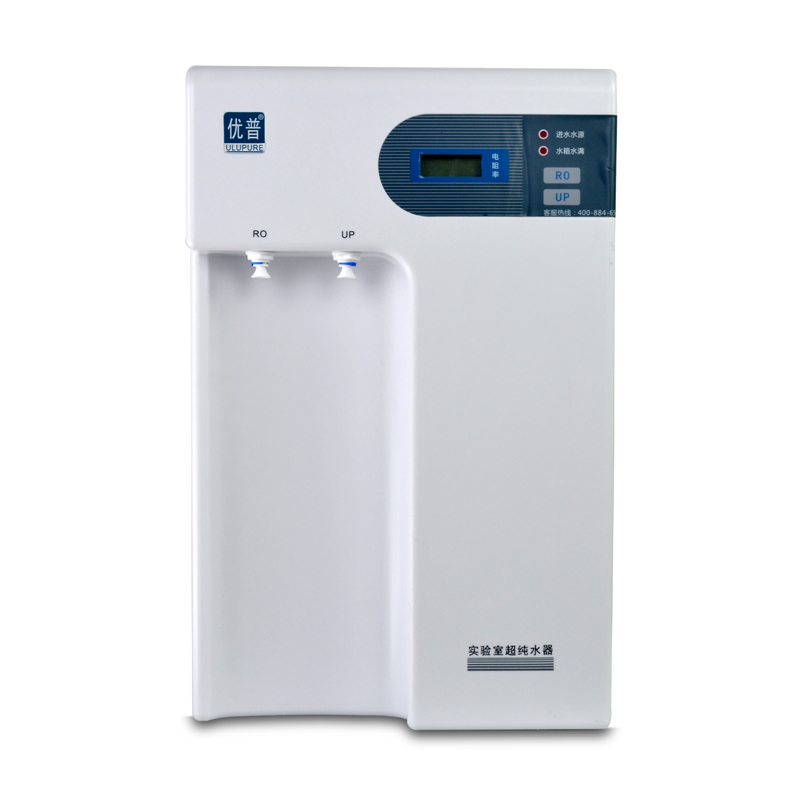
Under normal circumstances, after using ultrapure water equipment for a period of time, we may find that the water production slows down, which is puzzling to many customers. Below are the reasons why ultrapure water equipment may slow down water production:
1. Membrane Clogging. If the pre-filter is not replaced or cleaned for a long time, the water quality inside the machine will be far worse than the water quality before it enters the machine. Poor raw water quality coupled with a low wastewater ratio can cause clogging of the wastewater solenoid valve or flushing combination valve, resulting in no wastewater or very little wastewater output. This leads to membrane clogging and a shortened lifespan.
2. Transformer Fault. A faulty transformer cannot provide the voltage required for the pump to properly pressurize, resulting in a slower pump speed and lower pressure. Low pressure naturally cannot reach the pressure required for tap water to pass through the RO membrane, thus slowing down water production. After ruling out pump and membrane issues as the main factors affecting slow water production, it is necessary to try replacing the transformer.
3. Check Valve Clogging. Sometimes check valves can also become clogged, although this is rare. During inspection, you can remove the check valve and check the water flow. If there's a significant change in the flow rate after removal, it indicates a blockage.
4. Filter Cartridge Clogging. One of the most common equipment malfunctions is filter cartridge clogging. Replacing the filter cartridge is crucial for extending the equipment's lifespan.
5. Low Pump Pressure or Pump Pressure Loss. Low pump pressure typically occurs in equipment older than two years or equipment that has been operating for extended periods. Pump pressure loss is often difficult to detect. The direct symptom is reduced or no water output from the membrane, frequently mistaken for membrane clogging.
The ultrapure water produced by the ultrapure water system will deteriorate in quality over time when stored in the tank. What are the reasons for this deterioration?
1. Tank Material. Because ultrapure water has very high purity and is almost free of impurities, it easily absorbs pollutants from the external environment, causing contamination. 1. **Water Tank:** If the water tank is made of low-grade plastic, it's more susceptible to dissolving organic matter, increasing the water's conductivity and leading to a decline in water quality.
2. Vent Vent: Most ultrapure water systems have a vent vent to maintain pressure balance. However, this vent allows outside air to enter, introducing bacteria and particulate matter, which can contaminate the stored water. Therefore, a filter is recommended for the vent.
3. Water Tank: Some ultrapure water systems have flat-bottomed tanks. During maintenance, it's difficult to drain the water from the bottom, creating a breeding ground for bacteria. We recommend using a conical tank, allowing for easy drainage during maintenance and preventing bacterial growth.
4. Disinfection: Even in a sealed environment, bacteria can thrive, as even tiny microorganisms can form biofilms that contaminate the water. Therefore, disinfection of the pure water is crucial.
Many customers frequently report a problem when using ultrapure water equipment: scale easily forms on the reverse osmosis membrane. Industry experts say that scale formation not only affects the normal operation of the ultrapure water equipment but also impacts the quality of the output water, causing inconvenience. So, how can we prevent scale formation in ultrapure water equipment during use?
It is understood that during prolonged use, ultrapure water equipment uses the pressure difference across the reverse osmosis membrane for water exchange. This continuous exchange leads to the accumulation of large amounts of salt, which contains a significant amount of precipitate. Over time, this results in scale formation, which severely affects the quality of the purified water. Therefore, it is crucial to effectively prevent this from happening. Technicians suggest maintaining a consistent and stable filtration speed. A reasonable filtration speed ensures the purification effect of the ultrapure water equipment. Furthermore, when choosing filter media, it is recommended to select media with a relatively uniform particle size, as this ensures more thorough filtration.





