

Phone:
0086 28 87573647
+86 19150187139
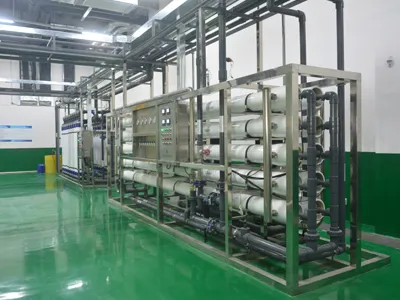
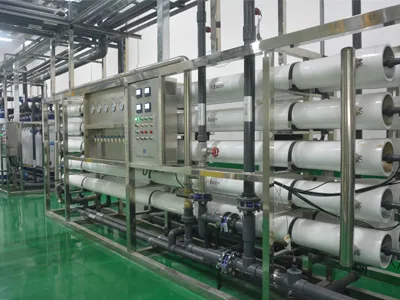
The Chinese Pharmacopoeia (2000 edition) defines purified water as "water prepared for pharmaceutical use by distillation, ion exchange, reverse osmosis, or other suitable methods," no longer limiting it to just distillation. This change in the Pharmacopoeia represents a significant advancement in the history of pharmaceutical water production in my country, aligning it with the standards of advanced countries worldwide. The Pharmacopoeia defines water for injection as "water obtained by distillation of purified water." Furthermore, the USP has explicitly stated in seven consecutive editions that reverse osmosis (RO) is a legally permissible method for producing water for injection, demonstrating confidence in the use of membrane technology for pharmaceutical water production. Membrane separation is an inevitable trend in the development of pharmaceutical water technology.
Currently, most domestic and international pharmaceutical companies use ion exchange, reverse osmosis, or a combination of both to produce purified water, which is then distilled to produce water for injection. In these pharmaceutical water production processes, ion exchange technology remains widely used as a deep desalination method. However, the regeneration of ion exchange resins generates large amounts of waste acid and alkali, severely polluting the environment and hindering its development. Reverse osmosis membranes achieve a 100% removal rate for bacteria, pyrogens, viruses, and organic matter in water. Although two-stage reverse osmosis eliminates the need for ion exchange resins, it has extremely high requirements for the salinity of the raw water. This is because the current desalination rate of reverse osmosis systems is around 98%. If the salinity of the raw water is high, the conductivity of the product water will exceed the control target.