


Phone:
0086 28 87573647
+86 19150187139

[Introduction] "In the future, online water quality analysis instruments, including mobile analytics, have broad application prospects and will be widely used in smart water management, intelligent water plants, smart agriculture, as well as personal water quality testing and water safety management."
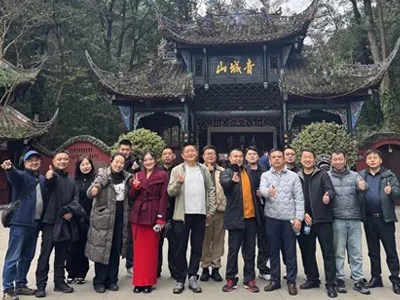
According to Instrument Information Network, the "7th China International Forum and Exhibition on the Application and Development of Online Analytical Instruments (CIOAE 2014)," jointly organized by the Analytical Instrument Branch of the China Instrument and Control Society and the Analytical Instrument Branch of the China Instrument and Control Industry Association, was held at the National Convention Center on November 25-26, 2014. Instrument Information Network participated in the conference as a strategic media supporter.
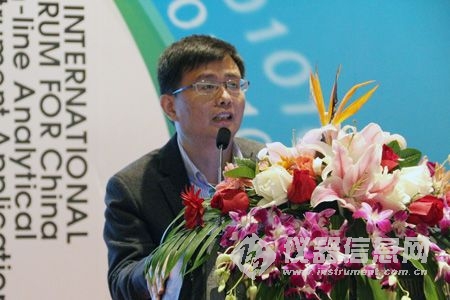
At the plenary session of this conference, Cheng Li from Hach Company presented a report entitled "Current Status and Future Prospects of Online Water Quality Analysis Instruments."
Current Status
The "2018 China Water Quality Analysis Instrument Market Outlook and Opportunities" report released by market research company Research and Markets in 2013 mentioned that China is one of the world's largest water quality analysis instrument markets and has become the leader in the Asia-Pacific region. The Chinese water quality analysis instrument market is projected to experience phenomenal growth over the next five years, exceeding $550 million in 2018.
This massive market is driven by two main factors. Firstly, stringent policies and regulations. my country has prioritized online monitoring as a crucial technological approach for controlling water pollution and ensuring water security. Automatic monitoring of pollution source discharge outlets controlled by national and local governments, along with automatic water quality monitoring stations distributed across rivers and lakes nationwide, provides numerous opportunities for the application of water quality analysis instruments.
Secondly, as a manufacturing powerhouse with the world's most comprehensive industrial sectors, China's industrial development also fuels the demand for online water quality analysis instruments. Currently, both traditional water-intensive industries like thermal power, petrochemicals, and coal chemicals, and emerging industries with extremely stringent water quality requirements such as electronics and pharmaceuticals, offer widespread application opportunities for online water quality analysis instruments.
Cheng Li explained that online water quality analysis instruments can be categorized into two types based on their application purpose: monitoring-type and process-type. Monitoring-type instruments are primarily used for simple water quality monitoring to determine whether water quality meets regulatory requirements and for early warning of environmental and drinking water quality; they do not participate in water treatment process control. The water quality parameters it monitors mainly include COD, ammonia nitrogen, total phosphorus, total nitrogen, and heavy metals. It also requires higher data accuracy, as the data can serve as the basis for law enforcement and management by relevant departments.
Process-type online water quality monitoring instruments are primarily used for water quality monitoring during water treatment processes or water use. The measured water quality parameters participate in process control to optimize water treatment processes and improve efficiency. Simultaneously, while ensuring water quality meets standards, they achieve energy conservation and consumption reduction in the water treatment process. Furthermore, the water quality parameters that need to be monitored vary depending on the water treatment process, potentially exceeding dozens. Process-type online water quality monitoring instruments have higher requirements for reliability and stability, requiring them to reliably reflect water quality change trends and provide a basis for water treatment process control. Additionally, the response time requirements for process-type analytical instruments are significantly higher than those for monitoring-type instruments.
Currently, typical applications of process-type online water quality analyzers in my country include: in the petrochemical industry, online TOC analyzers have become standard equipment for condensate reuse; in the water supply industry, water plants using chlorine and chloramine processes employ online disinfectant analyzers, such as residual chlorine and chloramine analyzers, to save on water treatment chemicals and reduce operating costs; in the pharmaceutical industry, the use of online TOC analyzers has become an important means of monitoring and controlling organic impurities in pharmaceutical water; in the municipal wastewater treatment and aquaculture industries, online dissolved oxygen monitoring reduces energy consumption and operating costs while ensuring water quality meets standards; online nutrient analyzers are also gradually being applied to help wastewater treatment plants optimize phosphorus and dechlorination processes and improve wastewater discharge standards; additionally, online hardness and online sodium ion analyzers are used to optimize boiler feedwater treatment processes.
Cheng Li stated that the Chinese online water quality analyzer market is developing rapidly, with significant government investment driving the rapid development of monitoring-type online water quality analyzers. Online water quality analyzers are being widely adopted, providing technical support for industrial upgrading in the water industry, optimization and control of water treatment processes, and reduction of energy consumption. However, several problems remain, such as: online water quality analyzers primarily use traditional analytical principles, with limited application of new measurement principles; data obtained from monitoring instruments are independent and lack strong correlation; the establishment of basic water quality databases is still in its early stages, and the lack of data post-processing and analysis prevents the full realization of data value and support for water environment prediction and early warning; and relying solely on monitoring-based analytical techniques lacks effective means to combat data manipulation, further undermining the value of online water quality analyzers.
Future Outlook
The emergence of new measurement principles, materials, and algorithms is also driving the development of water quality analyzers. New measurement principles such as LIBS (Laser-Induced Breakdown Spectroscopy), HMA (Hybrid Multispectral Analysis), and MWDXRF (Multi-Wavelength Dispersive X-ray Fluorescence Analysis), along with biotechnology, are gradually being adopted by online water quality analyzers, leading to the emergence of more water quality parameters that can be analyzed online.
New materials such as graphene, nanomaterials, and biochips provide material support for the application of online water quality analyzers based on new measurement principles. Chemometrics will be increasingly used in water quality analysis; the emergence of various new algorithms and water quality models will also enhance the functionality of various new online water quality analyzers and improve data post-processing, providing more valuable water quality information and data.
Regarding the future development of water quality analyzers, Cheng Li stated that the main trends are: intelligentization will become the mainstream of online water quality analyzer controllers, featuring network capabilities and more human-computer interaction methods, such as gesture and voice control; data sharing and reprocessing between instruments will be achieved through cloud computing.
Sensors will primarily develop towards miniaturization and low cost, enabling direct data transmission and online monitoring of more water quality parameters. On the software side, in addition to the instrument's own control software and data analysis software, various communication, data analysis, and processing application software will emerge, and water quality identification software will become a reality.
Furthermore, online water quality analyzers will possess self-learning, self-management, and adaptive functions, enabling them to proactively adjust or issue warnings based on changes in the environment, operator behavior, and the instrument's own status. The instruments can record and remind users of various usage and maintenance information, guiding them to proactively maintain the instrument, manage spare parts, and predict its lifespan, thus improving work efficiency.
Cheng Li explained that not only instrument hardware and analytical technology, but also software and data processing technology will be crucial components of online water quality analyzers. With the emergence of big data technology and cloud computing, the way data is managed and used, previously distributed across different departments and individuals, will change. Large amounts of data from online water quality analyzers can be rapidly processed and analyzed to establish regional or watershed water quality baselines and build a basic water quality database for target areas. Algorithms and mathematical models for water quality prediction and safety early warning can be constructed to guide government water management and public water use behavior.
In the future, it is worth anticipating whether we can leverage current innovative technologies based on mathematical model algorithms and utilize big data and cloud computing to conduct comprehensive water quality prediction and early warning for large areas, such as watersheds.
In addition, Cheng Li specifically introduced mobile water quality analysis technology. Mobile water quality analysis equipment includes portable analytical instruments and pre-prepared reagents. As a "non-continuous real-time analysis technology," mobile analysis will complement and develop traditional online water quality analysis technologies in the future.
Cheng Li explained that, based on instrument miniaturization, mobile water quality analysis equipment will also add wireless communication and GPS functions. Various data processing, analysis, and transmission apps will emerge in large numbers, providing more data information for big data processing centers. Existing mobile terminals will be enhanced with water quality analysis functions, realizing the civilian application of mobile water quality analysis technology.
The widespread adoption of mobile internet and the emergence of cloud computing have made data sharing in mobile water quality analysis a reality. With appropriate mobile carriers, large amounts of real-time water quality data can be obtained over a wide area. Mobile analysis can provide data with lower costs, wider coverage, and greater information volume than traditional fixed online analysis. Due to the emergence of big data and cloud computing, non-professional analysts can provide non-traditional water quality-related data, which will become increasingly valuable for comprehensive water quality assessment.
Finally, Cheng Li stated, "In the future, online water quality analysis instruments, including mobile analytics, will have broad application prospects and will be widely used in areas such as smart water management, intelligent water plants, smart agriculture, as well as personal water quality testing and water safety management."