






Phone:
0086 28 87573647
+86 19150187139

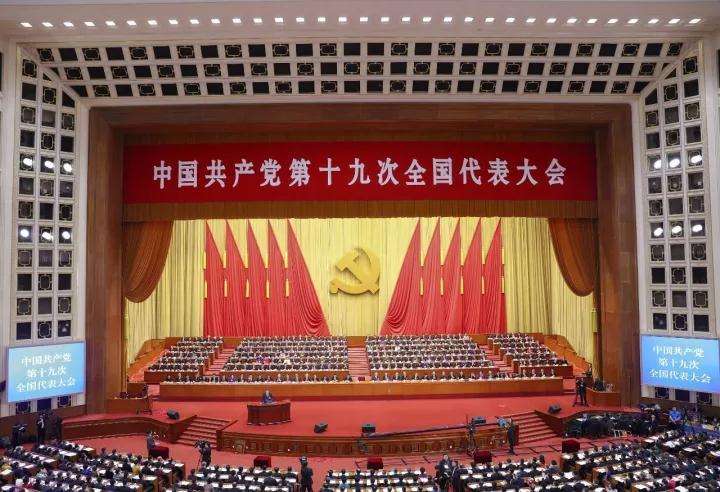
Innovation's Importance
"The 19th Party Congress report's positioning of innovation as the primary driving force for development and a strategic support for building a modern economic system further affirms and strengthens its role," said Zhou Zhonghe, director of the Institute of Vertebrate Paleontology and Paleoanthropology, Chinese Academy of Sciences.
Wan Jinbo, a researcher at the Institute of Science and Technology Strategy Consulting, Chinese Academy of Sciences, stated that a modern economic system is the fundamental support for building a modern socialist country in all respects. The 19th Party Congress report's emphasis on innovation as a strategic support for building a modern economic system signifies that the status of innovation is further strengthened in the new round of technological revolution, industrial transformation, and military transformation, and is crucial to the future and destiny of the nation.
"Accelerating the construction of an innovative country most urgently requires further strengthening scientific and technological innovation and relying on it to solve many problems encountered in economic development. This requirement is conducive to accelerating the transformation of my country's economic development model and enabling Party committees and governments at all levels to further recognize the key role of scientific and technological progress in development," said Xu Xudong, deputy director of the Institute of Hydrobiology, Chinese Academy of Sciences.
"National development and stability cannot be separated from scientific and technological innovation," Zhou Zhonghe suggested. He recommended that in the future, the government should continue to increase stable investment in scientific and technological innovation on the one hand, and continue to deepen the reform of the science and technology system on the other hand, creating a more relaxed and favorable innovation environment for scientific and technological workers.
The 19th CPC National Congress report proposed strengthening applied basic research, expanding the implementation of major national science and technology projects, and emphasizing innovation in key common technologies, cutting-edge leading technologies, modern engineering technologies, and disruptive technologies.
Redefining the Connotation of Scientific Research
Applied basic research refers to application-oriented basic research that solves common fundamental scientific problems for major and key technologies. "In the past, my country's research was mostly about following and imitating, with few technological achievements possessing core competitiveness. To become a science and technology powerhouse, we need landmark breakthroughs that lead global technological innovation," said Liu Jing, a researcher at the Institute of Physics and Chemistry of the Chinese Academy of Sciences and a professor at Tsinghua University. "The 19th CPC National Congress report's emphasis on strengthening applied basic research redefines the connotation of scientific research in my country and will have a profound impact."
Liu Jing said that new technological revolutions and industrial transformations often stem from breakthroughs in cutting-edge and disruptive technologies. Currently, the world's science and technology are on the eve of revolutionary changes, and strengthening research at the forefront of science and technology and industry is crucial to gaining the initiative in future technological and economic competition.
"Applied basic research is not simply the application of basic research, but rather basic research geared towards national strategic needs and major industrial application scenarios. It is the source of technological innovation and the foundation of industrial development," said Xiao Youdan, associate researcher at the Institute of Science and Technology Strategy Consulting, Chinese Academy of Sciences. "To build an innovative nation, we must break the previous cycle of 'technology import—becoming outdated—re-importing' and improve our basic research capabilities geared towards strategic applications."
Xiao Youdan believes that making applied basic research a key component of basic research is a strategic measure that aligns with my country's development stage and national conditions. Strengthening applied basic research requires a shift in mindset and institutional guarantees. He suggests that, in implementing the spirit of the 19th National Congress of the Communist Party of China, relevant departments should provide more precise support for application-oriented basic research, distinguishing between applied basic research and applied research. At the same time, it is necessary to change the one-size-fits-all division and evaluation of application-oriented basic research and applied research.
"Emphasizing applied basic research should also distinguish it from free-exploration-based basic research. Simultaneously, we should avoid duplication of resources and excessive competition between national research institutions and universities, resolving the long-standing functional overlap and positioning conflicts between the two in basic research," said Xiao Youdan. He suggested that universities, national research institutions, and market-oriented innovation entities should, in accordance with the new requirements of the 19th CPC National Congress report, quickly clarify their strategic positioning, innovate systems and mechanisms, address institutional shortcomings, and improve their capacity for resource allocation and human resource supply to implement strategic goals, all while focusing on strengthening basic research.
The 19th CPC National Congress report proposed establishing a technology innovation system with enterprises as the main body, market-oriented, and deeply integrated with industry, academia, and research.
Deep Integration of Scientific Research and Economy
Xu Xudong, Deputy Director of the Institute of Hydrobiology, Chinese Academy of Sciences, stated that the 19th CPC National Congress report emphasized the need for "deep integration" of industry, academia, and research. "The emphasis on 'deep integration' primarily addresses the current low level of integration in most cases, insufficient depth of collaborative problem-solving, and weak cohesion for win-win cooperation. This is due to my country's short history of market economy, the still-significant contribution of original technological innovation to the economy, and the lack of a truly established culture of industry-academia-research collaborative innovation."
Wan Jinbo, a researcher at the Institute of Science and Technology Strategy Consulting, Chinese Academy of Sciences, believes this statement aims to address the chronic problem of weak ties between scientific research and the economy. It seeks to continuously transform national strategic needs, people's aspirations for a better life, and prominent issues in innovation-driven development into tasks for scientific and technological innovation, and to continuously transform the achievements of scientific and technological innovation into driving forces for economic and social development, achieving seamless integration between scientific research and economic and social development.
Hu Zhijian, president of the China Academy of Science and Technology for Development Strategy, stated that the innovation capabilities of enterprises are crucial for building an innovative nation. Developed countries highly value the leading role of enterprises in the technological innovation system. A country's ability to create wealth and develop more competitive products and services in the international market depends primarily on its enterprises. As the main players in the market, enterprises naturally possess the instinct for innovation. Therefore, the 19th National Congress report reiterated the need for enterprises as the main body and the market as the guide.
"The market must truly become the force for allocating innovation resources, and enterprises must truly become the main drivers of technological innovation. The government should not direct enterprise innovation; the market should guide it, and competition should force enterprises to innovate," said Hu Zhijian. He added that in this process, the government's role is to continuously improve the innovation environment, creating a fair, orderly, and anti-monopoly market; simultaneously, to leverage the effectiveness of all scientific and technological resources, achieving deep integration of research institutions, universities, and enterprises to establish a national technological innovation system; and to further deepen the reform of the science and technology system to break down institutional barriers to the flow of scientific and technological elements; and to give full play to the role of science and technology finance and intermediary organizations to unblock the channels for finance to enter the real economy, especially innovative small and medium-sized enterprises.
The 19th National Congress report proposed to target the forefront of global science and technology, strengthen basic research, and achieve major breakthroughs in forward-looking basic research and leading original achievements.
Behind this strengthening is investment.
"Basic research is the cornerstone of the country's future scientific and technological development. Compared with leading scientific and technological nations, my country lags far behind in this area. To achieve major breakthroughs in leading original achievements, we must strengthen and improve the level of basic research," said Wang Yifang, director of the Institute of High Energy Physics, Chinese Academy of Sciences.
Wang Yifang stated that technologically advanced countries typically invest 15%-20% of their GDP in basic research, while our current investment is only 5%. We should continue to increase investment in basic research, hoping to raise it to 10% in the near future. Furthermore, funding should not be solely the responsibility of the central government; local governments should also actively participate.
Zhou Zhonghe, Director of the Institute of Vertebrate Paleontology and Paleoanthropology, Chinese Academy of Sciences, said that strengthening basic research and increasing the output of major, leading original achievements requires, firstly, maintaining continuous and stable investment in basic research. In terms of investment direction and allocation, we must not neglect investment in small-scale, team-based basic research. Secondly, we must continue to deepen the reform of the science and technology system, the most important aspect of which is reforming the scientific research evaluation system. In addition, we must attach importance to the training of talent in basic research.
Wu Ji, Director of the National Space Science Center, Chinese Academy of Sciences, said that in the long run, we must pay special attention to how to strengthen the momentum of scientific and technological innovation and achieve a shift from following to leading. To achieve this, we should increase investment and strategic research in cutting-edge fields of basic science, while also adopting scientific organizational and management methods.
"Building capacity for basic research is extremely important. We should continue to strengthen the construction of large-scale scientific facilities. Moreover, these facilities should be open to the world after completion, not just for Chinese scientists. Only in this way can our basic research hope to achieve world-leading status," suggested Gao Fu, Academician of the Chinese Academy of Sciences and Director of the Chinese Center for Disease Control and Prevention.
The 19th National Congress report proposed deepening the reform of the science and technology system, establishing a technology innovation system with enterprises as the main body, market-oriented, and deeply integrated with industry, academia, and research, strengthening support for innovation in small and medium-sized enterprises, and promoting the transformation of scientific and technological achievements.
From Solo to Chorus: Innovation Transformation
"To implement the requirements of the 19th National Congress report to accelerate the construction of an innovative country, we must adhere to the dual-wheel drive of scientific and technological innovation and institutional innovation, and solve the three basic questions of 'who will innovate,' 'where does the driving force come from,' and 'how to use the results,'" said Wan Jinbo, a researcher at the Institute of Science and Technology Strategy Consulting of the Chinese Academy of Sciences. He believes that it is necessary to continuously improve the institutional mechanisms adapted to innovation-driven development, and simultaneously realize the modernization of national scientific and technological innovation, the modernization of the scientific and technological innovation governance system, and the modernization of governance capacity in the overall process of building a prosperous, democratic, civilized, harmonious, and beautiful socialist modern country.
Hu Zhijian, president of the China Academy of Science and Technology for Development, stated that in recent years, my country's top-level design for innovation-driven development has basically taken shape, the main framework of a future-oriented science and technology system has been largely established, and a series of science and technology system reform measures have been introduced. These mainly focus on reforms in science and technology evaluation, science and technology program management, and the technology transfer and transformation system.
"Taking science and technology evaluation reform as an example, we have implemented a distribution policy oriented towards increasing the value of knowledge. The 'three evaluations' reform—project review, talent evaluation, and institutional assessment—is continuously deepening, and the pace of reward system reform is also accelerating. These all contribute to the flow of innovative talent and stimulate the innovative vitality of researchers," said Hu Zhijian.
Experts interviewed generally believe that compared with the goal of accelerating the construction of an innovative country, my country still faces many problems in science and technology system reform, and further deepening of science and technology system reform is urgently needed. Wan Jinbo said, "Currently, the supply and demand relationship between my country's scientific and technological innovation and economic and social development is not well matched. We must simultaneously exert efforts in both science and technology system reform and economic and social reform to eliminate the 'island phenomenon' in scientific and technological innovation and transform innovation from a 'solo performance' to a 'chorus.'"
Xu Xudong, deputy director of the Institute of Hydrobiology, Chinese Academy of Sciences, suggested that follow-up measures for the reform of science and technology program management should be implemented as soon as possible, and continuous summarization and improvement should be carried out during operation; at the same time, the special nature of scientific and technological innovation activities should be further reflected, and researchers should be given more freedom; it is also necessary to accelerate the establishment of a healthy scientific research value orientation, strengthen the support for intermediate links needed for the transformation of scientific and technological achievements, and build pilot-scale platforms.
The 19th National Congress report proposed advocating an innovation culture and strengthening the creation, protection, and utilization of intellectual property rights.
The word "strengthen" is unusual.
Zhang Zhicheng, director of the Protection and Coordination Department of the State Intellectual Property Office, believes that the 18th National Congress report first proposed "strengthening intellectual property protection," while the 19th National Congress report proposed "strengthening the creation, protection, and utilization of intellectual property rights." The shift from "strengthening" to "enhancing" demonstrates the central government's consistent emphasis on intellectual property protection and also sets new requirements for intellectual property protection work in the new era. "Strengthening" protection means further promoting new breakthroughs in various aspects of work based on the significant achievements already made in building a strong intellectual property nation.
"This is a new proposition and a new positioning for intellectual property work in the new era, and even more so, a new task and a new mission given to intellectual property work under new historical conditions, which will guide the theoretical and practical work of intellectual property for a long time," said Han Xiucheng, director of the Intellectual Property Development Research Center of the State Intellectual Property Office. "Innovation-driven development is a major trend of the times, a global trend, and a major national strategy, while intellectual property is a strategic allocation, institutional support, and legal guarantee for innovation-driven development," said Wu Handong, honorary director of the Intellectual Property Research Center at Zhongnan University of Economics and Law and a member of the National Intellectual Property Strategy Expert Group. He added that strengthening the creation, protection, and utilization of intellectual property involves not only institutional innovation but also technological, cultural, and industrial innovation, requiring a comprehensive and multi-dimensional understanding of its profound implications.
Shen Changyu, director of the State Intellectual Property Office, stated that implementing the report's requirements requires focusing on the word "strengthening," systematically planning all aspects of intellectual property creation, protection, and utilization, and striving to achieve a fundamental transformation. First, it is necessary to promote innovation in cutting-edge scientific and technological fields, deeply implement the patent quality improvement project, and strive to transform intellectual property creation from quantity to quality and from large to strong. Second, it is necessary to coordinate and promote the various aspects of strict, comprehensive, rapid, and equal protection of intellectual property, build a sound environment for the strict protection of intellectual property in accordance with the law, and promote the transformation of intellectual property protection from continuous strengthening to comprehensive and strict enforcement. Thirdly, we must start by deepening the reform of intellectual property rights distribution and establishing and improving the intellectual property operation platform system, striving to promote the transformation and application of intellectual property from single benefits to comprehensive benefits, boosting the development of the real economy, improving product supply levels, and meeting the people's growing needs for a better life.
Summary
Currently, my country's economic development has entered a new normal, requiring both new demand-driven growth and the impetus of technological innovation. Sichuan Ulupure, as a technology and environmental protection company producing ultrapure water, understands even more the importance of technological innovation for future development. Only by using new knowledge to drive technological development and continuously innovating can we break free from the situation of merely following others.