

Phone:
0086 28 87573647
+86 19150187139
Our company is one of the earliest professional manufacturers in China engaged in the development, production, sales, and service of laboratory ultrapure water systems. Since our establishment in 1998, we have installed and sold thousands of various types of reverse osmosis pure water systems (including some drinking RO systems) and over 400 laboratory ultrapure water systems in western provinces such as Sichuan, Yunnan, and Xi'an. Among these, more than 20 customers are located in Xichang and Panzhihua (see the customer directory for the Southern Sichuan region). Our company adheres to the corporate philosophy of professionalism, innovation, excellence, and service, providing high-quality products and excellent pre-sales and after-sales service to our customers.
The Vanadium Testing Station of the Quality Inspection Center of Panzhihua Iron and Steel Group was one of the earliest laboratory customers of Panzhihua Iron and Steel Group to use our products. This vanadium testing station has a large water consumption (approximately 150 liters per day). Some analytical instruments require ultrapure water with a conductivity below 0.1 μS/cm, while the rest require pure water with a conductivity below 3 μS/cm. Panzhihua City is a mining area, resulting in poor tap water quality. The total dissolved solids (TDS) content is between 200 and 250 mg/L, with high iron and manganese content. Based on the specific characteristics of Panzhihua's water quality, our company explored various technical solutions and ultimately provided a customized solution for our clients.
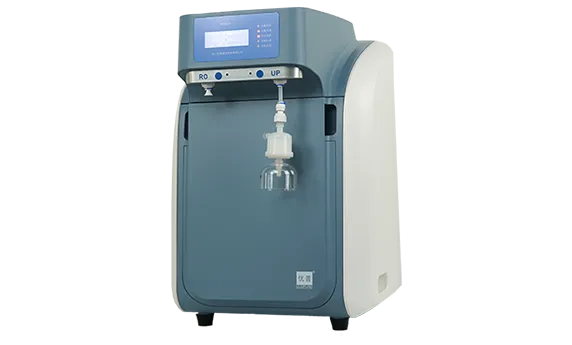
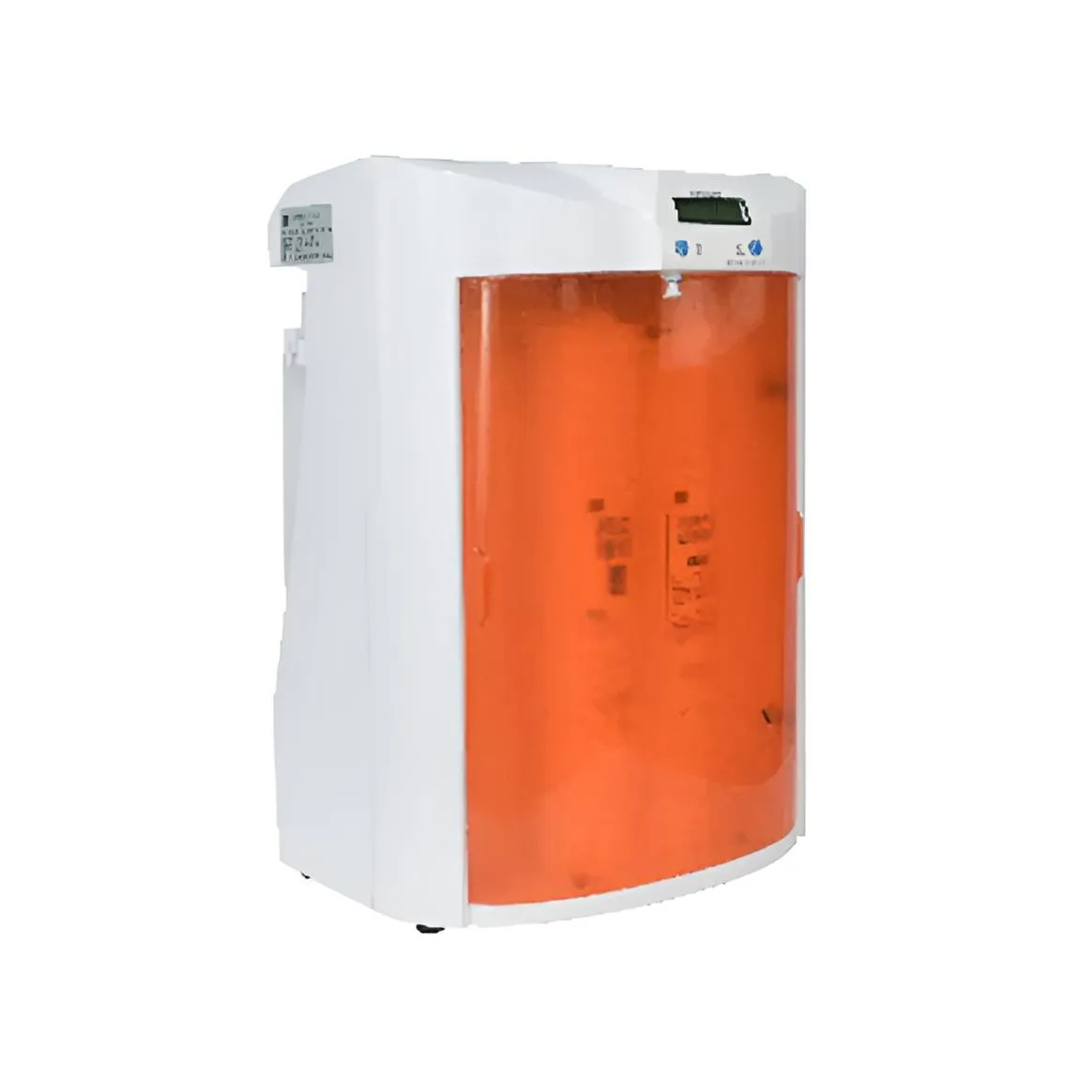
Initially, our sales representative for the Southern Sichuan region, Xie Jiacheng, recommended our UPT-Ⅰ-20 benchtop ultrapure water system, as per standard requirements. The basic configuration and technical parameters of this model are as follows:
Water production capacity: 20 liters/hour
Water flow rate: 1.5 liters/minute
UP water quality: >10 MΩ·cm
RO water quality: >2~10 μs/cm (final measured value: 7~8 μs/cm)
Water pretreatment: 10-inch 4-channel type
RO membrane: 1 x 75G Dow membrane
Purification column: 5 x 10-inch standard purification columns
The vanadium testing station requires pure water with a conductivity below 3 μS/cm. Due to the poor quality of the local source water, the RO water produced by the single-stage reverse osmosis membrane could not meet the customer's requirements. During the trial period, the laboratory staff only used UP ultrapure water. UP ultrapure water is obtained by treating RO pure water with a fine-mixing resin in the purification column. The purification column is small, and the resin exchange capacity is limited. As a result, after only about 10 days of use, the UP water quality deteriorated rapidly, requiring frequent replacement of expensive purification column consumables, making it economically unfeasible. This solution was rejected by the vanadium testing station.
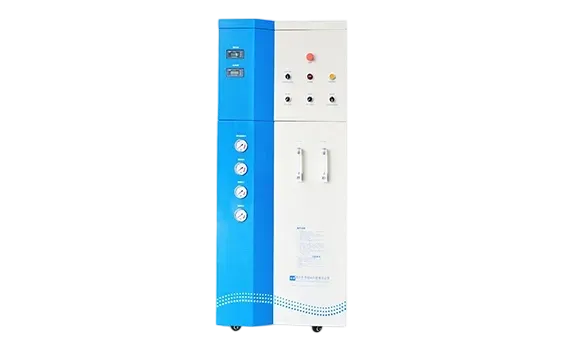
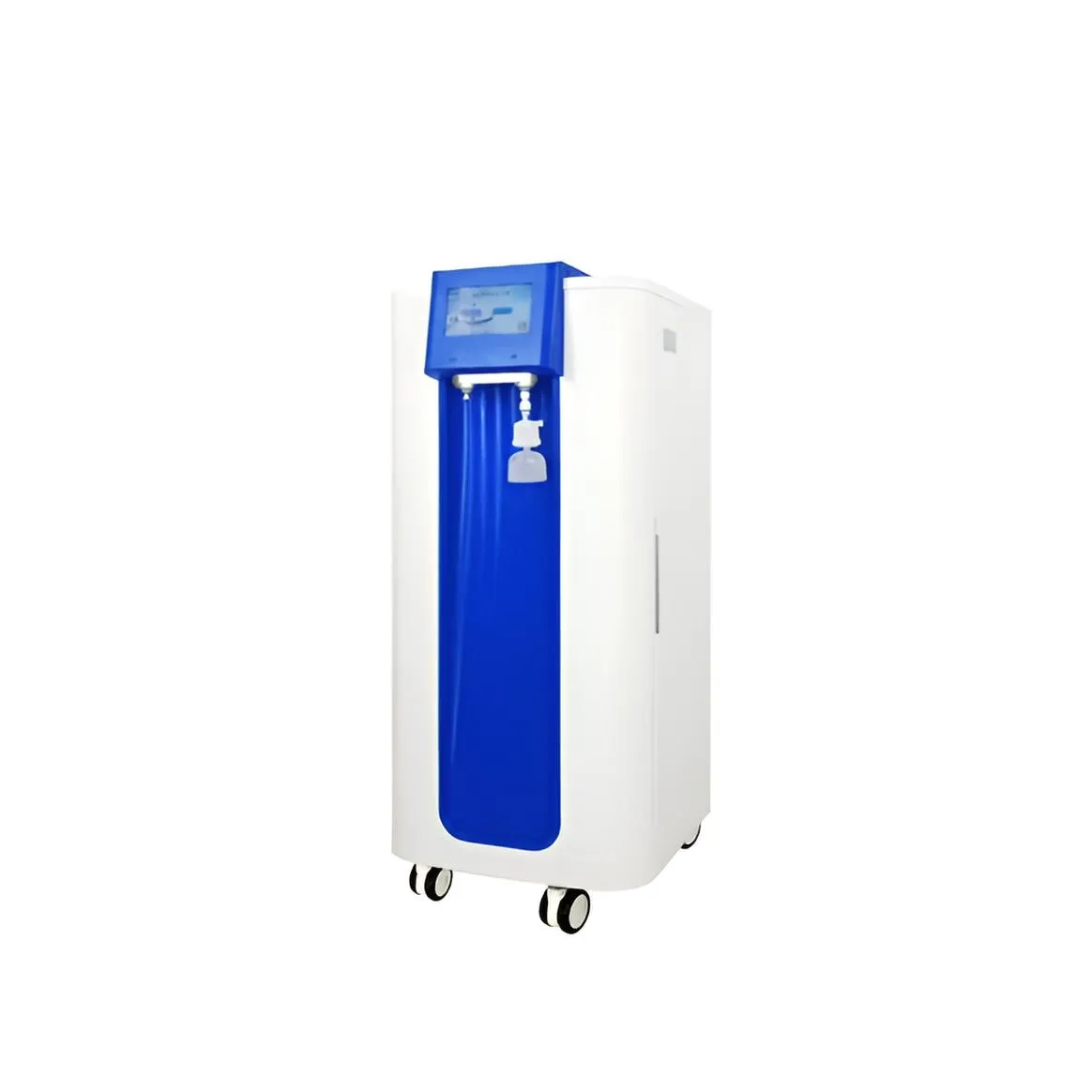
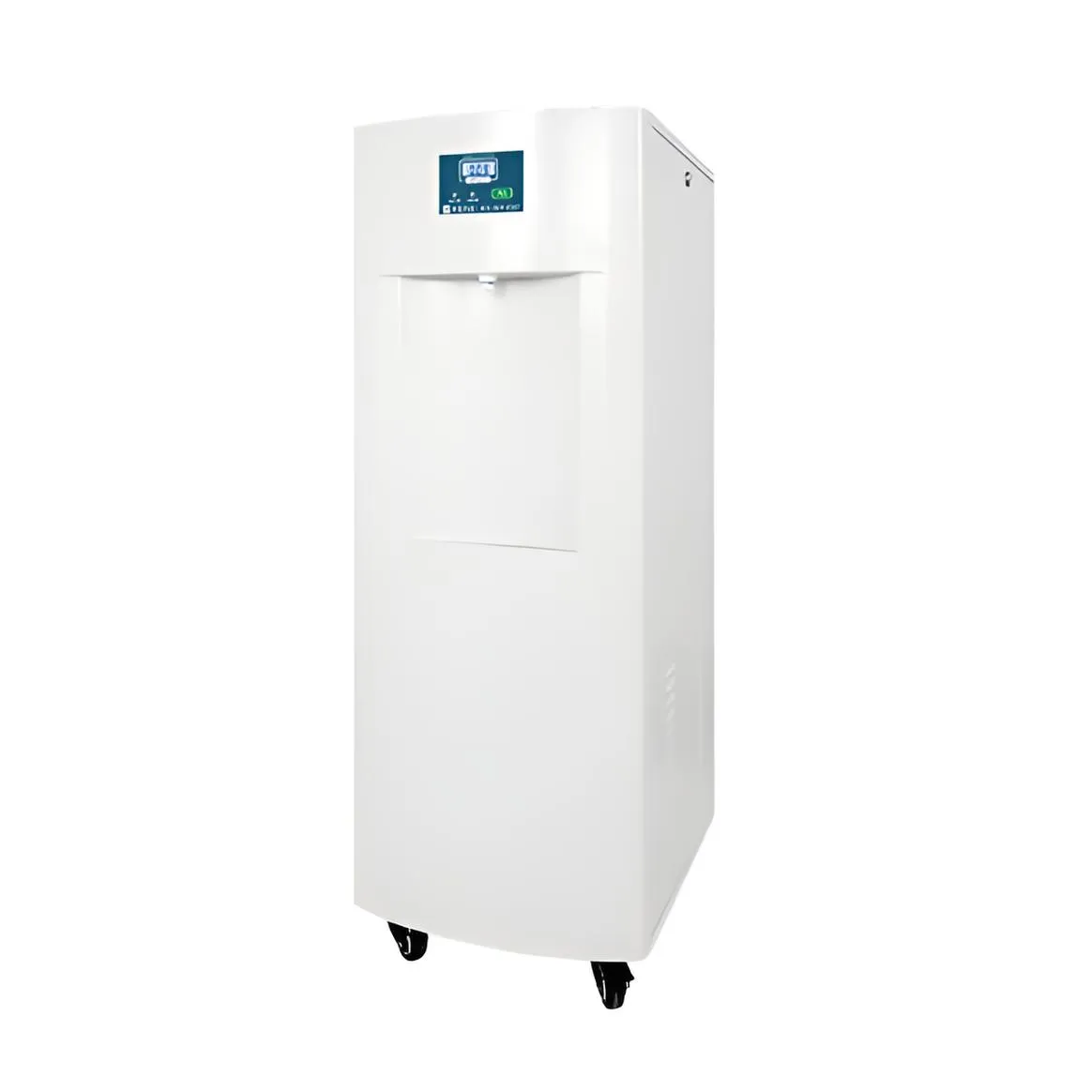
The company's technical support department designed a second solution for the customer, primarily based on two-stage reverse osmosis. Common sense dictates that when the source water TDS value is 200-250 mg/L, the conductivity of the permeate from the two-stage reverse osmosis membrane should be stable at around 1 μS/cm. The model selected is a UPL floor-standing unit. Its basic configuration and technical parameters are as follows:
Water pre-processor: 20-inch 4-channel enhanced type
First-stage RO membrane: 4 x 100G fluid membranes (water production: 80 liters/hour)
Second-stage RO membrane: 2 x 75G Dow membranes (water production: 40 liters/hour)
Purification column: Increased to 8 columns
UP water quality: >10 MΩ·cm
RO water quality: 1~2 μs/cm (final measured value: 1.4 μs/cm)
The customer initially experienced good results with the above-mentioned two-stage reverse osmosis model. After 15 days of trial use, the monitoring station reported that the RO water conductivity had increased to 2.2 μs/cm. After another 20 days, the monitoring station reported that the RO membrane water conductivity had increased to 3 μs/cm. After some time, the RO water conductivity had reached 4.5 μs/cm, and it was no longer possible to use only UP ultrapure water!
The leaders of the vanadium testing station, Yang and Zhang, together with our company's engineers, analyzed the situation and found that the local tap water contained high levels of iron and manganese cations and a certain degree of calcium and magnesium hardness, which significantly impacted the quality of the RO membrane effluent. This led to a rapid decline in the RO membrane's effluent quality, and frequent RO membrane replacements were expensive. The only solution was to remove iron and manganese ions through oxidation using a degassing device during the pretreatment stage. However, degassing devices are complex and bulky, requiring a substantial initial investment. Therefore, the following third improvement solution was ultimately chosen:
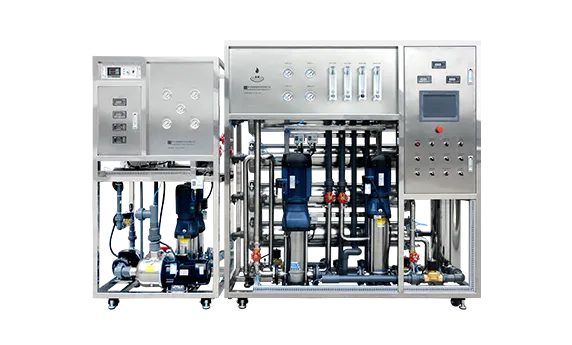
Water Pretreatment: Add one fully automatic water softener to use low-cost, easily regenerable sodium-type cation exchange resin to filter out calcium, magnesium, iron, and manganese cations from the source water; add one columnar activated carbon filter element, which can filter out some iron and manganese ions from the source water.
Reverse Osmosis Section: Two 100G single-stage RO membranes (total water production capacity 40 liters/hour)
Ion Exchange Section: Custom-made large cabinet to accommodate fiberglass resin tanks, replacing expensive purification columns. Only resin replacement (25 liters/time) is required. If water quality requirements are not high, cheaper domestic resin can be considered, significantly reducing annual consumable costs.
This system was implemented from early April 2004 to the end of March 2005. The vanadium testing station used UP ultrapure water that had undergone ion exchange treatment. The water quality gradually decreased from 0.08 μs/cm initially to 1 μs/cm and is still in use. During this period, the vanadium testing station only replaced pretreatment consumables once (one PP filter cartridge + two AC activated carbon filter cartridges). The more expensive RO membranes and finely mixed resins have not yet been replaced; the replacement cycle for the RO membranes and finely mixed resins is estimated to be approximately one year.
As a result, our company has also perfected the production of a new type of UPL floor-standing ultrapure water system that uses a resin tank instead of a purification column, in order to meet the needs of customers with large water consumption in areas with high mineralization.