



Phone:
0086 28 87573647
+86 19150187139

area | PH | Dissolved oxygen | ammonia nitrogen | Dissolved solids (TDS) | Total hardness (as CaCO3 ) | Total alkalinity | Non-carbonate hardness | Average water temperature | Water supply pressure |
Beijing | Around 8.02 | 8.64 mg/L | 0.15 mg/L | 400mg/L | South, West, and Central zones: ≥4 mmol/L (hard water); East and North zones: ≤3 mmol/L (medium-hard water). | ||||
Tianjin | Around 8.2 | 7.7-9.6 mg/L | 225mg/L | 3.5 mmol/L (classified as medium-hard water) | 2.05 mmol/L | 0.85 mmol/L | Summer temperature 20℃, winter temperature 5℃ | 0.4MPa | |
Hebei Province (Shijiazhuang) | 7.67 | 8.97 mg/L | 0.04 mg/L | 360mg/L | |||||
Shanxi (Taiyuan) | 6.72 | 7.23 mg/L | 3.76 mg/L | 420mg/L |
(1) First, from a geographical perspective, North China is located in the lower reaches of the Yellow River basin, bordering the Bohai Sea to the east. It has a temperate monsoon climate, with precipitation concentrated in summer. Most of the region is inland and difficult to be affected by the monsoon, resulting in low and uneven rainfall, with more rainfall in coastal areas and less inland areas. Consequently, groundwater does not receive sufficient replenishment from rainwater, and the water quality deteriorates further after pollution. In addition, being located at the river estuary, it is in the lower reaches of each river basin, which is the most polluted section of the river. Naturally, the water quality is poor, with severe eutrophication and high levels of various ions, organic matter, particulate matter, and other pollutants. This increases the workload of the water purifier's purification column, thus shortening its lifespan. (The average TDS of tap water in the entire North China region is ≥300 mg/L, with most areas in Inner Mongolia ≥400 mg/L.)
(2) Secondly, North China, including relatively industrialized cities such as Beijing and Tianjin, has a large population, which makes water pollution in the region more severe. In addition, the overall water utilization rate in my country is not high, and water resources are wasted in a serious manner. In summary, most of the tap water in this region is surface water that is slightly or moderately polluted, resulting in high water hardness (calcium and magnesium ion content) and other pollutant content, which causes greater damage to reverse osmosis membranes and purification columns.
(3) Finally, according to the "Analysis of Water Environment in the First Half of 2017" issued by the Ministry of Environmental Protection in the first half of 2017, all provinces and cities in North China were among the worst-performing regions. Beijing, Tianjin, Hebei, and Shanxi ranked as the top four regions in terms of the proportion of water bodies that lost their usability in the first half of 2017. Given such severe pollution, it is not easy for water treatment plants to fully implement national standards when treating raw water. Even after treatment, some pollutants remain, such as various ions, lipids, and organic matter. Furthermore, secondary pollution may occur during pipeline transportation, resulting in the raw water supplied to water purifiers potentially containing microorganisms and various pollutants. These microorganisms or oily substances may adhere to the surface of the resin in the purification column, causing a rapid decline in resin function.
III. Suggestions for solving this type of problem:
Standard small-scale laboratory water purifiers are designed for use with tap water of medium to high quality. For areas with poor water quality, it is advisable to enhance the pretreatment system to ensure the proper functioning of the reverse osmosis membrane and produce higher quality pure water.
·
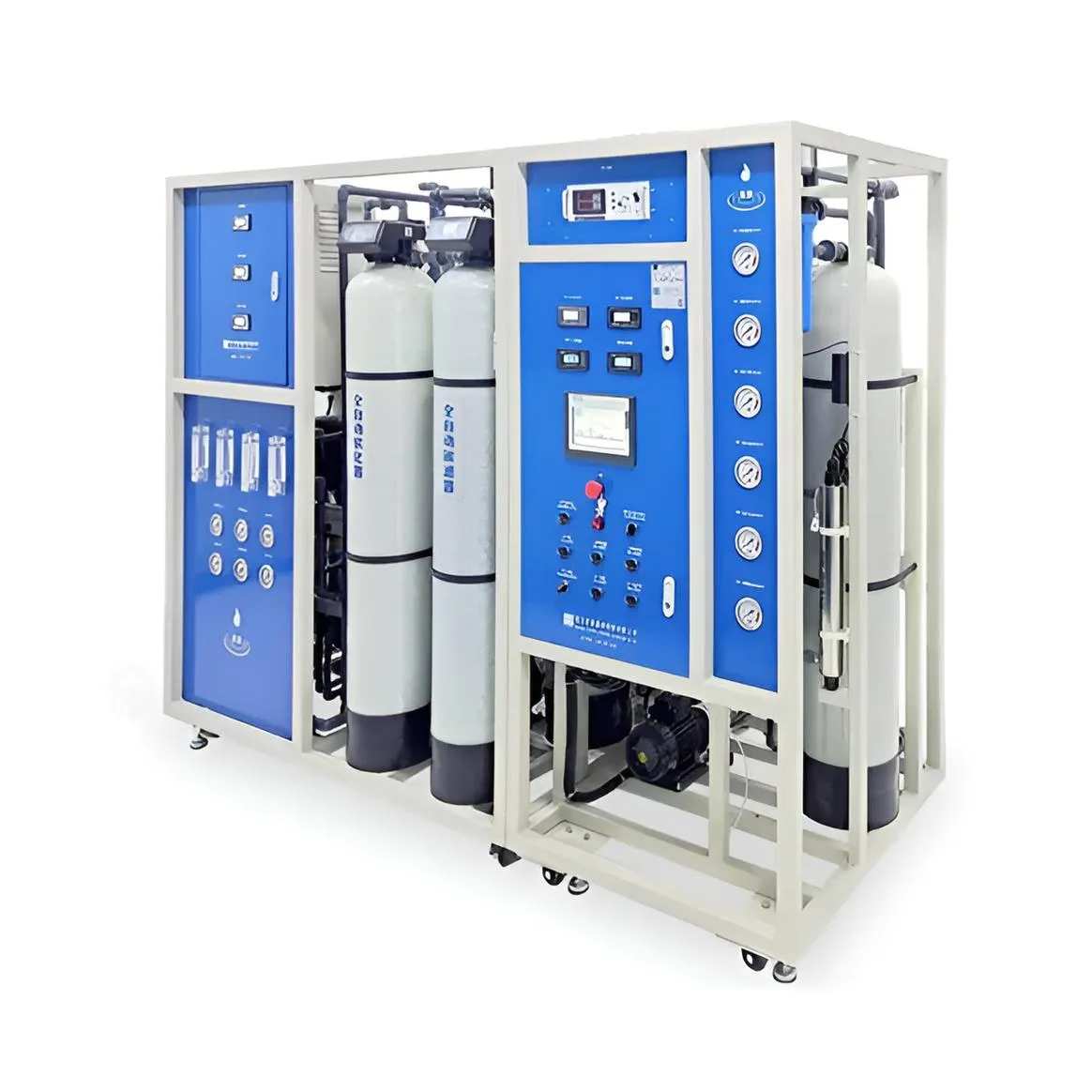
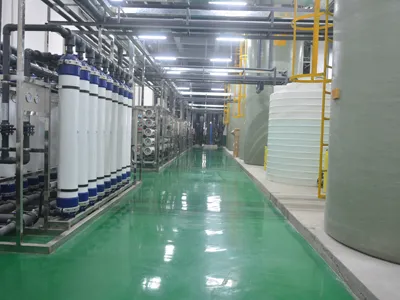
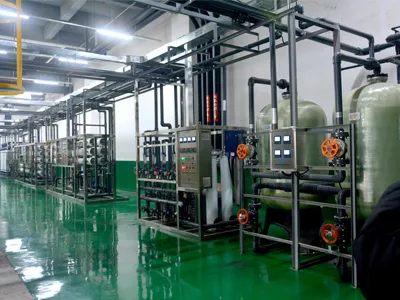
(1) The function of adding the UPU fully automatic multi-media filter: to remove silt, rust, etc., and reduce the turbidity and colloidal content of the raw water. This equipment has a periodic automatic flushing function, which can effectively slow down the consumption rate of the pretreatment filter cartridge of the downstream pure water machine;
(2) Significance of adding a UPU activated carbon filter: It is filled with coconut shell activated carbon and supplemented with antibacterial packing. This device has strong physical adsorption and chemical catalytic properties, and can efficiently adsorb various pollutants in water such as free chlorine, phenol, sulfur, colloids, pesticide residues, and heavy metals. It also has a certain adsorption effect on dissolved gases in water. It is particularly effective in purifying complex water bodies and effectively protects the reverse osmosis system.
(3) The importance of adding a fully automatic water softener: Since the two filtration systems mentioned above cannot remove dissolved calcium and magnesium in the water, after passing through the reverse osmosis system, the calcium and magnesium on the concentrate side will naturally settle and form scale, which will clog the reverse osmosis membrane and cause the pure water to deteriorate.
The effective combination of the three optional preprocessors mentioned above can purify raw water into a source water suitable for a pure water machine, laying the foundation for pure water production. Although the initial investment is high, it can greatly reduce the later maintenance costs of the pure water machine and has profound significance for the equipment to produce stable pure and ultrapure water.
(4) It is recommended that customers choose a two-stage reverse osmosis pure water machine. Since the reverse osmosis membrane is greatly affected by the quality of the raw water, the conductivity of a single-stage reverse osmosis system is almost always much higher than 5us/cm under the raw water conditions in northern regions. If a two-stage reverse osmosis system is used, it is usually easy to control it within 5us/cm. At the same time, the residual amounts of organic matter, microorganisms, oxidizable substances, and ions are much lower than those of a single-stage reverse osmosis system.
In some areas, the content of dissolved gases in tap water is extremely high, especially carbon dioxide, which has a significant impact on reverse osmosis systems. Even dual-stage reverse osmosis systems cannot achieve a concentration of less than 5 μS/cm. Therefore, it is necessary to add a degassing device or a pH adjustment system.
(5) High-quality ultrapure water is hard-won: First, high-quality pure water must be used as the water source, and an ultrapure column must be used for ion exchange, supplemented by a complex purification system to remove pyrogens, bacteria, and particulate matter. Even with such a meticulous purification system, sometimes it is still not enough to fully meet the needs of trace analysis instruments. On the basis of the original, the EDI process is organically combined to first remove most of the ions and some soluble silica from the pure water, reduce the workload of the purification column, extend the life of the ultrapure column, and finally completely remove ions, bacteria, organic matter, and particulate matter from the water, taking a step closer to the ideal ultrapure water.
In conclusion, for an ultrapure water system that uses tap water as its source, every step, from pretreatment and reverse osmosis to ultrapurification, is equally important. Neglecting pretreatment will inevitably lead to a shortened lifespan of the RO membrane, and the performance of the RO membrane will directly affect the water quality and lifespan of the ultrapure column, ultimately resulting in rapid consumption of consumables, unstable effluent quality, and high operating costs.
As a water treatment equipment salesperson, it is essential to make reasonable configurations and selections based on the raw water quality and the laboratory water standards required by the user in order to fully meet the customer's experimental water needs and gain a better reputation.