

Phone:
0086 28 87573647
+86 19150187139

[Abstract] This paper reviews the glorious development of the domestic reverse osmosis pure water equipment industry and its application field over the past eight years; it comments on the development of products and enterprises in the industry; and in the field of reverse osmosis engineering technology research, an overall optimization model for system design and operation is proposed.
[Keywords] RO membrane industry, RO membrane technology, RO system design
Present Situation, Development and Research of The Reverse Osmosis Technology
(Jing Dawei Tianjin Urban Construction Institute, Tianjin 300384)
(Song Jing TIANCI.,LTD Tianjin 300240)
[Abstract] The radiance developing course of the RO pure water equipment industry and its application field during the past eight years is looked back. The future of the industry, including products and companies, is looked forward. In the RO system research field, an optimizing model is offered for the RO system design and operation.
[Keywords] RO membrane industry, RO membrane technology, RO system design
Pure Water Preparation Industry
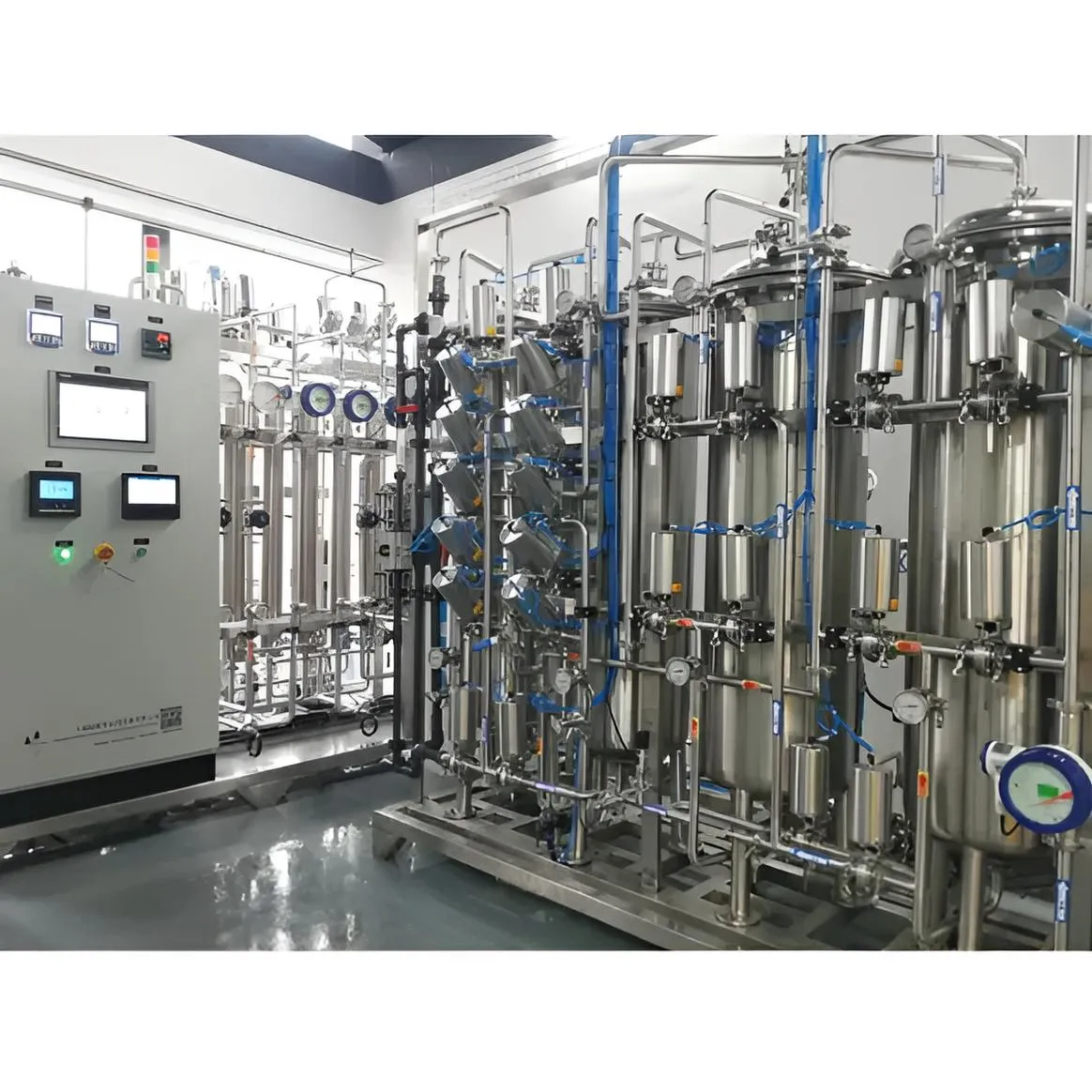
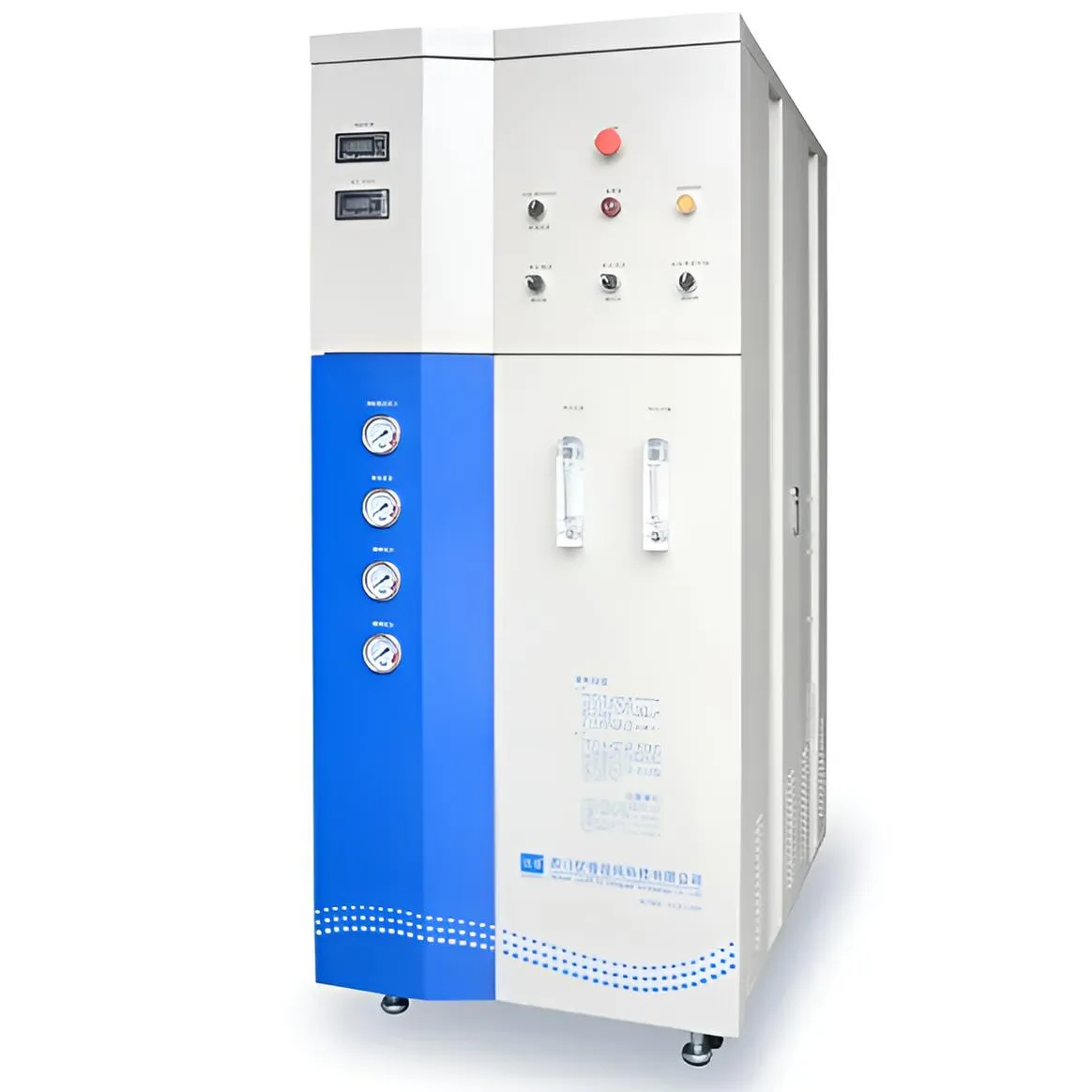
Marked by the entry of Hydranautics' reverse osmosis membrane products into the mainland China market eight years ago, domestic reverse osmosis pure water preparation technology entered a stage of rapid development. It has been widely applied in industries such as power, petroleum, chemical, metallurgy, electronics, pharmaceuticals, and food, as well as in municipal water supply and drinking water applications. Compared with traditional ion exchange and electrodialysis methods, reverse osmosis membrane technology occupies the vast majority of the pure water preparation market share. Reverse osmosis technology was first applied in China to the production of flushing water in the microelectronics industry. In recent years, the technological and consumer wave generated by reverse osmosis technology for drinking water has swept across the country from south to north and east to west, greatly promoting the popularization of RO technology.
In recent years, my country's stable exchange rate, tariff reductions, fierce price competition from foreign membrane manufacturers in the domestic market, the continuous squeezing out of price markups by domestic distributors, and the gradual localization of supporting products have all contributed to a continuous decline in the market price of membranes and their supporting products, as well as the engineering cost of reverse osmosis systems. Meanwhile, the overall national strength and purchasing power of enterprises have increased, and personal consumption levels have risen. This, in turn, has promoted the widespread adoption of reverse osmosis technology. It has facilitated the acceptance of reverse osmosis technology and its products by various industries, including direct drinking water, municipal water supply, and various industrial sectors, forming a crucial link in their respective technological advancements. This, in turn, has played a certain role in promoting the overall progress of domestic industry.
Reverse Osmosis Membrane Products
Regarding the structural forms of reverse osmosis membranes, the market for hollow fiber membranes, tubular membranes, and plate membranes is relatively narrow. As a result, DuPont has ceased production of its hollow fiber membranes, and Toyobo's hollow fiber membranes have extremely limited sales in China. However, due to the low pretreatment requirements, wide range of water sources that can be treated, extensive application range, and huge market, spiral wound membranes have become almost synonymous with reverse osmosis membranes. In terms of membrane materials, cellulose acetate membranes, due to their high operating pressure and low desalination rate, have basically withdrawn from the market. Low-pressure and ultra-low-pressure aromatic polyamide composite membranes have become the absolute mainstream in the market. The development trend of membrane products is towards a wider variety and more versatile approach, including low-fouling membranes, positively charged membranes, and sodium filtration membranes.
Hydranautics' low-fouling membranes (LFC1 and LFC3 series) possess strong chemical antifouling properties. They are achieved by adding an antifouling material layer to the existing polyamide composite membrane, neutralizing the previously negatively charged membrane surface and increasing its hydrophilicity, thereby effectively improving the membrane's resistance to organic fouling. Dow Chemical's low-fouling membranes (BW30-FR series) exhibit strong physical antifouling properties. They improve the smoothness of the membrane surface and increase the thickness of the feed screen layer, reducing turbulence and increasing flow velocity on the membrane surface, thus effectively improving the membrane's resistance to microbial fouling. Low-fouling membranes have unique advantages in surface water, reclaimed water, wastewater treatment, and the concentration and purification of other solutions. Since entering the domestic market in 1998, they have gained increasing attention and rapid adoption. In recent years, positively charged membranes have emerged, with positively charged membrane surfaces that can more effectively remove cations. When used in the second stage of reverse osmosis, they can effectively improve the overall system desalination rate, achieving the system's permeate water quality requirements with a conductivity below 1 μS/cm. Nanofiltration membranes, strictly speaking, do not belong to the category of reverse osmosis membranes. Their membrane materials are diverse and not limited to aromatic polyamides. Membrane quality assessment can consider multiple indicators such as viruses, bacteria, amine nitrogen, and BOD, not just low desalination rates. Therefore, nanofiltration membranes have a wide range of applications and deserve significant development.
Reverse Osmosis Membrane Market
In the RO membrane product market, Hydranautics (Nitto Denko) and Dow Chemical (Filmtec) currently hold approximately 80% of the domestic market share. Other foreign membrane manufacturers, such as Koch (Fluid Systems), Osmonics (Desal), Trisep, CSM (Saehan), and Toray, collectively hold approximately 20% of the market. This situation indicates that all international spiral-wound membrane manufacturers with large-scale production capacity have entered the domestic market and secured a place. China began developing RO membranes (hollow core and spiral wound) in the 1960s, with technological development almost in sync with the world at that time. In the following years, domestic levels gradually lagged behind international levels, and foreign membrane production lines were introduced starting in the 1980s. Currently, represented by Huludao Yuchai Northern Membrane Industry Co., Ltd., there are still 4-5 companies with certain production capacity, but their market share in the domestic membrane market is less than 2%.
Domestic sales of various types of spiral-wound membranes were approximately US$200 million, US$500 million, US$800 million, US$1000 million, US$1500 million, and US$25 million from 1996 to 2001, respectively, with an estimated sales of US$30 million in 2002. Global RO membrane sales in 2001 were approximately US$500 million. Excluding regional and product price differences, domestic membrane sales volume accounted for approximately 10% of global sales volume. In 2001, Hydranautics pioneered the investment and construction of a spiral wound membrane plant in Shanghai (Songjiang), with products entering the domestic market in May 2002. It is believed that other foreign membrane manufacturers will follow suit and establish plants in China. Some emerging domestic membrane manufacturers are also accelerating the construction of plants in Hangzhou, Guiyang, and other locations, and their products will soon be available on the market. At that time, the domestic membrane market will further expand, and competition will intensify, with downstream industries related to domestic membrane technology being the biggest beneficiaries.
Reverse Osmosis Membrane Applications
In the application of RO membranes, the YUMA water plant in the United States (treating canal water), which went into operation in the 1980s, still maintains its position as the world's largest reverse osmosis membrane water treatment project with a daily treatment capacity of 280,000 tons. Seawater desalination is one of the important application areas of reverse osmosis technology. Globally, the three largest seawater desalination projects with a production scale exceeding 100,000 tons/day are located in the UAE, Saudi Arabia, and Spain, respectively. Among them, the Fujairah water plant in the UAE, which went into operation in 2002, has a treatment capacity of 140,000 tons/day. According to incomplete statistics, the world currently produces over 12 million tons of pure water per day using reverse osmosis technology. In comparison, while my country's total production and the scale of individual projects are still at a relatively early stage, its development is rapid and its market potential is enormous. Conservative estimates suggest that there are currently over 200 reverse osmosis systems in China with a production capacity exceeding 100 m³/h for industrial use. The largest completed project is the 750 m³/h, 14,000 ppm sub-seawater desalination project at the Cangzhou Chemical Plant, using domestically produced membranes from Yuchai Northern Membrane Company. The largest projects under construction in 2002 were two 2,000 m³/hr rolling mill water systems at the Shanghai Baoshan Steel Plant and Taiyuan Steel Plant. The largest projects in the power industry are the 100 m³/h power plant water projects in Yantai and Dalian. There are already over a dozen reverse osmosis production lines for bottled and packaged water with a production capacity exceeding 500 m³/h, with the largest reaching 1,000 m³/h. It is expected that drinking water production systems with a daily production capacity of 10,000 tons will appear in Shandong and Dalian within the next two years. Due to economic and geographical factors, reverse osmosis projects are concentrated in Shandong Province and Dalian. With the increasing aridity in northern my country and the rising demands for water quantity and quality from industrial and residential sectors, membrane-based seawater desalination will inevitably shift from its current focus on marine and island applications to industrial and municipal sectors, representing a huge market potential.
Reverse Osmosis Supporting Products
The supporting product market is developing in tandem with the membrane product market. Many foreign supporting products, such as ARGO's scale inhibitors, GRUNDFOS and DP's vertical multistage centrifugal pumps, PROCON and NOCCHI's vane pumps, CODELINE's membrane pressure vessels, AUTOTROL and FLACK's water softener multi-way valves, PARK and STRUCTURE's fiberglass filter cartridges, and BLUEWHITE and KING's panel flow meters, once dominated the membrane supporting product market. However, thanks to the concerted and unremitting efforts of domestic membrane distributors and similar supporting product manufacturers, these membrane supporting products are gradually being localized. Currently, product quality is generally up to standard, and market prices have fallen significantly. Some products are also sold to the United States and other countries of origin, opening up a new field for the development of this industry.
Enterprise Development
The sales revenue of the pure water equipment manufacturing industry related to reverse osmosis technology reached an estimated 8 billion RMB in 2001. This marks the reverse osmosis equipment manufacturing and pure water preparation industry as one of the fastest-growing and most sustainable industries in China. In Shanghai, Beijing, Guangzhou, Shenzhen, Tianjin, Hangzhou, Huzhou, Xi'an, and other places, a group of professional enterprises specializing in RO membrane technology, including product agency, equipment manufacturing, engineering installation, and the production of supporting products, have emerged. After nearly ten years of rapid development, this industry has begun to enter a period of stable development. Although turnover is still growing rapidly, the growth of operating profits has slowed down. Currently, a fundamental problem facing all enterprises in the industry is to conduct in-depth research on products and technologies while doing well in the market, seeking development through intensive management.
Faced with such a huge and continuously developing membrane product market, and facing the pressure of WTO accession and the severe situation of foreign companies establishing factories in China, the pace of localization of technology and materials in my country's membrane production industry is slow. Yuchai Group's acquisition of Northern Membrane Industry Co., Ltd. has given industry insiders hope, but truly developing research capabilities requires extraordinary efforts from the company. Achieving a significant market share necessitates the same level of trust and enthusiasm from the Chinese people as they would for supporting products. For the equipment manufacturing industry, the lack of effective industry associations for both equipment manufacturers and component suppliers, coupled with disorderly price competition, severely restricts industry development. Due to various reasons, companies in the industry face not only market competition pressures but also the threat of frequent internal divisions, making it difficult to form internationally competitive flagship enterprises. Only by relying on flagship enterprises can large-scale domestic projects avoid easily falling into the hands of large foreign companies, enabling significant expansion into the international RO water treatment engineering and product markets.
Furthermore, domestic companies must learn from the business communities of South Korea and Taiwan, applying the management skills honed in the domestic market to markets in less developed countries. This will allow the fierce competition among our companies to shift overseas, enabling the success of expanding into the domestic market to be replicated in less developed countries. The speed and success of this process largely depend on the formation and development of the industry's core enterprises.
Product and Market Development
The pure water equipment manufacturing and related product manufacturing industry will see two major development trends in the coming years. First, it will continue to achieve domestic production, continuously improve product quality, establish a robust domestic sales network and mechanism, and achieve large-scale production. Second, it will leverage China's WTO accession to aggressively promote domestically produced products to the international market. The domestic production of small vane pumps, multi-way valves for water softeners, and specialized instruments will inevitably accelerate. Several domestic companies have already developed 4-inch slotted and seamless stainless steel membrane pressure vessels, 4-inch and 8-inch fiberglass membrane pressure vessels from the Harbin Fiberglass Research Institute, vertical multistage centrifugal pumps from Wuxi Tianhe Water Supply and Drainage Equipment Factory and Hangzhou Southern Special Pump Factory, fiberglass filter barrels from the Xi'an Composite Materials Research Institute, and fine filter media from Beijing Chaolun Company, all of which possess the technological capabilities to enter the international market. Hollow fiber ultrafiltration membranes, with their high domestic adoption rate, massive production volume, low price, and extremely high market share, deter foreign products. However, their product range is limited, lacking high-quality and high-end products. If this situation improves, a major entry into the international market is imminent. Our products going global is not only necessary for the survival and development of related enterprises, but has also proven entirely feasible. Importantly, our businesses should focus more on the international market. Domestically produced goods are already abundant in the US, Japanese, and European markets; only membrane-related products are lacking.
Problems Faced
Compared to the sweeping wave of RO engineering projects, domestic research on RO engineering technology is relatively weak and lagging, with many problems urgently needing to be solved. One important issue is the need for domestically developed RO system design software, including pretreatment, to transform scattered research results on RO application technologies into products that directly serve system design. Another important issue of concern to industry professionals is the design and operational optimization of RO systems. In-depth analysis and discussion of this fundamental problem, and its application in engineering design and system operation practice, can improve the design and operation level of reverse osmosis systems, thereby generating significant economic benefits.
Currently, the design of RO systems largely relies on design software provided by foreign membrane manufacturers. While these software programs greatly assist in system design, they are essentially merely simulation environments for membrane system design schemes. They cannot automatically provide feasible design solutions, lack the ability to optimize designs, and do not address the crucial pretreatment system. This poses a significant challenge for designers of small and medium-sized RO systems.