





Phone:
0086 28 87573647
+86 19150187139

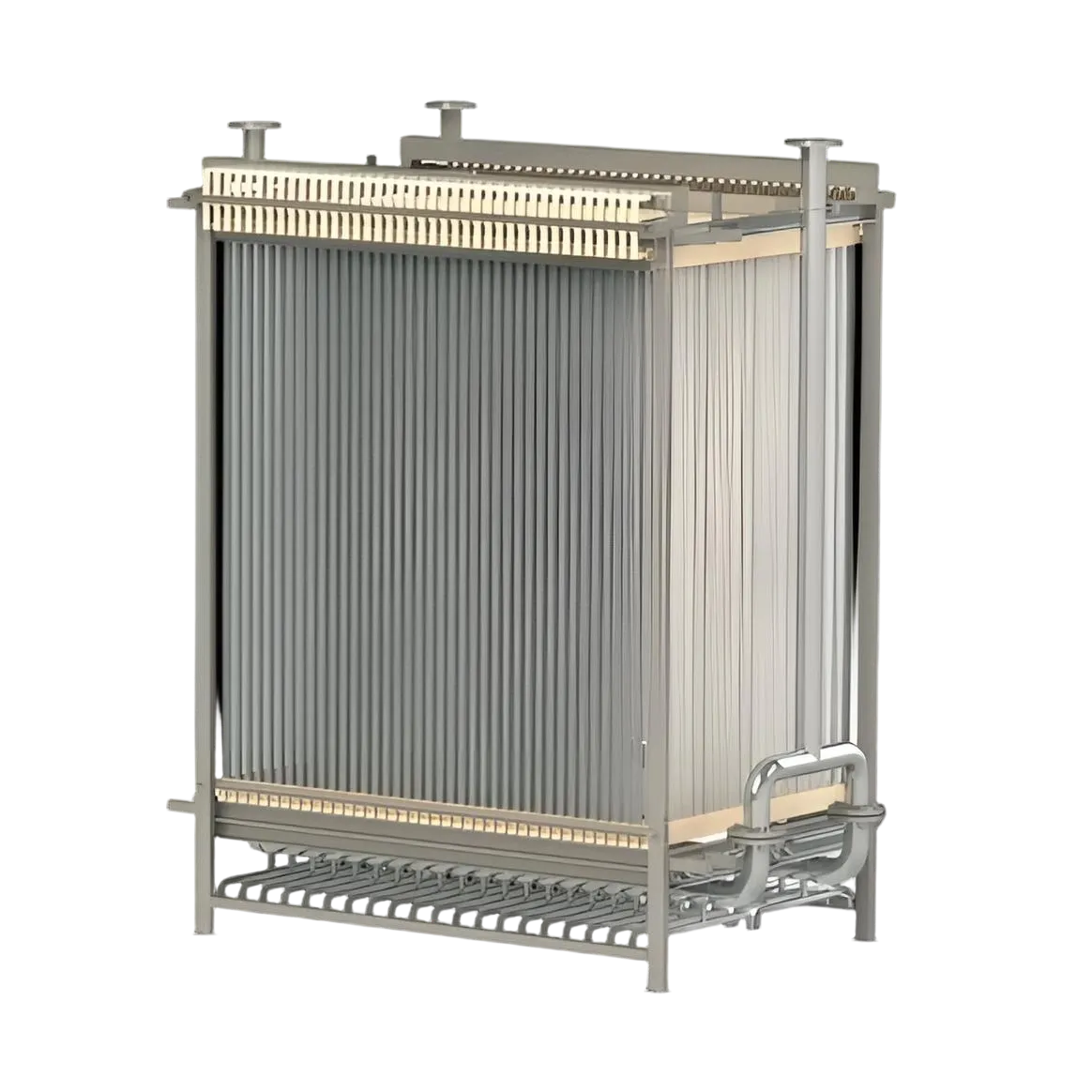
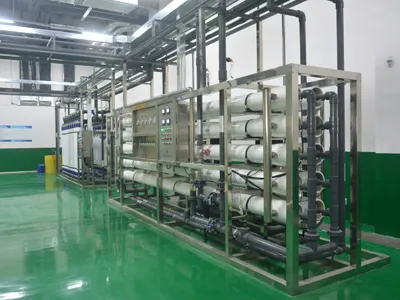
Electrodeionization (EDI) technology represents the highest level of pharmaceutical water preparation technology today [6,7]. EDI technology utilizes the ion exchange effect of ion exchange resins and the selective permeation of anions and cations by anion and cation exchange membranes to achieve directional migration of ions under the action of a DC electric field, thereby completing the deep desalination of water. Since ion exchange, ion migration, and electroregeneration of ion exchange resins occur simultaneously, it is like a mixed ion exchange resin column that exchanges and regenerates at the same time, which can continuously produce high-quality pharmaceutical water. Therefore, this process is also called continuous deionization (CDI) process. As a continuous deep desalination method, EDI (Electrodeionization) following RO (Reverse Osmosis) offers several advantages: RO has a high desalination rate for ions with a valence of 2 or higher, such as Ca²⁺ and Mg²⁺, thus effectively reducing raw water hardness and promoting long-term stable operation of the EDI membrane stack; simultaneously, it facilitates the dissociation of water in the EDI desalination chamber, generating sufficient H⁺ and OH⁻, thereby achieving electrochemical regeneration of the ion exchange resin. This keeps a significant portion of the resin in an exchange-regeneration equilibrium state, eliminating the need for chemical regeneration with acids or alkalis, and requiring only 5% of the ion exchange resin used in traditional processes.
Furthermore, the increased EDI current density and the continuous generation of H+ and OH- ions from water dissociation on the resin surface in the desalination chamber can alter the local pH value of the desalination water, creating an environment unfavorable to bacterial growth. Simultaneously, because the anion exchange resin surface carries a positive charge, while bacteria, especially Gram-negative bacteria which significantly impact pharmaceutical water, carry a negative charge, they are easily adsorbed onto the anion exchange resin surface, occupying the most active site of water dissociation. This inhibits or even kills their growth, significantly reducing the degree of bacterial endotoxin contamination in the EDI permeate—a major advantage of EDI over traditional processes. Pre-treatment of raw water before it enters the RO-EDI system, including filtration, adsorption, and softening, can reduce the sedimentation index (SDI), remove free residual chlorine, soften the water, and protect membrane performance, thus greatly extending the lifespan of the RO-EDI system.
In fact, the concept of EDI was proposed abroad as early as the 1950s, but for more than 30 years afterward, EDI technology did not make substantial progress. The main technical difficulties lay in the structural design of the device and the determination of operating parameters. It wasn't until 1987 that Millipore, an American company, launched the first commercially available small-scale EDI device for laboratory use. In the 1990s, companies like Ionpure in the US applied EDI technology to the production of pharmaceutical water, truly achieving industrialization. In recent years, the Institute of Health Equipment, Academy of Military Medical Sciences in my country, has constructed a complete water treatment system using RO (primary)-EDI as the core technology, combined with necessary pretreatment and post-treatment facilities. The institute completed the transformation of its research results in 2000, applying it to the pharmaceutical industry with good efficiency. The RO-EDI water treatment system produces high-quality water with a resistivity of 15-18 mΩ/cm (compared to only 1 mΩ/cm in ordinary ion exchange systems) and a bacterial endotoxin content of less than 0.01 EU/ml. Analysis suggests that membrane separation technology combining EDI with RO and other technologies will be one of the most promising pharmaceutical water production technologies of the 21st century. With the revision of the Chinese Pharmacopoeia, this technology will undoubtedly be promoted in my country.





