

Phone:
0086 28 87573647
+86 19150187139

1.1 Principle
Electrodeionization (EDI) water purification technology [1,2] is a new method of desalination and purification that organically combines ion exchange and electrodialysis membrane technology, using only electricity to remove ions from water. In China, it is called packed bed electrodialysis desalination. Figure 1 shows the working principle diagram of EDI water purification equipment.
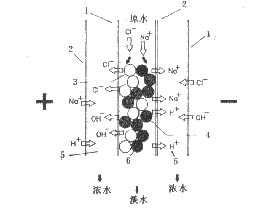
Figure 1 Working principle diagram of EDI water purification equipment
1 — Anion exchange membrane; 2 — Cation exchange membrane; 3 — Anion exchange resin;
4 — Cation exchange resin; 5 — Concentrate chamber; 6 — Desalinate chamber
Under certain process and operating conditions, when the polarization process at the interface between the membrane or resin and water develops to a certain extent, the water ionizes into H+ and OH- ions, thereby achieving dynamic electroregeneration of the resin. This process is the core and foundation of EDI technology. In layman's terms, filling the desalination chamber of a conventional electrodialysis system with mixed resin achieves:
1) improved effluent quality, with an effluent conductivity below 0.067 μS/cm when the influent conductivity is < 40 μS/cm;
2) continuous operation of the equipment and self-regeneration of the resin.
Advantages:
1) Continuous water output, no backup equipment required;
2) Stable and reliable operation, unattended operation, easy automation;
3) Self-regeneration, no consumption of acid or alkali, good environmental benefits;
4) Low operating costs, easy to popularize and promote;
5) Removal of bacteria, pyrogens, and silica.
The RO-EDI desalination system, which combines EDI with reverse osmosis (RO) [3], will become the mainstream desalination system for producing high-purity water in this century. It will gradually replace ion exchange, and its market share will continue to increase. It is estimated that it will reach about 85% in the future.
1.2 Development history
1) Foreign countries:
In 1955, the United States used EDI water purification equipment to treat radioactive wastewater;
In 1987, Millipore, a US company, first realized the industrialization of EDI water purification equipment production;
In 1991, Ionics modified EDI water purification equipment and realized industrialization.
Currently, the US companies that provide EDI water purification equipment products and engineering services are: Electropure, Millipore, Ionpure, Ionics, and E-cell (a Canadian and Japanese joint venture, now acquired by General Electric Company of the United States).
2) Domestically:
In the 1970s and 1980s, experimental research fell into the misconception of using tap water to produce high-purity water in a single step.
In 1984, the Institute of Atomic Energy developed the 1103-type pure water purifier.
From 1996 to 1997, Tsinghua University achieved the following research results on EDI and related technologies:
Utility model patent for "Electrodeionized Pure Water Purifier" (ZL96244874.5);
Utility model patent for "Equal-void Packed Bed Electrodialysis Device" (ZL97221361.9);
Invention patent for "Electrodeionized Soft Water Method and Apparatus" (ZL97116340.5);
Invention patent for "Electro-regeneration Method and Apparatus for Ion Exchange Resin" (ZL 96120791.4); A practical reaction superposition model was used to explain the EDI process.
From 1996 to the present, the following institutions have participated in EDI research:
Tianjin University and the Academy of Military Medical Sciences;
Hangzhou Water Treatment Technology Research and Development Center;
and the foreign-invested Huzhou European and American Company (wound-wound EDI water purification equipment).
1.3 Progress
China has begun to enter the industrialization stage of EDI products. EDI products are just beginning to be used in thermal power plants, their largest user. There are 120 t/h EDI water purification systems in the power grid, 240 t/h EDI water purification systems in Baosteel's self-owned power station, and 6-7 self-owned power stations in Shandong using EDI products. These products are mostly imported. China is a large country; simply importing a large number of EDI water purification systems cannot meet the demand. The market is large, and the profit margin is considerable. Utilizing domestically produced materials such as ion exchange membranes to produce inexpensive products with performance comparable to foreign products is expected to gradually increase the market share of domestically produced EDI products.
In manufacturing domestically produced EDI water purification equipment, in addition to absorbing the strengths of foreign products, domestic materials should be used, adapted to local conditions, and independent intellectual property rights should be utilized. The "equal-pore packed bed electrodialysis device" invented by the author is a relatively good EDI water purification device. Besides possessing a series of advantages of other EDI water purification devices, it also features uniform pore size in the packed bed, low flow resistance, high flow rate, and long service life. It has been confirmed that equal-pore filling can greatly shorten the rinsing and electro-regeneration time of EDI water purification equipment. Equal-pore filling technology has become a more realistic, convenient and effective filling technology in the development of EDI water purification equipment.
In the freshwater chamber of EDI water purification equipment, cation exchange resin is used instead of the anion and cation exchange resin that is usually filled to make an electro-deionized water softener [4] . It is placed after nanofiltration reverse osmosis equipment or traditional electrodialysis equipment as a fine treatment softening device in the softening treatment system. These devices together form a continuous soft water system that does not require salt regeneration. This continuous soft water system only consumes electricity to operate and can be unattended, realizing the transformation of soft water automation. There are 500,000 industrial boilers in China that need to use soft water for feed water. Other industries in the national economy also have a considerable demand for soft water. They are very interested in promoting electro-deionized water softeners that are automated, unattended, and consume only electricity without salt regeneration. Although water softeners are not expensive, the market is good and the demand is large, so promoting electro-deionized water softeners will also have good economic benefits.
2.1 External electro-regeneration system [5, 6]
During the operation of EDI water purification equipment, water ionization occurs continuously at the interface between the membrane and resin and water. The H+ and OH- ions generated by ionization continuously regenerate the ineffective ion exchange resin. As a result, a protective layer composed of fresh resin is formed at the bottom of the resin layer, which makes the effluent water quality of EDI water purification equipment very good. Therefore, the ability to regenerate ineffective resin during the operation of EDI water purification equipment is an inherent characteristic. Can this characteristic be used to regenerate ineffective resin in ordinary ion exchangers? Can an external electro-regenerator with a structure similar to that of EDI water purification equipment be designed, while allowing the resin to flow freely in it? The answer is yes. At this time, as long as ineffective resin is continuously fed into the inlet of the external electro-regenerator, under the action of DC electric field, regenerated resin will continuously flow out from the outlet. The electro-regeneration process of resin is carried out in the external electro-regenerator. In this way, the external electro-regenerator replaces the acid and alkali regeneration system used in the original ion exchanger regeneration, realizing the external electro-regeneration of the exhausted ion exchange resin.
The concept of external electroregeneration of ion exchange resin was formed by the author when studying the working process of EDI water purification equipment. The direct verification of the correctness of this external electroregeneration system is provided by the nearly 10,000 sets of EDI water purification equipment currently in use. Isn't the reliable operation of these EDI water purification equipment an example of resin electroregeneration being carried out in EDI water purification equipment? However, people are not satisfied with this verification. They designed various experimental devices, demonstrated the resin electroregeneration process, measured relevant data, and demonstrated the feasibility of implementing resin electroregeneration.
2.2 Feasibility demonstration
1) Inspired by this invention of resin electroregeneration method,
Li Fuqin et al. of Hebei University of Architecture and Technology [7] designed an EDI water purification equipment test device with a fresh water chamber of 200mm×100mm×10mm and measured the relevant parameters affecting the electroregeneration of mixed bed ion exchange resin. The experiment proved that the test device can fully regenerate the resin and the resin regeneration effect is excellent. The experiment showed that the resin electroregeneration technology has good feasibility. The regeneration voltage of the experimental device was determined to be 30V and the regeneration time to be 40min. The flow rate of the freshwater chamber was calculated to be 0.5-1.0cm/s.
The experimental study on the electro-regeneration of multi-bed ion exchange resin using bipolar membrane was listed as a key scientific and technological project of Hebei Province in 2000 (00213093). The bipolar membrane is composed of a cation exchange resin layer, an anion exchange resin layer and a hydrophilic layer at the intermediate interface. Under the action of a DC electric field, it can ionize water into H+ and OH- ions. Li Fuqin et al. [8] divided the freshwater chamber into two parts using a bipolar membrane (produced in Shanghai). The two sides of the bipolar membrane were filled with anion and cation resins respectively. The experimental device was used to conduct an experimental study on the feasibility of electro-regeneration of multi-bed ion exchange resin. The experimental results showed that when the regeneration voltage was 60V and the regeneration time was 60min, the resin electro-regeneration device could regenerate the failed resin to a degree close to chemical regeneration, showing that the resin electro-regeneration technology has good feasibility. 2)
Wang Jianyou et al. of Tianjin University
[9] tested the feasibility of resin electroregeneration by filling a basic mixed bed resin in a self-made EDI water purification device. The RO effluent with a conductivity of 10-18 μS/cm was used as the inlet water of the EDI water purification device. After running for about 18 hours, the conductivity of the product water decreased from 3.3 μS/cm to below 0.067 μS/cm, so that the mixed bed resin was effectively regenerated. Therefore, under certain process conditions, the EDI water purification device can electroregenerate Na and Cl type resins to a degree close to or even exceeding that of acid and alkali regeneration [10] .
3) The research and development of ion exchange resin electroregeneration technology by Beijing Guodian Longyuan Environmental Protection Engineering Co., Ltd. and North China Electric Power University
State Power Corporation was proposed by the author of this article as the inventor of the resin electroregeneration patent and applied for by Beijing Guodian Longyuan Environmental Protection Engineering Co., Ltd. It was listed as a 2001 State Power Corporation Science and Technology Fund Project (SP-2001-02-25). For some reason, the patent inventor did not participate in this research and development work.
The results obtained using a self-made experimental setup showed that the working exchange capacity of ion exchange resins after electroregeneration could meet the field use standard (above 300 mmol/L). They also conducted electroregeneration experiments on mixed-bed ion exchange resins using bipolar membranes [11, 12] . The experiments showed that domestically produced membranes could not meet the requirements, while Japanese membranes achieved satisfactory electroregeneration results.
The results obtained using a self-made experimental setup showed that the working exchange capacity of mixed-bed ion exchange resins after electroregeneration could meet the field use standard (above 300 mmol/L), but the reproducibility of the regeneration effect was poor. Under the same experimental conditions, the working exchange capacities of the regenerated resins were measured to be 288, 321, 163, 179, 204, and 196 mmol/L in six repeated experiments. They also found that the degree of resin breakage gradually increased with the number of experiments, which affected the resin regeneration effect. Therefore, the wear resistance of the regenerated resin was measured. The normal wear resistance of general resin is 95%, while the measured value of the regenerated resin is only 19.6% (cationic resin) and 3.7% (anionic resin). In their paper [13] , they exclaimed: "When the used resin was tested for wear resistance, there were basically no complete round particles, and most of them had turned into powder." They attributed the above phenomenon to the electro-regeneration of the resin, that is, "the resin particles underwent a cycle of regeneration-failure-regeneration, which caused the resin particles to expand-contract-expand countless times, making the resin easy to break, reducing its physical and chemical properties, and making the regeneration effect unstable."
When the authors of this paper conducted more than 10 electro-regeneration tests on the resin using EDI water purification equipment, they did not observe unstable test data or resin breakage, and so far they have not seen any other reports of resin breakage during electro-regeneration. Professionals engaged in water treatment know that when normal qualified resin products are used in water treatment equipment, the annual replenishment rate is about 7~15% due to wear and tear; under normal circumstances, the resin will not turn into powder after only a few uses. There are nearly 10,000 sets of EDI water purification equipment in operation at home and abroad, and there are no reports of the resin turning into powder after a short period of use. Therefore, the cause of the above phenomenon cannot be attributed to the electro-regeneration of the resin. The phenomenon that the resin broke into powder after only 6 electro-regenerations in the above electro-regeneration test is really puzzling. Some people speculate that the resin used in the above electro-regeneration test may be a counterfeit resin, or a regenerated resin (a waste resin that has been processed and reused), or there may be errors in the storage and use of the resin.
4) Wuhan Yida Water Treatment Engineering Co., Ltd. and Zou Xiangqun et al. of Wuhan University [14] conducted an experimental study on the electro-regeneration of resin using a self-made cylindrical resin electro-regeneration device with a diameter of 200 mm and a height of 400 mm. The middle compartment of the electro-regeneration device is loaded with gel-type mixed anion and cation resins with different proportions that have been used for one year. The two sides of the compartment are homogeneous anion and cation exchange membranes, respectively. During the resin electro-regeneration test, the failed resin is intermittently fed in from the top of the device, and the corresponding regenerated resin is intermittently discharged from the bottom of the device. The influent is a first-level demineralized water with a conductivity of <2μS/cm. The experimental results are shown in Table 1. As can be seen from the data in Table 1, direct current can regenerate the exhausted ion exchange resin to a certain extent. The current efficiency during the regeneration process decreases as the resin regeneration degree increases. The regeneration degree data for resins numbered 2, 4, and 5 in Table 1 also indicate that the resin regeneration degree can be gradually increased. For example, the regeneration degree of cation exchange resin in number 2 can be increased from 3.5% to 44.3%, then from 49.4% to 57.5%, and finally from 85.4% to 88.7%. This three-step process increases the regeneration degree from a very low 3.5% to a very high 88.7%. This indirectly indicates that the height of the experimental device is insufficient, and the residence time of the resin within the device is not long enough, preventing complete resin regeneration from being achieved in one step.
5) Tsinghua University and Baoding Huan Gong Machinery & Electronics Co., Ltd.
Table 1. Test results of electroregeneration of cation and anion resins [14]
Serial Number | resin | Regeneration rate / % | Cation to Anion Resin Volume Ratio | Regeneration current /A | Regeneration time / h | |
Before regeneration | After regeneration | |||||
1 | Cation resin | 3.5 | 31.7 | 1 : 1.5 | 3.0 ~ 4.3 | 4.0 |
Anion resin | 1.7 | 27.5 | ||||
2 | Cation resin | 3.5 | 44.3 | 1 : 1.5 | 2.1 to 4.3 | 11.0 |
Anion resin | 1.7 | 32.2 | ||||
3 | Cation resin | 17 | 31.0 | 1 : 1.3 | 2.8 ~ 3.6 | 9.5 |
Anion resin | 30.5 | 57.0 | ||||
4 | Cation resin | 49.4 | 57.5 | 1 : 2 | 1.4 ~ 1.8 | 15.1 |
Anion resin | 14.8 | 32.5 | ||||
5 | Cation resin | 85.4 | 88.7 | 1 : 2 | 2.8 ~ 3.8 | 5.0 |
Anion resin | 88.4 | 91.1 | ||||
Unlike the self-made resin electroregeneration device used in the previous experimental studies, this experiment used a commercially available EDI water purification system, specifically a 1 t/h EDI water purification system from Ionpure, USA. Because the selected structure, materials, and process parameters of the EDI water purification system are more suitable for achieving resin electroregeneration, and its performance is more complete, the EDI water purification system was chosen as the experimental device for static resin electroregeneration, which is more reliable and complete than the self-made resin electroregeneration experimental device mentioned above.
In this experiment, the effluent from the RO unit (conductivity approximately 14.5 μS/cm) was used as the influent to the EDI water purification system for resin electroregeneration. Water and electricity were continuously supplied to electroregenerate the failed anion and cation mixed resin in the freshwater chamber of the EDI water purification system until the effluent conductivity reached 0.067 μS/cm. The relationship curve between the effluent conductivity and the regeneration duration during continuous operation of the EDI water purification system was recorded (as shown in Figure 2).
The experiment shows that the better the influent water quality of the EDI water purification system, the shorter the resin electroregeneration time. The Ionpure product used in this experiment has a concentrate chamber filled with conductive resin. Therefore, the resistance of the concentrate chamber is low during operation, resulting in a larger current at a given voltage, with a maximum current reaching 10 A, which is higher than the current used in the aforementioned experimental setup. This leads to a shorter regeneration time. After more than 10 cycles of resin electroregeneration tests, the Ionpure product was found to completely regenerate the basic-type failed resin into a mixed H/OH type resin within 7–10 hours. At this point, when RO effluent is fed into the Ionpure product, the conductivity of the permeate can be below 0.067 μS/cm. The duration of regeneration depends primarily on the magnitude of the current used for regeneration. Detailed results of this experiment are pending publication.
Conductivity / μS· cm⁻¹
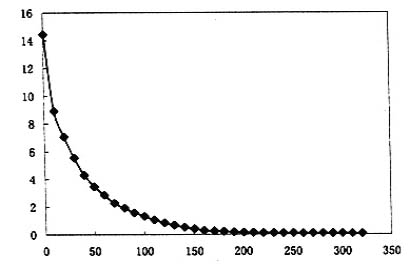
Time/min
Figure 2. Relationship between the conductivity of EDI water purifier outlet and regeneration duration.
2.3 Prospects
External electroregeneration of ion exchange resin is a green water treatment process, representing a technological revolution in existing ion exchange water treatment and suitable for retrofitting existing plants. It only requires eliminating the acid and alkali regeneration systems. After the original ion exchangers fail, the resin is transported to the external electroregenerator, electroregenerated, and then returned to the original ion exchangers.
Since ion exchange water treatment is the most widely used and common method in water desalination systems (e.g., over 90% of boiler feedwater treatment systems in thermal power plants use ion exchange (although its share has declined in recent years due to the promotion of RO technology), the market capacity for this type of ion exchange resin electroregeneration retrofit is substantial. Based on the amount of acid and alkali consumed, the domestic market is estimated at 2-3 billion yuan. Furthermore, it can be exported to capture a large international market. Therefore, promoting resin electroregeneration technology has significant economic and environmental benefits.
In high-purity water preparation systems, using EDI to replace mixed beds to form an RO-EDI system is a promising industry with broad development prospects, as this system is the mainstream desalination system of this century. This type of EDI water purification equipment has been industrialized abroad, but has not yet been mass-produced domestically. The urgent task is to increase investment, learn from the strengths of foreign companies, utilize independent intellectual property rights, realize the mass production of EDI water purification equipment, and gradually increase the market share of domestic products.
Developing electro-deionized water softening equipment is a characteristic of China's application of EDI water purification technology and deserves vigorous promotion.
Studies on the feasibility of ion exchange resin electro-regeneration technology show that exhausted resin can be regenerated using electro-regeneration technology. In order to realize resin electro-regeneration in engineering, it is necessary to find ways to shorten the electro-regeneration time, appropriately expand the capacity of the resin filling device in the external electro-regenerator, and further develop fluidized electro-regeneration. Resin and water two-phase fluid external regeneration is a mature technology. As long as it is used properly, it is expected to be industrialized soon.
References
1. Wang Fang. Electro-deionized water purification technology [J]. Membrane Science and Technology, 2001, 21(2): 50-54.
2. Wang Fang. New progress in electro-deionized water purification technology [J]. Industrial Water Treatment, 2000, 20(7): 4-7.
3. Wang Fang. Reverse osmosis-electrodeionization desalination system [J]. Industrial Water Treatment, 2002, 22(10): 12-15.
4. Wang Fang. Electrodeionization softening method [J]. China Boiler and Pressure Vessel Safety, 1999, 15(5): 7-10.
5. Wang Fang. Electroregeneration method of mixed bed ion exchange resin [J]. Industrial Water Treatment, 1997, 17(2): 1-3.
6. Wang Fang. Electroregeneration method of ion exchange resin [J]. Membrane Science and Technology, 2002, 22(6): 9-13.
7. Li Fuqin, Li Qingxue, Wang Dongyun. Experimental study on electroregeneration of mixed bed ion exchange resin [J]. Journal of Hebei University of Architecture and Technology, 1999, 16(4): 14-16.
8. Li Fuqin, Yang Yunlong, Li Qingxue, et al. Application test of bipolar membrane packed bed electrodialysis technology [J]. China Water & Wastewater, 2001, 17(10): 74-76.
9. Wang Jianyou, Wang Shichang. Study on preparation of high-purity water by reverse osmosis/electrodeionization (RO/EDI) integrated membrane process [J]. Chemical Industry and Engineering Progress, 2002 Supplement: 172-177.
10. Wang Jianyou. [J]. New technology and research progress of high-purity water by electrodeionization (EDI) [J]. Shanghai Chemical Industry, 2000, 21: 15-19.
11. Zhao Ying, Yin Lianqing, Lu Guangjie, et al. Experimental study on electroregeneration of ion exchange resin [J]. Journal of Chemical Industry and Engineering (China), 2003, 54(9): 1330-1333.
12. Zhao Ying, Lu Guangjie, Yin Lianqing, et al. Experimental study on electroregeneration of ion exchange resin by bipolar membrane [J]. Journal of North China Electric Power University, 2003, 30(1): 96-99.
13. Zhao Ying, Luo Guangjie, Yin Lianqing. Feasibility study on electro-regeneration of ion exchange resin in thermal power plants [J]. Electric Power Science and Engineering, 2002(4): 73-75.
14. Zou Xiangqun, Qian Qin, Chen Zhihe. Experimental study on electro-regeneration of resin [J]. Industrial Water Treatment, 2003, 23(8): 48-50, 58.