





Phone:
0086 28 87573647
+86 19150187139

In recent years, my country has discharged approximately 40-50 billion cubic meters of wastewater annually, of which only about 15-25% is treated before discharge. Due to the widespread flow of wastewater, major water systems across the country have suffered varying degrees of pollution, leading to severe deterioration of the water environment. Therefore, strengthening wastewater treatment to ensure not only compliant discharge but also large-scale reuse is crucial. This is vital for eliminating pollution, improving the water environment, alleviating water scarcity, conserving precious water resources, and promoting the development of the environmental protection industry. Simultaneously, the economic and social benefits of wastewater reuse, in turn, promote and drive further development of wastewater recycling, thus realizing the resource utilization of wastewater and driving cleaner production.
Urban wastewater mainly consists of domestic sewage and industrial wastewater, roughly equal in size. Currently, centralized biological methods (conventional activated sludge process, A-B process, A2/O, hydrolysis-oxidation, SBR, oxidation ditch, etc.) are mainly used to treat it to meet discharge standards. To implement wastewater resource utilization and cleaner production, in addition to the reuse of centrally treated wastewater, the treatment and reuse of wastewater from point source pollution sources is also crucial. Point source pollution control can alleviate the burden on centralized treatment facilities, ensure the quality of treated water, and sometimes even achieve cleaner production. Integrating traditional processes with membrane technology can transform wastewater into reusable water of different quality standards or enable its recycling. This alleviates supply and demand imbalances, reduces pollution, and promotes the development of the environmental protection industry. Currently, wastewater reuse is widely practiced for industrial cooling water, irrigation water, and municipal water use, yielding significant economic, social, and environmental benefits.
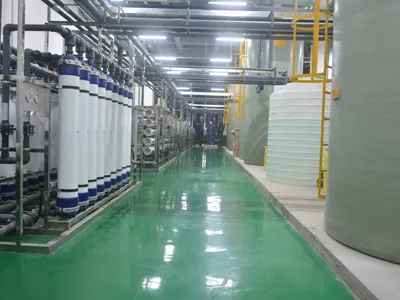
Submerged membrane bioreactors treat domestic, food, and pharmaceutical industrial wastewater for reuse; ultrafiltration enables the recovery of electrophoretic paint and rinsing water in the coating industry (especially the automotive and aluminum processing industries); ultrafiltration treats desizing wastewater and dyeing wastewater in the textile and dyeing industries, returning them to the sizing and dyeing systems for reuse, with significant effects and is a relatively ideal treatment technology; reverse osmosis and nanofiltration enable the reuse of valuable electroplating agents in rinsing water of electroplating wastewater (nickel, chromium, cadmium, gold, etc.) and the reuse of rinsing water, basically achieving a closed-loop cycle with zero discharge [9,10]; dialysis recovers waste acids and alkalis from metallurgy, chemical, and mining industries for reuse, greatly reducing pollution; ultrafiltration is also a process worthy of vigorous promotion for treating oily wastewater, such as oilfield reinjection water, crude oil wastewater, emulsified oil wastewater, and synthetic fiber oil agent wastewater [8]. In the area of comprehensive and advanced wastewater treatment [11,12,13], membrane technology for wastewater treatment can remove suspended particles, pathogens, and various organic and inorganic substances. Reverse osmosis, a two-stage comprehensive and advanced wastewater treatment process, produces reclaimed water of different grades that can be used for miscellaneous purposes (firefighting, car washing, road sprinkling, etc.), irrigation, construction, industrial cooling, groundwater reinjection, and even boiler water. These are technically and economically feasible, with significant economic and environmental benefits. Groundwater reinjection not only prevents seawater intrusion but also replenishes groundwater sources and improves water quality in the basin. Urban wastewater reuse plays a significant role in alleviating urban water shortages, saving precious water resources, reducing water pollution, and improving the water environment. Extensive practical experience has proven the feasibility and economic efficiency of wastewater reuse. With increasing environmental awareness and improved living standards, the demands for wastewater reuse will continue to rise. Due to the characteristics of membrane technology, continuous technological advancements, and declining treatment costs, membrane technology will play an increasingly important role in the field of wastewater reuse in the future. As early as the 1950s, membrane separation technology was proposed to solve the "water crisis". With the continuous progress of membrane technology and the increasing severity of water scarcity, membrane technology, as one of the key common technologies for sustainable development, will surely receive more attention and continue to play a greater role in water resource development and protection, drinking water purification, transformation of traditional industries and promotion of cleaner production.





